
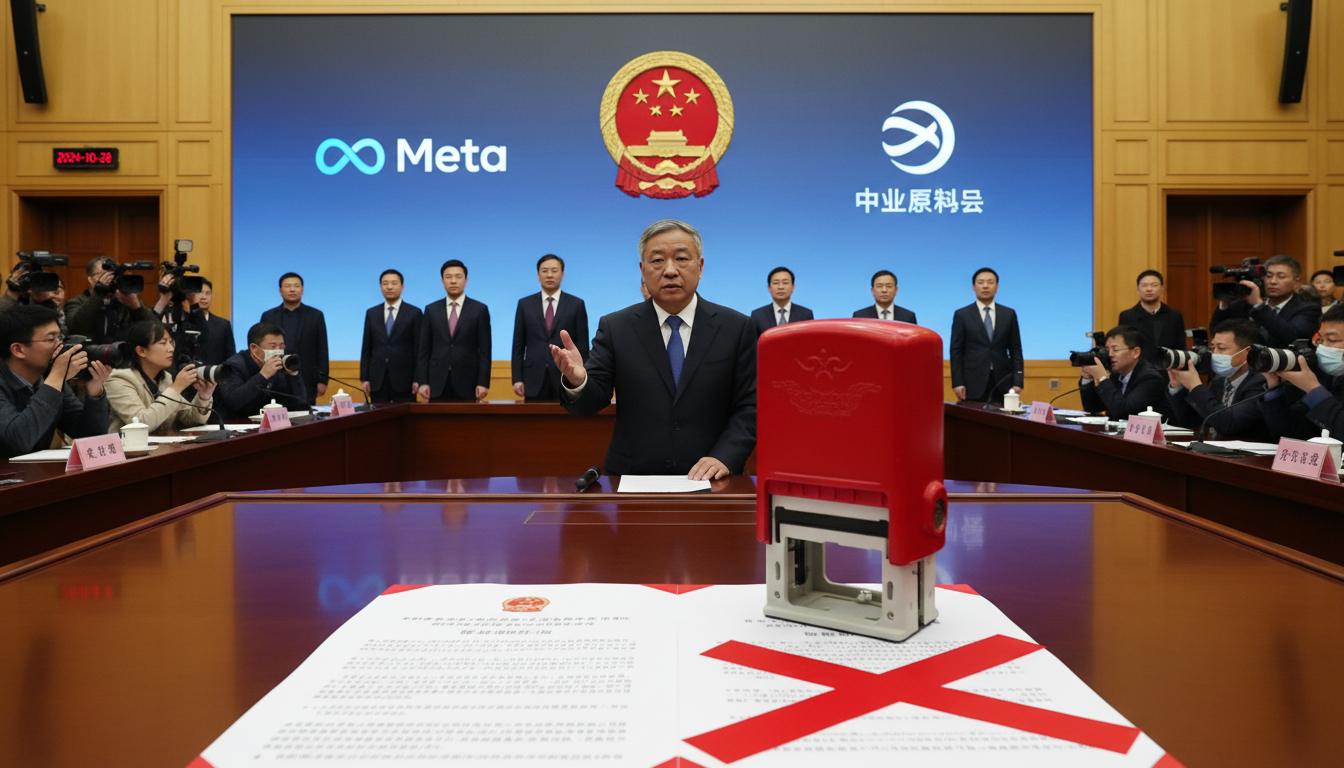
Beijing Blocks Meta Acquisition of Manus After National Security Review
China vetoes Meta acquisition of Manus on April 27, 2026, citing national security concerns and raising questions about the future of the Chinese-founded agentic AI startup.
Beijing on Monday announced it has blocked the Meta acquisition of Manus following a national security review by the National Development and Reform Commission (NDRC). The decision, made public on April 27, 2026, comes after regulatory scrutiny of deals involving advanced artificial intelligence technologies. The move places the future ownership and international partnerships of the Chinese-founded agentic AI company in doubt.
Official Ruling from the National Development and Reform Commission
The National Development and Reform Commission issued the decision, stating the acquisition raised national security concerns that could not be mitigated under current conditions. The agency’s announcement provided no detailed public account of technical findings but emphasized the need to safeguard strategic technologies. Beijing’s formal veto is consistent with broader patterns of regulatory intervention in sensitive technology transfers.
Why the Deal Triggered Security Scrutiny
Manus develops agentic AI systems designed to perform autonomous decision-making and task execution, capabilities regulators often classify as strategically sensitive. Authorities typically evaluate implications for data flows, control of critical infrastructure, and potential military or dual-use applications. Chinese regulators cited those general security vectors in their rationale for blocking the sale to a foreign technology firm.
Immediate Impact on Manus and Its Operations
The ruling effectively halts any transfer of control to Meta and leaves Manus’ corporate future uncertain. Investors and partners will now need to reassess governance structures, funding plans, and operational locales. Manus faces the task of stabilizing its business while ensuring compliance with domestic regulatory expectations that could include restructuring or limiting foreign involvement.
Implications for Meta’s Global Strategy
For Meta, the decision is a significant setback to efforts to acquire advanced AI talent and products from abroad, particularly those with origins in China. The company must now balance ambitions to expand its AI portfolio with the practical limits imposed by sovereign security reviews. Meta’s broader strategy for agentic AI research and deployment may be reshaped by the need to rely more heavily on internal development and partnerships in jurisdictions with clearer acquisition pathways.
Wider Effect on Cross-Border AI Transactions
Regulators’ use of national security reviews to block technology deals underscores growing constraints on cross-border M&A in frontier AI fields. The Manus decision is likely to sharpen caution among foreign acquirers and prompt more thorough pre-transaction dialogues with Chinese authorities. Startups with technologies deemed sensitive may find themselves negotiating more complex clearance conditions or seeking alternative structures to preserve domestic control.
Reactions from Industry and Investors
Market participants and venture firms watching the Manus case have expressed concern about increased regulatory unpredictability. Some investors may press portfolio companies to adopt governance designs that reduce the need for foreign approvals, while others could seek exit paths in markets with fewer national-security hurdles. Industry groups are expected to lobby for clearer, more transparent review criteria to reduce deal uncertainty.
Possible Paths Forward for Manus and Meta
Manus could pursue options such as deeper domestic partnerships, partial asset carve-outs, or operational adjustments that keep core technology under Chinese control while enabling limited international collaboration. Meta might explore licensing arrangements, joint ventures structured to meet regulatory tests, or continued investment in in-house agentic AI capabilities. Any path will require detailed engagement with regulators and likely an extended period of legal and policy negotiation.
The NDRC’s announcement on April 27, 2026 adds to a growing body of high-profile cases where governments have intervened to limit foreign control over advanced technologies. The Manus decision will be closely watched by companies, investors and policymakers as a measure of how national security concerns are being balanced with cross-border innovation and commercial integration.
Market watchers said the ruling could chill some foreign investment in sensitive tech sectors, while prompting startups to prioritize compliance and contingency planning. The full commercial and technological consequences for Manus, Meta and the broader AI ecosystem will unfold as both firms and regulators respond to the ruling and explore legally permissible alternatives.

