
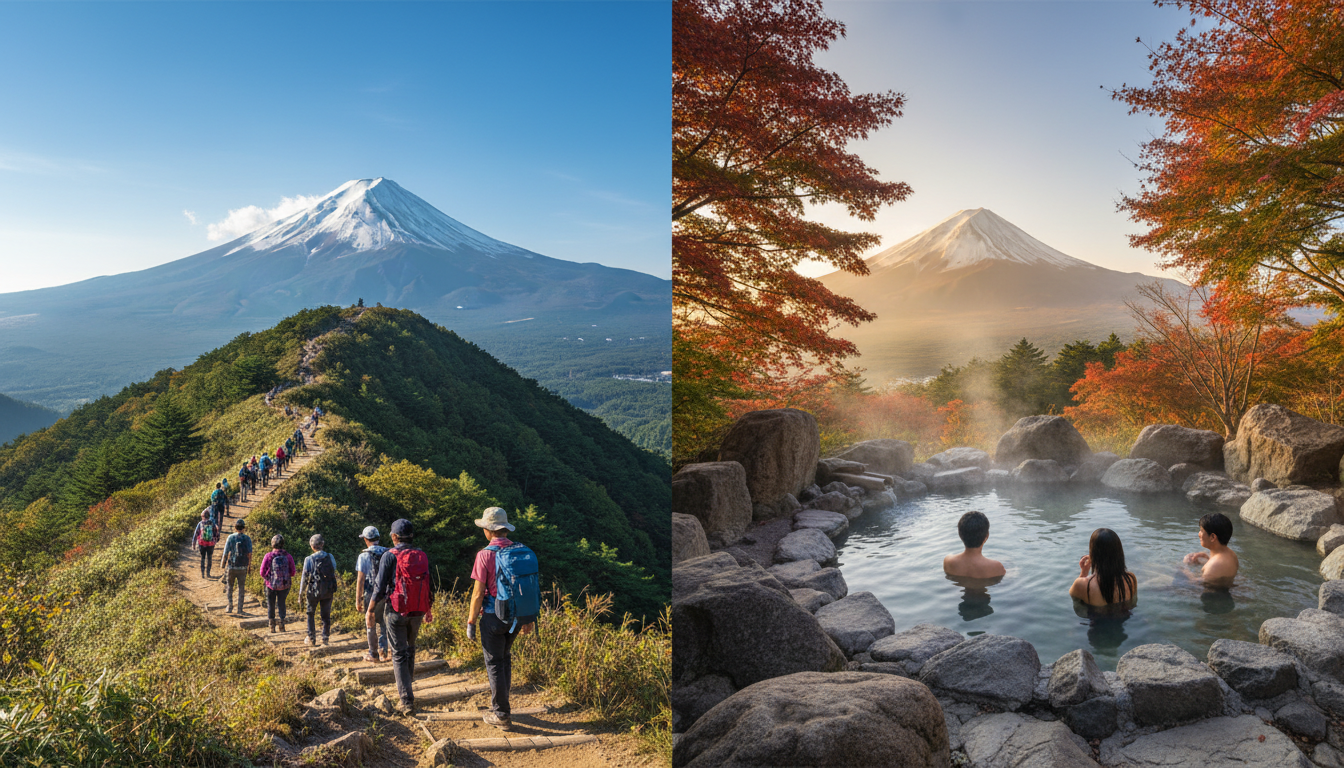
Yamanashi two-day itinerary for hiking, onsen, strawberries and Mount Fuji views
Practical Yamanashi two-day itinerary from Tokyo with Shosenkyo Gorge hiking, Hottarakashi onsen, Ichikawa strawberry picking and Fujiyama Twin Terrace views.
This Yamanashi two-day itinerary lays out a compact, activity-focused route from Tokyo that combines a riverside gorge hike, an overnight ryokan stay, an onsen with Mount Fuji views, fruit picking and a high-elevation panorama at Fujiyama Twin Terrace.
The plan is aimed at travelers who want active outdoor time, accessible local food and iconic vistas without the crowds of Japan’s better known tourist corridors.
The following guide provides timings, transport options, estimated costs and practical tips to complete this loop in two days.
Day 1 Shosenkyo Gorge and approach
Shosenkyo Gorge is the anchor for the first day and is best reached early to avoid afternoon visitors.
From central Tokyo the drive typically takes about two to two and a half hours depending on traffic, while the JR Chuo Line Limited Express reaches Kofu in roughly ninety minutes followed by a local bus to the Shosenkyo entrance.
Arriving midmorning gives time for the main gorge hike, a visit to the ropeway area and a relaxed descent with stops at riverside shops and viewpoints.
Facilities at the trailhead include municipal parking, public toilets and small food stalls that open from late morning during peak seasons.
Shosenkyo Gorge hike route and highlights
The main walk through Shosenkyo follows a mostly paved riverside trail that rises and falls with frequent viewing platforms.
Expect a route time of around four hours for a moderate pace that includes stops for photos and a short visit to Senga Falls.
The trail passes through forested sections, basalt cliffs and a few small shops near the top area where light meals and souvenirs are available.
Hikers who prefer to avoid the return descent can take the ropeway down from the upper station, while craft workshops near the ropeway offer short glass making experiences from about two thousand yen.
Evening ryokan and dining near Yamanashi Station
After the hike most travelers head toward the Yamanashi Station area for an overnight stay and a warm bath.
Local hotels and ryokan offer a range of options from simple business-style rooms with sento facilities to full board ryokan plans that include multi-course dinners.
A popular midrange option in the area lists rooms with breakfast for about eleven thousand yen and on-site bathing that helps recover tired muscles after an active day.
Dining choices near the station include casual Japanese inns and family-run restaurants serving regional dishes and hearty Western-influenced plates such as hamburg steak.
Day 2 Hottarakashi Onsen and morning logistics
The second day begins with a visit to Hottarakashi Onsen, a hilltop onsen known for outdoor baths that look out toward Mount Fuji when visibility is good.
Entry fees are typically modest and the facility includes several open-air pools and indoor bathing areas; visitors should plan to bring a towel or purchase one at the entrance.
Because Hottarakashi sits on higher ground, it is difficult to access without private transport and either a car or taxi will greatly simplify timing and transfers.
After the onsen, nearby food stalls and light snack vendors provide a place to linger and take in sweeping valley views.
Ichikawa strawberry picking and seasonal considerations
Fruit picking is a common regional activity and Ichikawa Berry House is representative of local operations that offer short all-you-can-eat sessions.
Typical sessions last around thirty minutes and cost in the range of two to two and a half thousand yen, with condensed milk often provided for dipping.
Varieties change by season so visitors should confirm availability in advance and book weekend time slots during high season to avoid disappointment.
Most berry farms are easiest reached by car; those relying on public transport should reserve a taxi or plan additional time for transfers.
Fujiyama Twin Terrace access and viewpoint options
The final major stop on the itinerary is Fujiyama Twin Terrace, a hilltop terrace that provides a panoramic view of Mount Fuji and the surrounding lakes.
By car the drive from the Yamanashi Station area is generally about ninety minutes, while those using public transit can take the JR Chuo Line to a nearby station and continue by taxi or shuttle.
During the main visiting months a shuttle runs from a base point to the terrace for a round trip fee of approximately eighteen hundred yen, otherwise the route requires a moderate uphill hike from the shuttle stop.
At the terrace visitors will find benches, viewing platforms and space to sit and take photographs without the crush common at more famous Fuji viewpoints.
Transport choices parking and timing
Renting a car transforms this itinerary and significantly reduces transfer times between dispersed sites.
Driving provides flexibility for morning starts and late departures and is the most direct way to link Shosenkyo, Hottarakashi Onsen and the strawberry farms.
For those who prefer public transport the JR Chuo Line remains the spine of the route; plan for local buses, station-area taxis and longer walking sections, especially for hilltop destinations.
Parking at popular sites can fill during weekends so arriving early, parking legally and confirming shuttle schedules is essential.
Costs and booking recommendations
Planned costs for a two-day loop will vary by accommodation level and choice of transport but a basic estimate helps with budgeting.
Expect entry fees and activities to include a Hottarakashi onsen fee of under one thousand yen, a glass craft workshop from around two thousand yen, and strawberry picking sessions near two to two and a half thousand yen.
Fuel, tolls and a midrange hotel room will constitute the bulk of variable expenses, while shuttles or taxis to hilltop viewpoints should be considered optional but sometimes necessary.
Advance booking for ryokan rooms and farm picking slots is recommended during holiday periods and weekends.
Safety seasonal and accessibility notes
Hiking routes are generally straightforward but can be slippery when wet and conditions vary by season so wear appropriate footwear and carry water.
Visibility of Mount Fuji is weather dependent and clear views often occur early in the morning or after a cold front passes through the region.
Some onsen and facilities have limited operating hours outside peak months and shuttle services to terraces may run only from spring through autumn.
Travelers with mobility concerns should verify access at each site and consider car rental to avoid extended uphill walks and shuttle transfers.
This compact two-day Yamanashi itinerary combines active hiking, restorative bathing, seasonal fruit picking and multiple Mount Fuji viewpoints while remaining feasible from a Tokyo base.
By prioritizing an early start on day one, booking key accommodations or activities in advance and choosing the transport mode that fits your comfort level you can cover the highlights without rushing.
Whether you arrive by rental car or stitch the route together using trains and taxis, the mix of natural scenery, local food and quiet observation points makes Yamanashi a manageable and refreshing short escape from the city.
Plan for variable weather, check opening times and shuttle schedules before you depart, and allow a little extra time at each stop to savor the views and local hospitality.

