
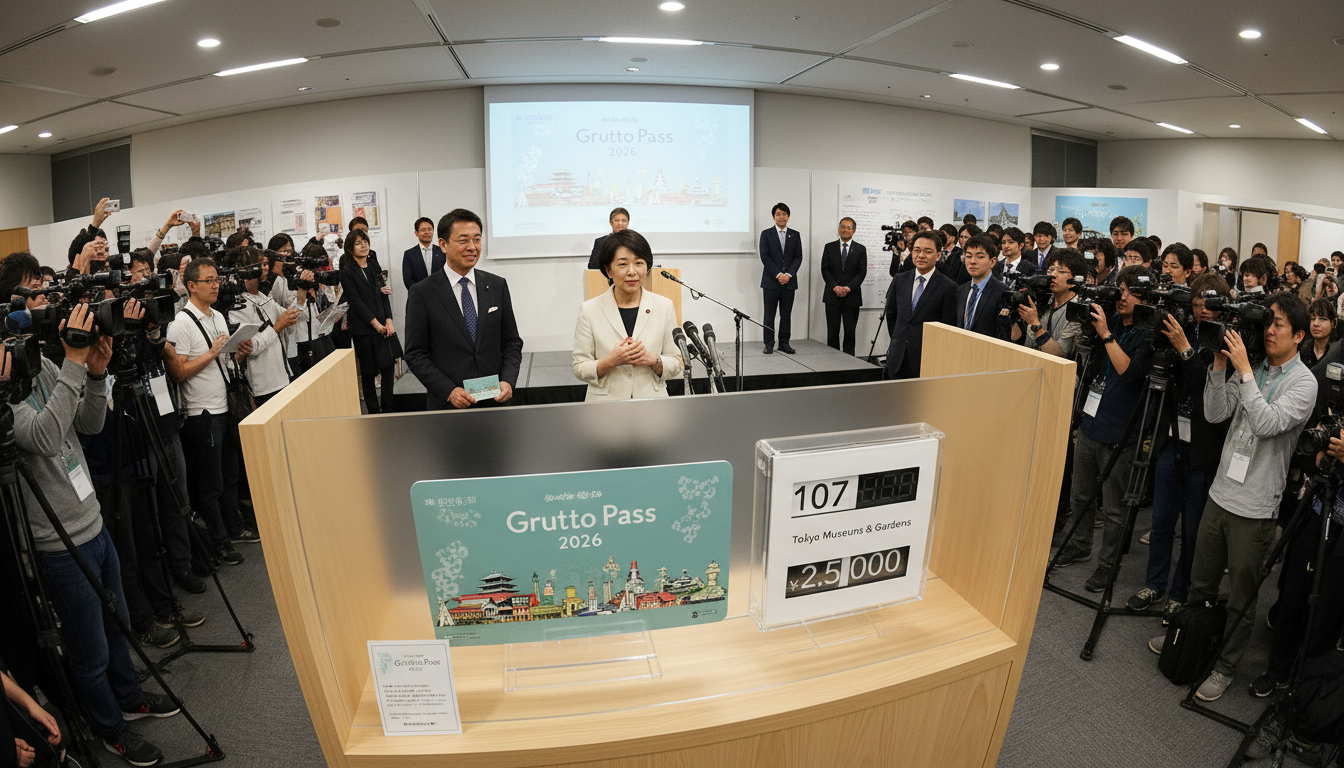
Grutto Pass 2026 opens two-month access to 107 Tokyo museums and gardens
Grutto Pass 2026 brings two months’ access to 107 Tokyo museums, gardens and zoos for ¥2,500, with free entry or discounts and practical tips for visitors.
Tokyo’s cultural access program Grutto Pass 2026 launches a two-month ticket giving holders entry or discounts at 107 museums, gardens, zoos and historic sites across the metropolis. The pass, on offer for ¥2,500, is marketed as delivering savings that can total as much as ¥50,000 for visitors who use it actively over the promotional period. Organizers say the scheme is meant to encourage exploration of under-visited institutions as well as to ease cost barriers for families, students and visitors to Tokyo.
Grutto Pass 2026 delivers admission or discounts at 107 sites
The central feature of Grutto Pass 2026 is bundled access to 107 participating venues across Tokyo’s 23 wards and surrounding areas. The campaign promises either free admission or discounts at each listed site, with the full package designed to cover museums, botanical gardens, municipal galleries, zoological parks and selected historic locations. Officials and organizers emphasize the breadth of the network, noting that the pass is intended to encourage longer, decentralized visits rather than single-day museum runs.
Participation ranges from small local museums to larger cultural institutions that operate on municipal or private models, creating an opportunity for visitors to mix major draws with neighborhood attractions. The pass is structured so that a few well-planned visits can deliver substantial value relative to the ¥2,500 purchase price. Organizers estimate cumulative savings of up to ¥50,000 depending on which venues and special exhibitions a visitor chooses to attend during the two-month window.
The program is timed to coincide with seasonal programming and exhibition rotations to make it appealing throughout the two months of validity. For visitors, that means the pass can be used both for headline exhibitions and for repeat visits to gardens, zoos and venues with frequently changing displays. The design reflects a push to keep Tokyo’s cultural calendar active and accessible across different demographics.
Price, validity and how the advertised savings work
At ¥2,500 the Grutto Pass 2026 is positioned as an affordable gateway to Tokyo’s cultural sites, particularly for repeat visitors and families. The stated savings figure — “up to ¥50,000” — is an aggregate maximum based on combining full-price admissions and discounts at multiple venues across the two-month period. In practice, the exact savings a holder realizes will depend on which sites they visit and whether they attend special paid exhibitions that still require a supplemental fee.
The pass is valid for a continuous two-month period linked to the promotional cycle; prospective buyers should confirm exact activation and expiry rules at the time of purchase. Terms typically specify whether the period begins on the date of purchase or on first use, and whether the pass is transferable, so checking the issuing body’s detailed terms is recommended before planning an itinerary. Organizers also advise checking whether the pass covers special exhibitions or only standard admissions, as some high-profile shows may require separate tickets.
Because the program bundles many sites under a single purchase price, it is most cost-effective for visitors who plan multiple visits or wish to explore several different neighborhoods. Occasional museumgoers who plan only one or two visits may find standard single-admission tickets more economical, while active cultural explorers and families are likely to extract the greatest value.
Participating venues and what the pass covers
The Grutto Pass network includes a wide range of cultural operators, from municipally run museums to privately managed galleries and public gardens. Participating venues are selected to offer a balanced mix of art, history, science, natural history, horticulture and wildlife attractions. That diversity is intended to attract residents and tourists with varying interests and to encourage cross-visitation between neighborhood institutions and larger city museums.
Because participants span many types of institutions, the pass can be used for day trips that combine indoor exhibitions with outdoor spaces such as botanical gardens and historical parks. Zoos and family-oriented facilities are included to broaden the appeal to households and school groups. Small local museums often gain increased exposure through the program, and administrative coordinators say the scheme is intended to drive foot traffic toward venues that might otherwise receive fewer visitors.
The precise list of participating venues and whether a given site offers free admission or a discount on the pass is published by the program operator and subject to change. Prospective buyers should consult the official participant list to confirm which museums and gardens are included during the promotional period and to see whether specific special exhibitions are covered.
How to buy the Grutto Pass 2026 and present it at venues
Buyers can typically purchase the Grutto Pass through official sales channels, including designated tourist information centers, participating venue ticket counters, and the program’s managed sales outlets. Some distribution points may also offer online purchase and digital delivery, while others issue a physical pass to be presented at entry. Shoppers are advised to confirm payment methods, points of sale, and whether reservations or timed-entry slots are required for particular venues.
When presenting the pass at a venue, holders should bring the pass itself along with a form of photo ID if requested, and be prepared for staff to scan or record pass usage. The pass may operate on a per-visit record basis, meaning that venues log entries to prevent repeated full-price claims; users should therefore keep their pass secure and accessible while moving between sites. If a digital pass option is available, confirm compatibility with venue ticket systems and whether an offline alternative is provided in case of connectivity issues.
Advance planning pays off when using the pass, especially for popular museums or garden events that limit daily admissions. Some venues reserve the right to restrict entry for large exhibitions, and holders may need to secure a timed ticket in addition to presenting the Grutto Pass. Checking each venue’s access rules and recommended arrival times will help users avoid disappointment, particularly on weekends and holidays.
Suggested itineraries and practical visitor tips
For travelers seeking to maximize value, a focused two-week or month-long schedule that targets different districts is often effective. One practical approach is a weekend museum circuit in one area followed by weekday visits to botanical gardens and smaller local museums when crowds are lighter. Combining outdoor sites such as gardens and historical parks with indoor galleries creates balanced days that are less weather-dependent and easier on families with children.
Take advantage of public transportation passes and route planning to reduce transit time between institutions and to increase the number of visits achievable within the two-month validity. Many museums cluster around hubs served by major train lines or subway stations, and grouping nearby venues into a single day reduces commuting costs and fatigue. For families, prioritize early-morning visits to zoos or hands-on science centers before mid-afternoon crowds arrive.
Keep an eye on seasonal events and rotating exhibitions when planning an itinerary, and allow for at least 90 minutes per medium-sized museum and two to three hours for major institutions or garden visits. Reserve extra time for special exhibitions that may require supplemental fees or timed-entry reservations. Finally, monitor opening hours and any temporary closures for maintenance or events to avoid wasted journeys.
Organizers’ goals and potential impact on Tokyo’s cultural scene
Organizers of the Grutto Pass 2026 campaign say the program aims to broaden access to cultural resources and to distribute visitor flow more evenly across the city. By reducing the cost barrier to entry and presenting a menu of varied institutions, the initiative seeks to encourage repeat visits and foster longer-term engagement with museums and gardens. For smaller museums and neighborhood galleries, inclusion in the program can produce a valuable uplift in visibility and attendance.
The pass may also influence programming decisions at participating venues, as institutions adapt to an influx of pass holders by extending opening hours or tailoring family-friendly activities. Municipal cultural bodies have highlighted the role such schemes can play in cultural education by making regular museum visits more affordable for students and low-income households. At the same time, venue managers caution that increased foot traffic requires careful visitor-flow management and potential operational adjustments to preserve collections and visitor experience.
For the city’s tourism sector, the Grutto Pass can be an attractive add-on for travelers who value cultural exploration and want to experience a wider spread of Tokyo’s arts and heritage beyond the headline museums. Local businesses near participating sites also stand to benefit from increased visitation, contributing to a broader economic ripple effect in neighborhoods outside the central tourist corridors.
Grutto Pass 2026 offers an affordable way to explore Tokyo’s wide cultural landscape while delivering potential savings for active visitors and families. Prospective purchasers should review the official participant list, confirm terms of validity and any reservation requirements, and plan itineraries that group nearby venues to maximize value and convenience. With careful planning, the ¥2,500 pass can transform a two-month period into a season of discovery across Tokyo’s museums, gardens and historic sites.

