
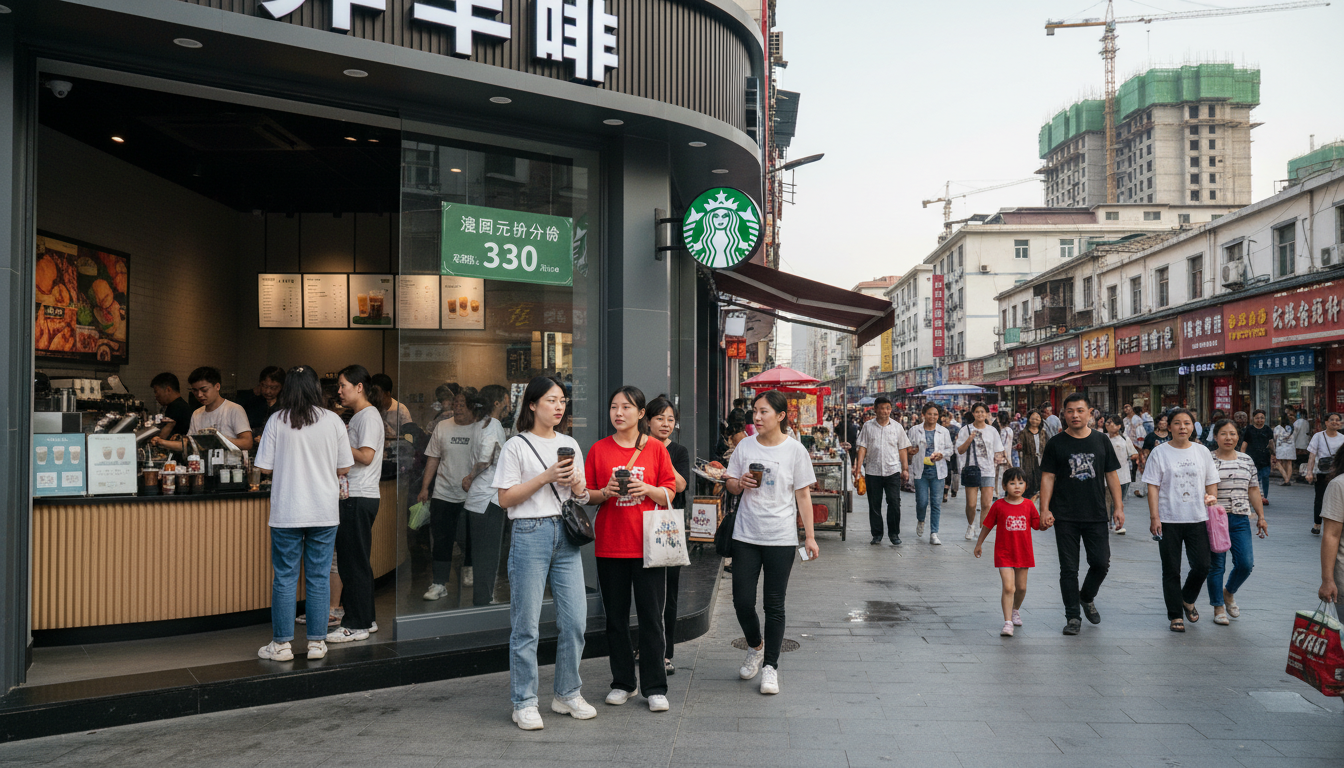
International coffee chains in China shift strategy to avoid 9.9 yuan price war
International coffee chains in China are adopting new store formats and expanding into less saturated cities to avoid a 9.9 yuan price war while protecting premium margins and jobs.
Foreign coffee chains adopt new store formats
International coffee chains in China are experimenting with smaller, hybrid and digitally integrated outlets to sustain margins amid intense local competition. These new formats range from kiosk-style counters in transit hubs to lounge-focused stores that emphasise atmosphere and food pairings. The aim is to reduce operating costs and cater to different customer occasions without engaging in the low-price promotions that have proliferated across the market.
Executives report that such formats allow brands to test products and localise offerings more quickly than full-size flagship stores. By tailoring size, service and menu to neighbourhood demand, foreign operators hope to preserve brand equity while reaching customers in new ways.
Aggressive 9.9 yuan pricing fuels local competition
A wave of local cafés and budget chains offering beverages for as little as 9.9 yuan has reshaped price expectations in many Chinese cities. That aggressive pricing has put pressure on established international players, whose average spend per customer can be substantially higher. For example, Peet’s Coffee has cited an average ticket around 50 yuan in China, highlighting the gap between premium and low-cost segments.
Industry observers say the 9.9 yuan phenomenon is driven by high-volume, low-margin operators leveraging local supply chains and heavy promotions. The result has been intense rivalry in major coastal cities and shopping districts, pushing some foreign brands to reassess their footprint and promotional tactics.
Premium positioning preserves higher average spend
Rather than match discount-led rivals, many international chains are doubling down on premium positioning and differentiated experiences. Menus are being expanded to include specialty brewing methods, seasonal beverages and food items that command higher margins. Stores emphasising craftsmanship, single-origin beans and bespoke service are marketed to consumers willing to pay above the low-price threshold.
This approach helps protect average transaction values while strengthening brand loyalty among urban professionals and expatriates. At the same time, companies are investing in staff training and store design to justify higher prices and maintain consistency across locations.
Expansion targets lower-tier and inland cities
To escape the fiercest price battles concentrated in first-tier coastal cities, several international coffee chains are moving into China’s lower-tier and inland urban markets. These cities often have fewer specialty coffee options and less saturated retail environments, offering opportunities to build presence with less promotional pressure. Companies view such markets as strategic for long-term growth and brand cultivation.
Local market entry typically begins with compact outlets in shopping centres or mixed-use developments, followed by larger flagship stores if demand proves sustainable. This geographic diversification reduces direct competition with low-price local chains in metropolitan cores and spreads operational risk across a broader set of consumer profiles.
Partnerships and supply-chain tweaks cut costs
To maintain profitability without resorting to steep discounts, foreign brands are pursuing joint ventures, franchise deals and supply-chain optimisation in China. Collaborations with domestic partners provide local market know-how and lower entry costs, while regional sourcing and centralised logistics help curb expenses. These measures are intended to improve unit economics even as retailers prioritise service and quality.
Some operators are also using digital platforms for targeted promotions and loyalty programmes rather than broad price cuts. By leveraging data from mobile apps and delivery partners, brands aim to drive repeat visits and increase basket sizes through personalised offers that do not erode perceived value.
Analysts weigh the long-term impacts on sector
Market analysts say the current environment will separate players that can sustain a premium proposition from those that rely on price-led volume. While the proliferation of 9.9 yuan stores has expanded coffee consumption among price-sensitive segments, it has also compressed margins across the industry. Observers expect consolidation, strategic alliances and greater segmentation as companies adapt to local realities.
Regulatory shifts and changing consumer tastes could further influence outcomes, analysts add. If consumer preferences tilt toward convenience and value, low-cost operators may retain advantage; if demand for quality and experience strengthens, premium chains could reclaim market share.
China’s coffee market still presents growth potential despite the turbulence, with rising urbanisation and evolving lifestyle trends driving overall demand. International brands that blend scaled operational efficiency with locally resonant offering stand the best chance of long-term success.
The competitive pressures reshaping the market have forced a rethink of expansion playbooks, with many global names choosing to prioritise sustainable margins and differentiated experiences over headline-grabbing discounts.

