
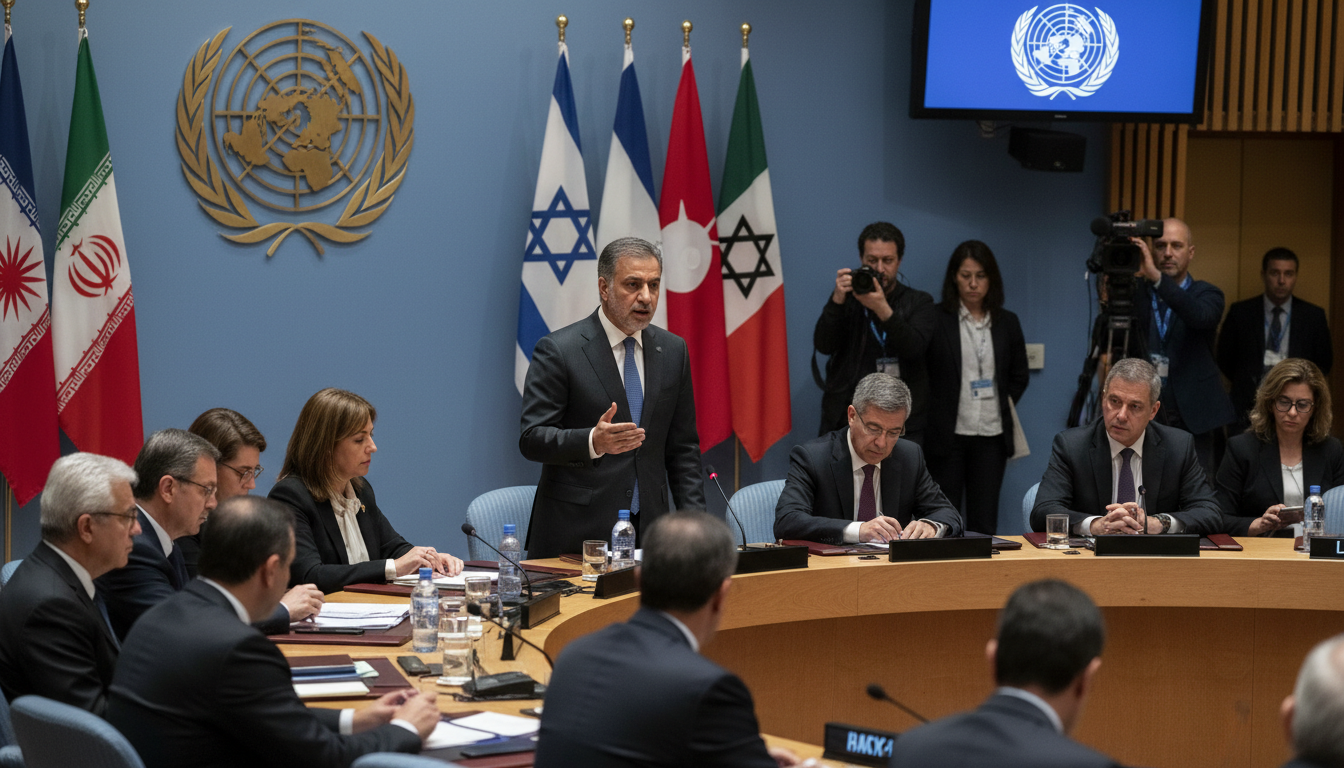
Iran urges UN Security Council to compel Israel to uphold ceasefire in Lebanon
Iran’s UN envoy calls on the Security Council to act decisively to enforce a ceasefire in Lebanon and halt attacks on civilians.
Iran’s ambassador to the United Nations, Amir-Saeid Iravani, on Tuesday urged the United Nations Security Council to “act decisively to compel Israel to fully uphold the ceasefire in Lebanon,” pressing member states to take concrete measures to protect civilians and infrastructure. The demand, delivered in New York, called for an immediate halt to attacks on non-combatants and for Israeli forces to withdraw from Lebanese territory, framing the issue as an urgent matter of international peace and security. The ambassador also broadened his critique to include alleged operations by Israel in Gaza, the occupied West Bank and the Golan Heights, and criticized what he described as hostile actions by the United States and Israel against Iran.
Iran’s call to the Security Council
Iravani addressed the Security Council directly, arguing that existing commitments to a ceasefire were not being respected and that the council had a responsibility to enforce them. He urged council members to adopt measures that would compel Israel to cease hostilities and to ensure accountability for attacks on civilian infrastructure. The ambassador framed the appeal as consistent with the council’s mandate to maintain international peace, stressing the humanitarian consequences of continued military activity along the Lebanon border.
Iravani’s remarks repeated Tehran’s position that the Security Council must move beyond statements of concern and toward binding action. He emphasized that failure to act would amount to tacit acceptance of civilian casualties and damage to critical services. The call signals Iran’s intent to use multilateral forums to pressure for an immediate change in conduct on the ground.
Demand for withdrawal from Lebanese territory
A central element of Iravani’s statement was a demand that Israeli forces withdraw from what Iran described as “occupied” areas in Lebanon. He urged the council to ensure an immediate pullback of troops and the cessation of operations that risk further escalation. The ambassador cited attacks on civilian infrastructure as evidence that deterrence and de-escalation mechanisms have not been effective.
The withdrawal demand echoes long-standing regional tensions and follows a pattern of appeals for respect of sovereignty and territorial integrity. While Israel has repeatedly framed its actions as security measures against cross-border threats, Iran and several other states argue that the scale and targets of operations violate international norms. The dispute underscores the difficulty the Security Council faces in reconciling competing security narratives.
Accusations against the United States and Israel
In his address, Iravani criticized both the United States and Israel for what he described as hostile policies and actions directed at Iran. He accused the two countries of contributing to regional instability through direct and indirect measures, and he urged the international community to recognize and respond to these actions. The comments linked broader geopolitical tensions to the immediate crisis along the Israel-Lebanon frontier.
Iran’s critique reflects wider diplomatic friction between Tehran and Washington, and between Iran and Israel, that has intensified in recent years. By highlighting US involvement, Iravani sought to frame the situation as not only bilateral but influenced by external strategic choices, thereby pressing the Security Council to consider the wider context when debating responses.
Condemnation of operations in Gaza, the West Bank and the Golan Heights
Iravani extended his condemnation to Israeli operations in Gaza, the occupied West Bank and the Golan Heights, describing those actions as violations requiring an international response. He argued that a pattern of military operations across multiple fronts demonstrates a systemic disregard for civilian protection obligations. The ambassador called on the Security Council to address what Iran sees as interconnected crises rather than treating each incident in isolation.
Observers note that raising multiple theaters at the council can be a diplomatic strategy to broaden pressure and invoke international law across several conflicts. Members sympathetic to Palestinian concerns and states critical of occupation policies are likely to respond to such framing, while others may resist linking separate issues in a single council debate.
Potential Security Council responses and legal questions
Iravani’s appeal places the Security Council at a crossroads between issuing condemnatory statements and pursuing enforceable measures such as resolutions with binding language or sanctions. Any council action will depend on the votes and positions of permanent members, who hold veto power over substantive decisions. The legal basis for compelling a withdrawal or imposing accountability measures would rest on determinations about violations of international humanitarian law and Security Council precedents.
Diplomats say that the council’s next steps could range from calling for immediate humanitarian pauses and deploying fact-finding mechanisms to more robust measures that carry enforcement implications. The political realities of the council, however, mean that translating calls for action into binding measures requires negotiation and compromise among members with divergent strategic interests.
The unfolding diplomatic exchanges are likely to include further statements from regional actors, consultations among council members, and potential referral to relevant UN bodies for investigation. How quickly and effectively the Security Council responds will influence the on-the-ground trajectory of violence and the prospects for civilian protection.
Iran’s public appeal to the Security Council seeks to place renewed international attention on the situation in Lebanon and on broader regional dynamics. Whether the council moves toward binding action or issues a written condemnation will depend on diplomatic bargaining in the coming days. The immediate emphasis from Tehran was clear: an end to attacks on civilians and a withdrawal of occupying forces remain essential to any credible ceasefire in Lebanon.

