
China Halts Robotaxi Licenses After Baidu Fleet Outage in Wuhan
China suspends issuance of new robotaxi licenses after a March outage that left about 200 driverless vehicles stranded in Wuhan, raising safety and regulatory concerns.
Government Suspends New Robotaxi Licenses
Chinese regulators have suspended the issuance of new robotaxi licenses following a mass outage of an autonomous fleet in Wuhan in March.
People with direct knowledge of the matter said authorities paused approvals while investigators assess system reliability and oversight gaps.
The move represents a significant regulatory tightening for a sector that had been rapidly expanding across major Chinese cities.
Mass Outage in Wuhan Raises Safety Questions
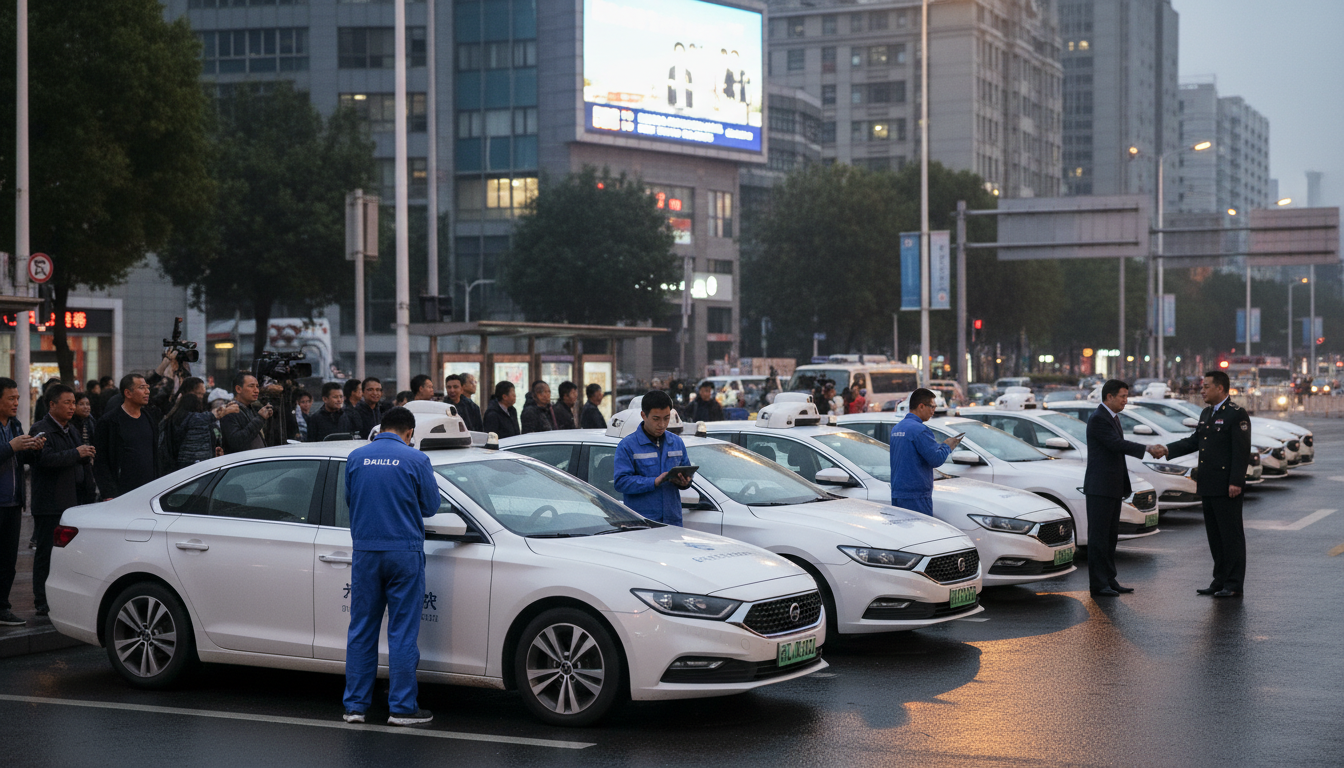
In March, roughly 200 robotaxis reportedly stopped operating simultaneously in Wuhan, drawing immediate scrutiny from transport authorities.
The stoppage disrupted services and prompted questions about fail-safe mechanisms and remote monitoring protocols for driverless vehicles.
Officials and industry observers said the incident exposed vulnerabilities in real-world operations that require regulator and operator attention.
Baidu Fleet and Apollo Go Platform Under Scrutiny
The affected vehicles were part of an autonomous ride-hailing service operated on a major Chinese technology company’s platform.
Company representatives have confirmed an operational disruption occurred, while officials are reviewing telemetry and incident logs to determine root causes.
Investigators are focusing on software integrity, communications links between vehicles and control centers, and the effectiveness of emergency fallback procedures.
Industry Reaction and Public Safety Concerns
Automotive suppliers, ride-hailing operators, and safety advocates reacted swiftly to the licensing halt, calling for clearer technical standards and independent audits.
Some firms slowed expansion plans and initiated internal safety reviews, citing the need to reassure regulators and passengers.
Public confidence in autonomous services could be affected unless operators and authorities demonstrate transparent corrective measures.
Regulatory Uncertainty Clouds Expansion Plans
The suspension of new robotaxi licenses creates immediate uncertainty for companies that had planned pilot programs and city rollouts.
Municipal transport departments and central regulators are expected to develop stricter criteria for approvals, including enhanced reliability benchmarks and incident reporting requirements.
Observers say the pause may delay broader commercialization timelines and force a re-evaluation of risk management practices across the sector.
Economic and Market Consequences
Investors and supply-chain partners are reassessing near-term prospects for driverless ride-hailing, with potential impacts on funding, partnerships, and procurement decisions.
Smaller autonomous vehicle startups may face financing pressure if licensing windows remain closed, while larger firms could absorb short-term setbacks through diversified business lines.
Longer term, regulatory clarity and demonstrated operational safety would be needed to restore momentum and justify continued investment.
Comparisons with Global Autonomous Vehicle Oversight
Regulators worldwide have taken varied approaches to supervising robotaxi deployments, balancing innovation with public safety considerations.
China’s pause mirrors similar interventions elsewhere where authorities have stepped in after high-profile incidents or technical failures.
Analysts say harmonizing operational standards and creating transparent investigation processes would help align industry practices with international safety expectations.
Autonomous ride-hailing companies and municipal authorities now face a critical period to demonstrate that robotaxi services can operate reliably in complex urban environments.
Restoring regulatory confidence will likely require detailed technical assessments, mandatory upgrades, and clearer accountability for both software providers and fleet operators.
Until authorities reopen the licensing channel, the future pace of robotaxi deployment in China will depend on the outcomes of ongoing investigations and on the sector’s ability to meet tightened safety thresholds.

