
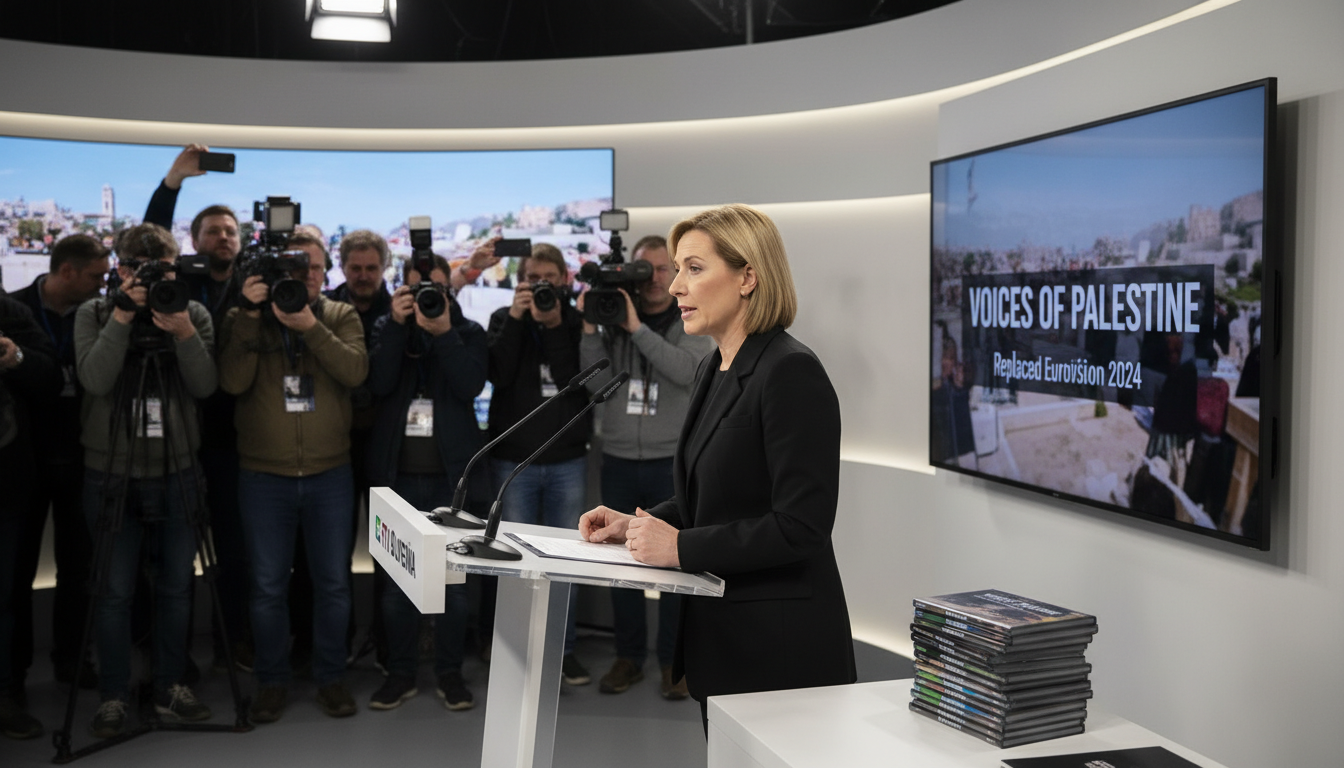
RTV Slovenia to Boycott Eurovision Broadcast, Replacing It with ‘Voices of Palestine’ Series
RTV Slovenia Eurovision boycott: the public broadcaster announced it will not air this year’s Eurovision Song Contest after organisers confirmed Israel’s participation, and said it will instead screen a series titled “Voices of Palestine.”
The decision, reported by TRT and relayed to The Associated Press, places Slovenia alongside several other European broadcasters that have withdrawn coverage in protest.
Broadcaster director Ksenija Horvat told reporters the channel had opted for alternative programming rather than transmit the contest.
RTV Slovenia Announces Broadcast Decision
RTV Slovenia’s director Ksenija Horvat informed The Associated Press that the broadcaster will not carry the contest and will replace the scheduled transmission with a film series.
The move follows earlier statements from the channel indicating opposition to the contest’s participant list, and the announcement has been framed by the broadcaster as a programming and editorial choice.
Organisers’ December Ruling Cited as Cause
Organisers decided in December to allow Israel to compete, a ruling that several national broadcasters said prompted their withdrawals from coverage.
That December decision has become the focal point for broadcasters and activists who argue that the participation presents ethical and political concerns they say cannot be separated from the contest.
Other European Broadcasters Withdrawing Coverage
Slovenia has joined Iceland, Ireland, the Netherlands and Spain in refusing to broadcast the contest after the organisers’ confirmation of Israel’s entry.
Those withdrawals represent a notable shift for a competition that normally relies on wide national coverage across Europe to reach its audience and to maintain advertising and sponsorship revenues.
Programming Shift to ‘Voices of Palestine’
RTV Slovenia said it will air a film series titled “Voices of Palestine” in place of Eurovision, describing the package as material that spotlights Palestinian perspectives.
The broadcaster framed the replacement programming as a way to offer viewers documentary and cultural content it views as relevant to ongoing debates about the contest’s participant list.
Potential Impact on Viewership and Sponsorship
The absence of several national broadcasters may reduce television ratings in affected markets and could complicate advertising commitments for broadcasters that typically cross-promote Eurovision.
Organisers rely on national transmission agreements to deliver sponsorship value and to ensure the contest’s pan-European reach, so multiple withdrawals raise questions about commercial and audience implications.
Political Debate and Cultural Ramifications
The withdrawals have intensified a long-running debate about the intersection of cultural events and geopolitics, with commentators and stakeholders divided over whether art should be insulated from state actions.
Supporters of the boycotts argue national broadcasters are exercising editorial independence in response to a political stance, while opponents warn that politicising the event risks undermining the contest’s mission as a unifying cultural exchange.
Developments remain fluid as broadcasters and organisers weigh legal, contractual and reputational considerations, and as audiences adjust to changing broadcast schedules.
Observers say further statements from national broadcasters, contest organisers and cultural bodies are likely as the event approaches and as the broader public debate continues to evolve.

