
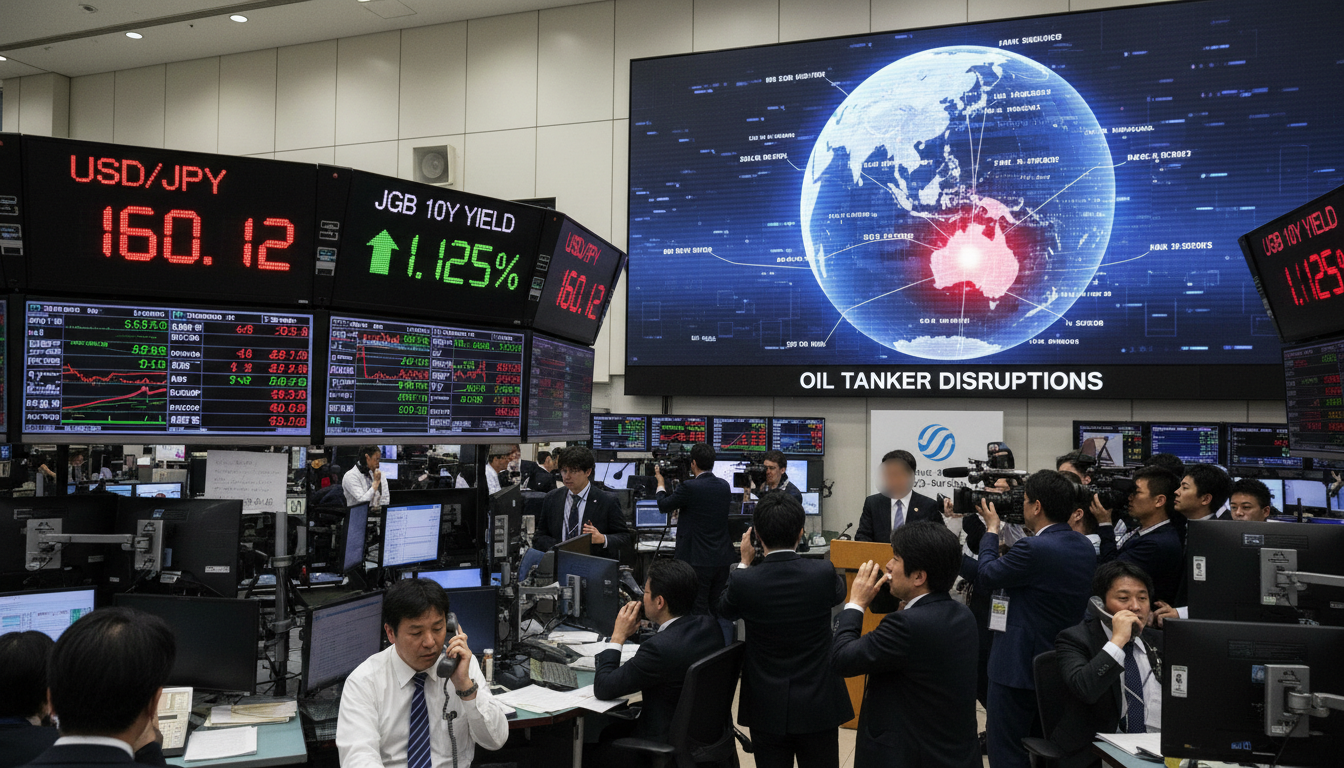
Yen Weakens Past 160 as Hormuz Blockade Sends Oil Prices and Inflation Fears Higher
Yen falls past 160 to the dollar as Hormuz blockade pushes oil prices up, JGB yields surge to 2.5% and pressure mounts on the Bank of Japan’s policy stance.
TOKYO — The yen weakened past the psychologically significant threshold of 160 to the U.S. dollar, a move investors tied on April 29–30, 2026 to a worsening energy shock after a blockade in the Strait of Hormuz pushed oil prices higher. Market data showed the currency slid to about 160.48 in New York trading while long-term Japanese government bond yields jumped to roughly 2.5%, amplifying concerns that imported energy costs will stoke inflation and complicate central bank policy.
Currency Move and Market Signals
The yen’s fall through 160 was sharp and swift, reflecting a risk-off reaction to supply disruptions in key oil shipping routes. Traders said the move was accompanied by increased demand for the dollar and a sell-off in Japanese government bonds, which drove long-term yields higher.
The immediate market response underscored how geopolitical shocks can rapidly transmit to currency and bond markets in an economy heavily dependent on energy imports. The combination of a weaker currency and higher yields tightened financial conditions for Japan.
JGB Yields Climb on Inflation Worries
Japanese government bond yields climbed to around 2.5% as investors priced in a higher inflation trajectory driven by rising energy costs. The move in yields reversed some of the ultra-low yield environment that had prevailed under the Bank of Japan’s longer-standing easing policies.
Rising yields increase borrowing costs for the government and private borrowers, and they alter the valuation of financial assets across institutional portfolios. Market participants flagged the move as a signal that expectations for future inflation and interest rates are shifting.
Household and Business Impact in Japan
A weaker yen raises the domestic cost of imported fuel, liquefied natural gas, and crude oil, a direct channel through which global tensions feed into Japanese inflation. For consumers, that risk translates into higher fuel and utility bills, adding pressure to already stretched household budgets.
Manufacturers and trading companies face a mixed picture: exporters benefit from a weaker yen through improved foreign-currency revenue, while firms reliant on imported raw materials and energy confront squeezed margins. The net impact will vary across sectors, but analysts warned that an extended period of higher energy costs would weigh on real incomes.
Policy Dilemma for the Bank of Japan
The combination of a depreciating currency and rising inflation expectations has intensified scrutiny of the Bank of Japan’s policy stance. Officials face the dilemma of supporting growth while preventing inflation from embedding into wage and price-setting behavior.
Any move toward tighter policy would represent a departure from years of ultra-loose monetary settings and could further lift yields, but inaction risks allowing imported inflation to become entrenched. Policymakers must balance those trade-offs amid volatile global commodity markets.
Speculation on Foreign Exchange Intervention
Speculation over possible market intervention to support the yen increased as the currency crossed the 160 line, a level often viewed by officials and market watchers as psychologically important. Past episodes show that authorities sometimes step into foreign exchange markets to curb disorderly moves.
Officials have limited tools and face the risk that intervention without accompanying policy adjustments may provide only temporary relief. Market sources noted that any intervention would be closely watched for signs of a coordinated or unilateral response.
Investor Positioning and Risk Sentiment
Investors adjusted exposures across equities, bonds, and currencies as uncertainty rose. Equities sensitive to energy costs and household spending saw increases in perceived downside risk, while exporters saw relative relief from currency translation gains.
Fixed-income investors reevaluated duration and credit positions as yields moved higher, prompting flows into short-dated securities and higher-yielding assets. The rapid repricing reflected a reassessment of how long the energy shock could persist and its transmission into core inflation.
Outlook for Markets and Policy Monitoring
Market participants said the trajectory of oil shipments through the Strait of Hormuz and any escalation of conflict in the Middle East will be key variables for the coming weeks. A prolonged impairment of supply would put additional upward pressure on global energy prices and on Japan’s import bill.
Policymakers and investors alike will watch upcoming economic data, corporate earnings, and any official communications from the Bank of Japan and the Ministry of Finance for clues about potential intervention or shifts in monetary settings. Volatility is likely to remain elevated until the energy supply picture clarifies.
The yen’s breach of 160 and the rise in JGB yields underline how external shocks can rapidly reshape Japan’s financial landscape, forcing a reassessment of policy priorities and corporate strategies in the weeks ahead.

