
Japan and Australia to fast-track six critical minerals projects to diversify supply chains
Japan and Australia will fast-track six critical minerals projects, including rare earths and nickel, to diversify supply chains and strengthen battery and high-tech supply capacity.
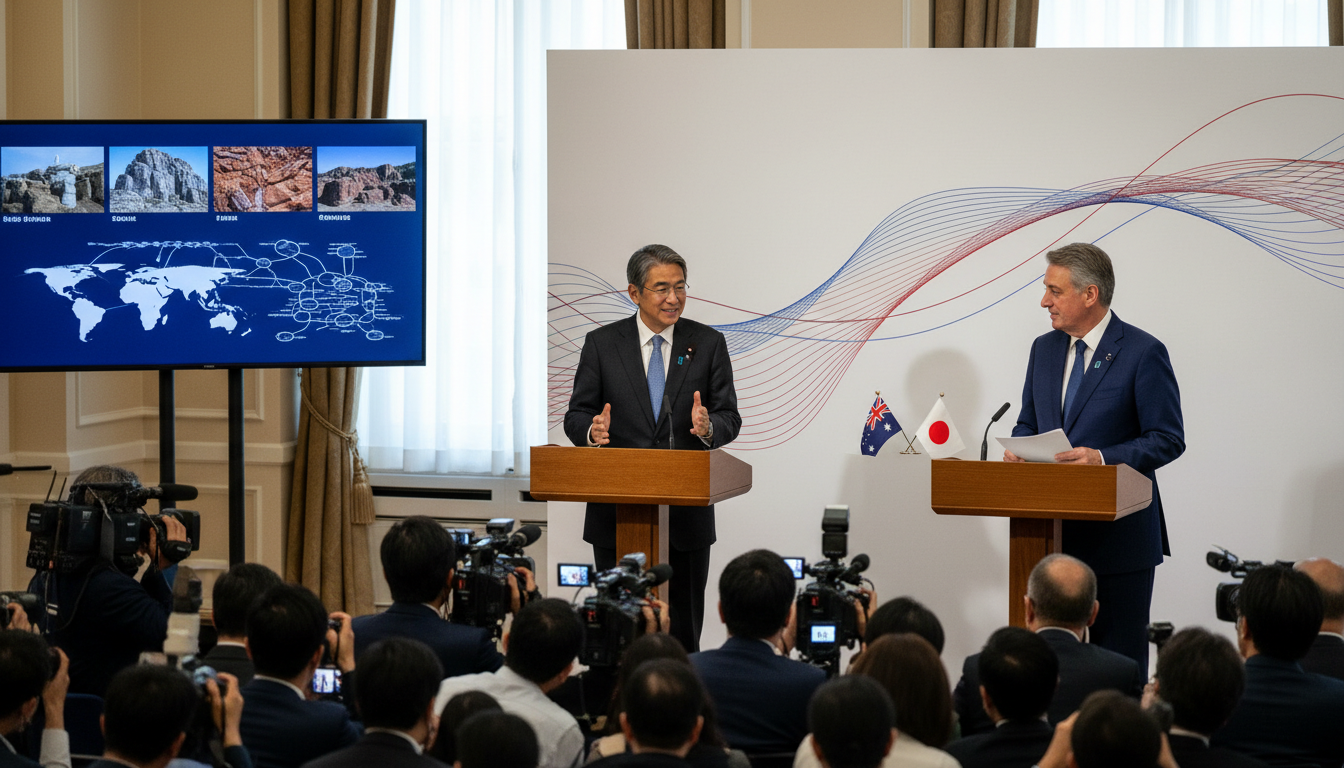
Japan and Australia will expedite development of six critical minerals projects, officials said, stepping up cooperation to reduce reliance on any single supplier. The projects, focused on rare earths, nickel and associated processing, will be prioritized for quicker permitting, financing and joint investment. A joint statement is expected during Industry Minister Sanae Takaichi’s visit to Australia in the first half of May 2026, signaling closer strategic coordination between the two governments.
Projects identified and priorities clarified
The two governments have identified six projects that span mining, processing and preliminary refining of critical minerals. Emphasis will be placed on rare earth elements and nickel, materials central to electric vehicles, batteries and advanced electronics. Officials said priority measures include streamlined regulatory reviews, coordinated financing and support for domestic processing capacity. The accelerated approach aims to shorten lead times from discovery to marketable supply.
Joint statement to be issued during ministerial visit
A formal joint statement is expected to be released while Industry Minister Sanae Takaichi is in Australia, where she will meet senior Australian officials and industry representatives. The communiqué will outline specific steps for joint procurement, investment incentives and technical cooperation. Ministers are preparing to announce mechanisms to link Japanese demand with Australian project output, including offtake agreements and government-backed financing. The timing and precise contents of the statement will reflect ongoing negotiations between public and private stakeholders.
Supply-chain diversification from China as a policy driver
Diversifying supply chains away from China is a stated motivation behind the accelerated program, reflecting broader regional efforts to reduce concentration in critical inputs. Both Tokyo and Canberra have said that resilient supply chains are essential to safeguard manufacturing for semiconductors, batteries, and defence-related technologies. By developing alternative sources and processing hubs, the partners aim to mitigate risks from geopolitical disruptions and market shocks. The initiative aligns with recent policy moves across the Indo-Pacific to build more distributed, secure supply networks.
Industry implications for batteries and automotive sectors
Faster deployment of rare earth and nickel supplies could have direct effects on electric-vehicle and battery supply chains in Japan. Japanese automakers and battery manufacturers have long sought secure access to these materials to support EV scaling and domestic production targets. Securing upstream feedstock and expanding local or allied processing capacity can reduce cost volatility and supply insecurity for manufacturers. Australian miners and processors stand to gain from long-term offtake deals and investment commitments tied to the expedited projects.
Financing, permits and public-private coordination
Officials say the push will combine government facilitation with private capital, using targeted incentives to attract investment in processing and refining capacity. Measures under discussion include faster environmental and land-use permitting, export-credit arrangements, and public co-investment where strategic need is clear. Both governments intend to engage financial institutions and industry groups to structure deals that balance commercial viability with strategic objectives. Close coordination will be required to reconcile timetables for permitting, construction and commissioning across jurisdictions.
Regional geopolitical and economic context
The push to accelerate critical minerals projects comes amid heightened global competition for technology metals and renewed focus on supply-chain security. For Japan, securing diversified inputs supports industrial policy and national resilience. For Australia, the effort reinforces its role as a key supplier of raw materials while expanding downstream processing activities. The initiative may also influence broader regional partnerships, as other countries seek to build complementary supply links and manufacturing clusters. Observers note that operationalizing these projects will test how quickly policy coordination can translate into tangible capacity.
Officials caution that while fast-tracking can reduce some delays, the timeline to meaningful production and processing remains subject to technical, environmental and market constraints. Building new refining and separation capacity, in particular, requires specialized skills, capital and time. Nonetheless, the announced prioritization marks a concrete step by two partners to align policy and industry action on critical minerals supply.
The coming joint statement and subsequent implementation steps will be watched closely by manufacturers and investors across the region as a barometer of how governments and industry will manage the transition toward more secure, diversified supply chains for critical minerals.

