
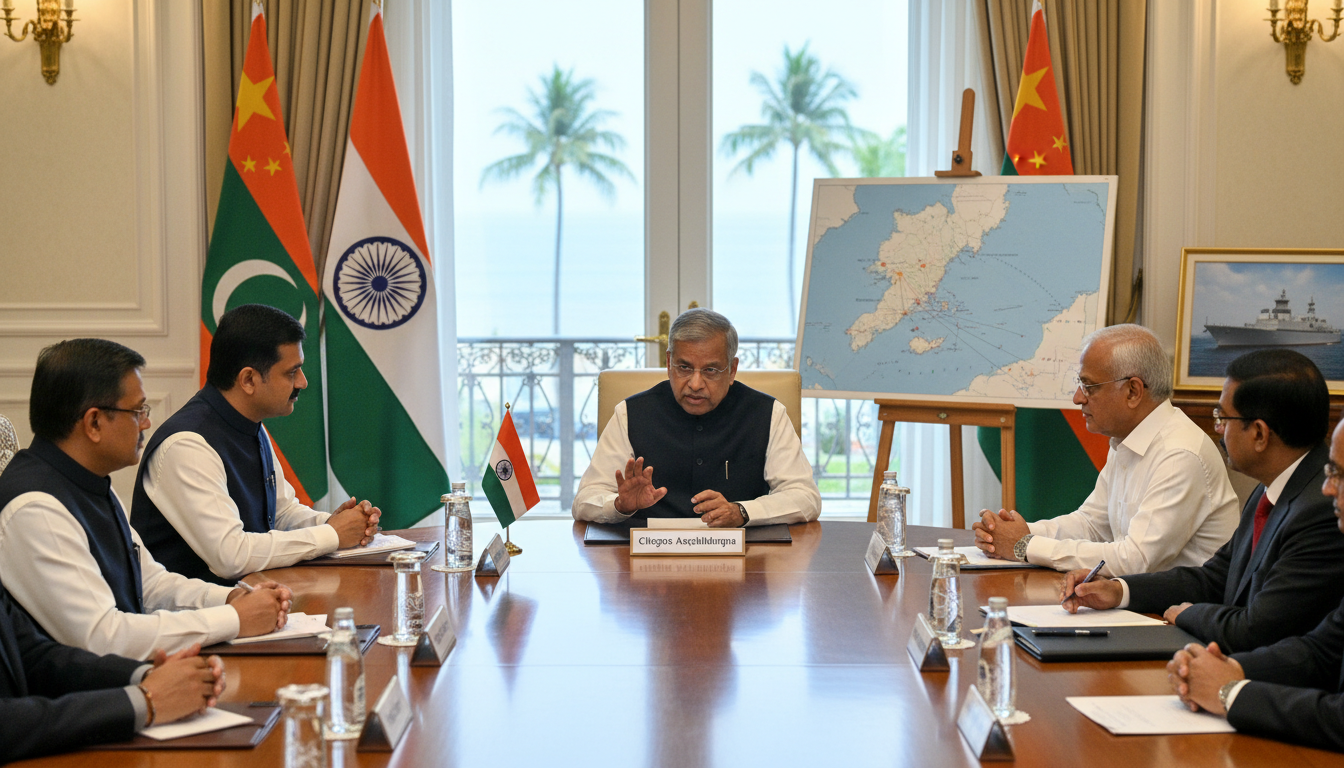
Chagos Archipelago dispute deepens as Maldives and Mauritius sever diplomatic ties
Maldives and Mauritius cut ties over the Chagos Archipelago dispute, triggering regional tensions and Indian strategic concerns as UK–US plans for Diego Garcia stall.
The long-running Chagos Archipelago dispute has escalated into a rare diplomatic rupture in the central Indian Ocean after Mauritius announced on 27 February 2026 that it had suspended diplomatic relations with the Maldives. The move followed Malé’s formal rejection of a UK–Mauritius agreement to transfer sovereignty over the islands and has turned a legal and historical contest into a political crisis for the region. (atolltimes.mv)
Mauritius suspends ties with the Maldives
Mauritius’ cabinet said it “took note” that the Maldives no longer recognises Mauritian sovereignty over the Chagos Archipelago and therefore decided to suspend all diplomatic relations with immediate effect. Port Louis framed the decision as a proportional response to what it described as Malé’s rejection of an internationally negotiated settlement. (atolltimes.mv)
The suspension marks an uncommon breakdown between two small island states whose maritime claims have been largely managed through regional forums and tribunals until now. Officials in Port Louis have warned that the dispute threatens longstanding regional cooperation on maritime security and fisheries management. (newswire.lk)
Maldives’ formal objections to the UK–Mauritius agreement
Maldivian President Mohamed Muizzu has repeatedly told parliament that his administration sent formal objections to the UK about the transfer of the Chagos Archipelago on 8 November 2024 and again in January 2026. Malé has argued that the deal undermines its maritime claims and that any change in sovereignty should not be effected without full regional consultation. (edition.mv)
The Maldivian government says its stance is grounded in concerns over maritime boundaries and the precedents the handover could set for neighbouring exclusive economic zone claims. Malé has indicated it remains open to diplomatic engagement but insists that recognition of sovereignty shifts must respect domestic law and established maritime dispute processes. (icwa.in)
British legal and political developments complicate the deal
A series of British legal rulings and on-the-ground actions by Chagossians have added fresh complexity to the political settlement. In March 2026 the British Indian Ocean Territory (BIOT) court issued judgments that questioned long-standing restrictions on Chagossian settlement, while activist landings on atolls such as Île du Coin prompted interim injunctions and legal challenges. These developments have made implementation of any transfer more legally fraught. (biot.gov.io)
Meanwhile London has put the parliamentary process to ratify the UK–Mauritius arrangement on hold amid concerns about securing formal U.S. assurances for the continued operation of the joint U.S.–UK military facility on Diego Garcia. The apparent withdrawal of U.S. political backing has forced a pause in Westminster and has inflamed debate in capitals across the Indian Ocean region. (wkzo.com)
India voices strategic concern over regional stability
New Delhi, which has long cultivated close ties with both the Maldives and Mauritius, has signalled anxiety that the bilateral rupture could be exploited by extra‑regional powers seeking footholds in the Indian Ocean. Indian analysts and policy institutes warned that the dispute risks opening diplomatic space for actors such as China to expand influence among island states. (thediplomat.com)
Official Indian statements have so far emphasised the need for stability and rules‑based resolution, reflecting New Delhi’s dual interest in preserving maritime security and maintaining strong ties with Mauritius. Observers note that any sustained estrangement between Port Louis and Malé will complicate India’s regional diplomacy, including forums for cooperative surveillance and disaster response. (pib.gov.in)
Regional and international reactions to the rupture
The diplomatic break has drawn swift comment beyond the islands themselves. Chagossian campaigners welcomed recent court decisions that they say vindicate their right to return, while Western capitals have been preoccupied with the operational future of Diego Garcia and the legal implications of transferring sovereignty. The controversy has become entangled with broader transatlantic politics, including public opposition from some U.S. quarters. (biot.gov.io)
Smaller Indian Ocean states and regional bodies are watching closely for spillover effects on fisheries, search-and-rescue cooperation, and maritime law enforcement. Analysts caution that if diplomatic channels remain frozen, practical cooperation on issues such as piracy, migration and climate resilience could be undermined at precisely the moment when collective responses are most needed. (eturbonews.com)
Diplomatic options and the path ahead
Diplomats in New Delhi, Port Louis and Malé say quiet talks remain possible, with mediators urging a return to legal and technical forums rather than public confrontation. Mauritius has signalled willingness to continue negotiations with the UK and is reported to have given London a limited window to resolve outstanding points before pressing its own legal options. (wkzo.com)
Legal challenges, tribunal referrals and further rounds of bilateral correspondence are likely as each side defends its claims at home and abroad. For India and other regional powers, the immediate priority will be to prevent strategic competition from widening while preserving the routines of maritime cooperation that underpin everyday security in the Indian Ocean. (icwa.in)
The Chagos Archipelago dispute has thus moved from courtroom and cabinet papers into a diplomatic crisis with real security consequences for the Indian Ocean littoral, leaving regional capitals to weigh legal claims against the practical imperative of keeping sea lanes and partnerships stable.

