
Tokyo Cherry Blossoms: 24 Best Hanami Spots, Night Views and Day Trips for 2026
Where to see Tokyo cherry blossoms in 2026: top parks, riverside tunnels, night illuminations and nearby day trips, with timing, transport and hanami tips.
Tokyo cherry blossoms are in full swing each spring, turning parks, riversides and garden paths into channels of pale pink and white that draw residents and visitors alike. This guide lists 24 top locations across the city and nearby day-trip destinations, with timing, access and practical hanami advice to help plan a successful outing during the 2026 season.
The list covers the nine most popular city sites — from Ueno Park to Meguro River — as well as quieter gardens, night illumination spots, and day-trip options like Kamakura and Mt. Takao. Expect clear, actionable details on when trees typically bloom, where to arrive early, and how to enjoy Tokyo cherry blossoms respectfully and safely.
Sakura Forecast and Timing for 2026
According to the Japan Meteorological Corporation (JMC), the principal Somei-yoshino cherry in Tokyo reached first bloom on March 19, 2026, with peak viewing near March 26, 2026. These dates apply to the most common variety and can shift locally by several days depending on temperature, wind and rain.
Different sakura varieties bloom on staggered schedules, so early- and late-blooming cultivars will extend viewing opportunities before and after the Somei-yoshino peak. Varieties to watch include early bloomers such as Kanzakura and Kawazu-zakura, and later varieties like Kanzan, Ukon and various yaezakura types that produce denser, layered petals.
Weather can compress or extend the display: a warm spell brings rapid opening and a shorter peak, while cool nights preserve blossoms and lengthen the viewing window. Check local forecasts in the days leading up to your visit and allow flexibility in your itinerary if you want the best chance of catching peak color.
Top 9 Public Viewing Spots in Central Tokyo
Ueno Park is one of the city’s most famous hanami locations, with roughly 800 cherry trees lining the main promenade near Ueno Station. Expect large crowds, lively picnic scenes and lantern-lit evenings; arrive early if you plan to picnic or rent a boat on the pond.
Shinjuku Gyoen offers a calmer alternative with about 1,300 trees spread across expansive lawns and formal gardens near Shinjuku. The garden contains varieties that bloom at different times, making it a reliable spot for an extended viewing season, although weekend and holiday entries sometimes require pre-registration.
The Imperial Palace East Gardens are free to enter and provide a measured, historic backdrop for a leisurely stroll among sakura near the Marunouchi business district. This is more of a walking venue than a party park, and the contrast between classical landscaping and nearby modern towers is a highlight.
Chidorigafuchi and Kitanomaru Park produce one of Tokyo’s most photographed scenes, where a tree-lined moat creates a tunnel of blossoms and seasonal boat rentals are available. The 700-meter path along the water is especially photogenic at peak bloom and remains one of the city’s most scenic hanami corridors.
Sumida Park runs along the Sumida River from Azumabashi to Sakurabashi, with more than 1,000 cherry trees and views of the Tokyo Skytree. The riverside setting is ideal for daytime walks and for booking traditional yakatabune pleasure boats for an on-water viewing experience.
Inokashira Park, located near Kichijōji, circles a central pond with around 500 trees and swan-shaped rental boats. The park’s quieter suburban atmosphere and the carpet of petals on the water make it a romantic choice, though local superstition around boating is part of its folklore.
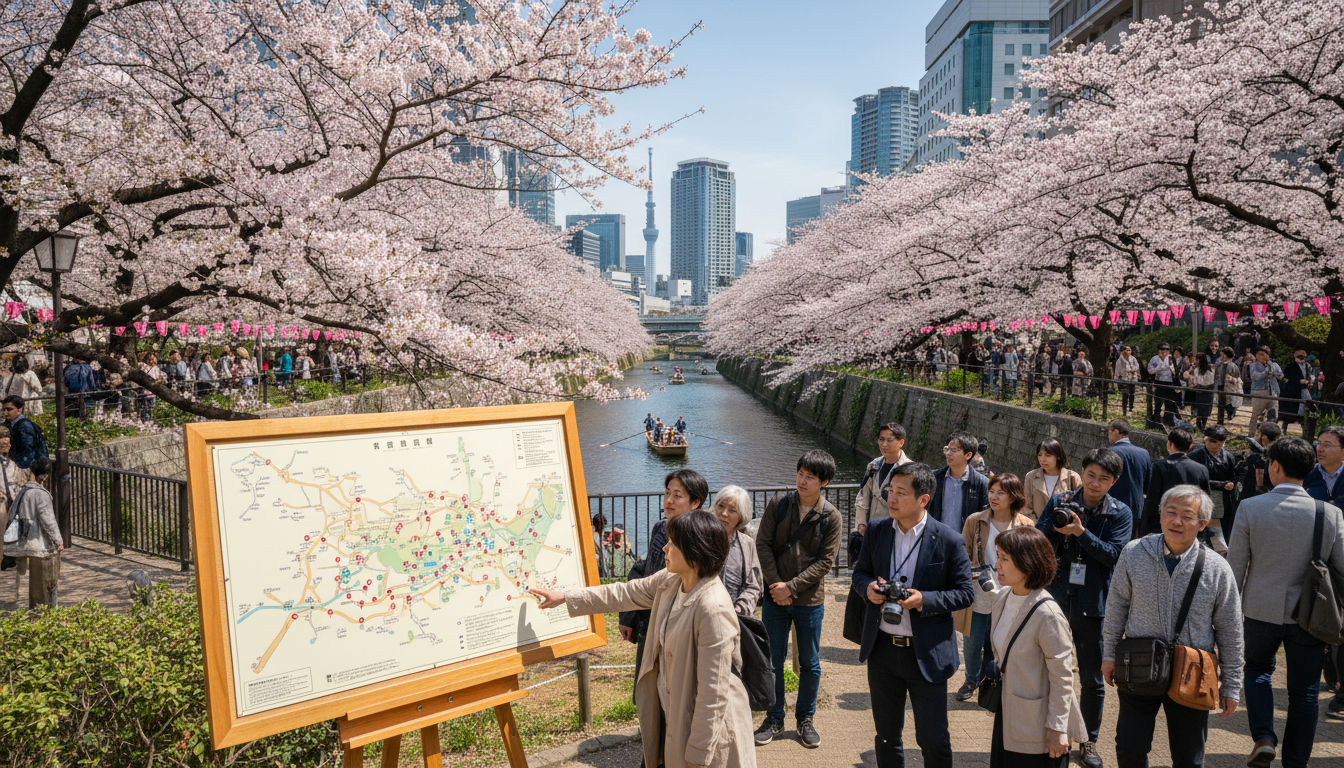
The Meguro River features over 800 trees along several kilometers of riverbank and is particularly famous for its evening illuminations during the sakura season. The continuous line of trees creates tunnel-like effects, and the adjacent cafés and small shops make for a pleasant walking route.
Yoyogi Park hosts roughly 600 cherry trees and is better known for its large gathering spaces and social atmosphere than for tight floral displays. It is a popular place for groups, street entertainers and spring markets, and it blends people-watching with blossom viewing in a distinctly urban setting.
Koishikawa Kōrakuen is one of Tokyo’s oldest landscaped gardens and is renowned for its weeping cherry trees and traditional design. Picnicking is generally not permitted, but the garden’s teahouse and carefully composed vistas offer an elegant, contemplative hanami experience.
Lesser-Known Parks and Suburban Spots with Fewer Crowds
Showa Kinen Park in Tachikawa is large and family-friendly, with about 1,500 cherry trees spread across rolling lawns and cycling paths. It sits roughly 40 minutes by train from central Tokyo and is good for visitors seeking space, seasonal flower combinations and bicycle rentals.
Asukayama Park has an Edo-period hanami history and about 600 trees clustered around a small hill served by a quaint cable lift. The park’s neighborhood feel and historical context make it a pleasant, less frantic alternative for local cherry viewing.
Yanaka Cemetery’s main avenue is lined with cherry trees that offer a quieter, more reflective type of hanami near Nippori. Visitors should be respectful in this setting, where the ephemeral nature of the blossoms resonates with the cemetery’s sense of history and remembrance.
Kasai Rinkai Park, adjacent to Tokyo Bay, combines open lawn, a bird sanctuary and seasonal cherry stands with family attractions such as a Ferris wheel and aquarium. Its waterfront location keeps crowds dispersed and gives a different coastal perspective on spring color.
Mt. Takao provides a greener, higher-altitude option for sakura watching and can offer later blooms compared with central Tokyo. The mountain is under an hour from Shinjuku and pairs cherry viewing with scenic hikes, temple visits and sweeping regional vistas.
Sotobori Park and Ōjima Komatsugawa Park are two river-oriented locations that feature prolonged stretches of cherry trees and local hanami activity. Both parks can be lively but tend to attract more neighborhood crowds than tourist hordes, making them useful midweek options.
Hibiya Park and Komazawa Olympic Park supply more urban leisure space with steady cherry tree plantings and straightforward transit access. Hibiya sits close to the Imperial Palace precincts and Hibiya Station, while Komazawa’s cycling routes let visitors combine active recreation and viewing.
Kinuta Park and Koganei Park are spacious suburban parks with extensive tree counts and lawns suited to larger picnics and family days out. Koganei, in particular, offers more than 50 varieties across 200 acres, giving visitors a botanical breadth that can extend the sakura season.
Hamarikyū Gardens and Rikugien represent classical Japanese landscaping with pockets of outstanding cherry specimens, including dramatic weeping trees that are often illuminated on select nights. These gardens typically charge modest entry fees and cater to visitors seeking cultivated scenery rather than open-field hanami.
Roppongi Sakurazaka and the Kitazawa-gawa Green Road are compact, local routes that are convenient if you are already in those neighborhoods. Both locations are best appreciated as short detours from shopping or dining in the area and offer illuminated trees after dark.
Nighttime Illuminations, River Cruises and Yozakura Routes
Yozakura — nighttime cherry blossom viewing — transforms daytime scenes with lanterns, uplighting and reflections that highlight petal texture against the dark sky. The Meguro River and Chidorigafuchi are two of the most popular yozakura locations, with scheduled lights and a distinctly romantic evening atmosphere.
Sumida River and its adjoining parks offer evening programs and the option to book traditional yakatabune boats for a private-viewing cruise beneath lit trees. These pleasure boats are a seasonal service and fill fast during peak weeks, so reserve in advance if you plan to combine dining and viewing on the river.
Many municipal illuminations are scheduled to coincide with expected peak bloom windows and can extend viewing hours into the evening, sometimes with temporary festival stalls or music programs. Note that illuminations and extended opening hours are subject to municipal decisions, weather and budget, so verify arrangements closer to your visit.
For quieter nighttime experiences, seek out small temple gardens and lesser-known riverside stretches where lights are softer or where trees are not actively promoted as festival sites. A short local stroll after dinner can reveal subtle, peaceful yo-zakura scenes away from the busiest routes.
Recommended Day Trips: Kamakura, Ōmiya and Mt. Takao
Kamakura’s Tsurugaoka Hachimangū Shrine offers an extended approach lined with cherry trees and a range of early and late-blooming varieties around its ponds and public spaces. The shrine combines cultural landmarks with seasonal color, making it an ideal half- or full-day excursion from central Tokyo.
Ōmiya Park in Saitama is rated among Japan’s top 100 sakura locations and boasts over 1,000 Yoshino cherry trees and evening illuminations. It is a straightforward train ride from Tokyo and provides a spacious alternative for visitors who want a festival atmosphere without the densest metropolitan crowds.
Mt. Takao is a convenient nature escape under an hour from Shinjuku, where trails and temple precincts are framed by blossoms at certain elevations. For visitors who prefer hiking to park picnicking, Takao delivers scenic variety and the possibility of seeing extended bloom periods at higher altitudes.
Day-trip itineraries combine blossom viewing with local foods and historic sites, so consider pairing a sakura route with market visits, temple stops or a regional museum to make the most of travel time. Trains and local buses are generally reliable during the season, but expect heavier passenger volumes on weekends and public holidays.
Practical Hanami Advice: Etiquette, Access and Safety
Hanami is a social custom and also a civic ritual that comes with clear expectations: reserve space respectfully, follow posted rules and avoid obstructing passageways in parks and riverside paths. Many gardens prohibit alcohol or picnicking on landscaped areas, while public parks permit gatherings but maintain time-honored norms of cleanliness and order.
Shinjuku Gyoen and other high-traffic gardens may require advance registration or timed tickets on weekends and national holidays during March and April, so check entry procedures before you go. For parks without entry fees, arrive early to secure a picnic spot, and bring a lightweight tarp or mat that you can fold and carry away with you.
Public transport will be crowded during the peak days; plan travel outside morning and evening commuter peaks when possible and allow extra time for transfers. Consider stations closest to park entrances, and use local navigation apps or station maps to plan the most direct walking route once you disembark.
Respectful behavior in solemn sites such as Yanaka Cemetery is essential: do not set up large groups, keep voices low and avoid leaving trash behind. Likewise, at river and moat paths, stay on designated paths or boat lanes and heed festival staff and signage regarding boat use and safety equipment.
Weather can change quickly in spring; bring a light waterproof layer for rain and a small umbrella for unexpected showers that can strip trees of petals. Dispose of waste in the many municipal receptacles or take it home if bins are full, and leave the site as you found it so that the next visitors can enjoy the same experience.
Hanami often involves food and drink; consider purchasing seasonal snacks from local vendors rather than bringing large coolers, and be mindful of park rules about open flames, barbecues or amplified music. Small, portable disposable or reusable items make cleanup easier and are better for crowded sites.
Tokyo cherry blossoms provide an annual window into the city’s seasonal rhythms, blending centuries-old appreciation with contemporary entertainment and tourism. With a mix of central hotspots, quieter gardens and nearby day trips, visitors can tailor their hanami plans to match mood, crowd tolerance and transport convenience.
Plan ahead for the specific parks you want to visit, monitor the weather and local sakura forecasts, and choose a mix of daytime and evening viewing to experience the full range of Japan’s spring spectacle. Enjoy the blossoms, respect local rules and fellow viewers, and take time to appreciate the fleeting beauty that defines Tokyo’s spring.

