
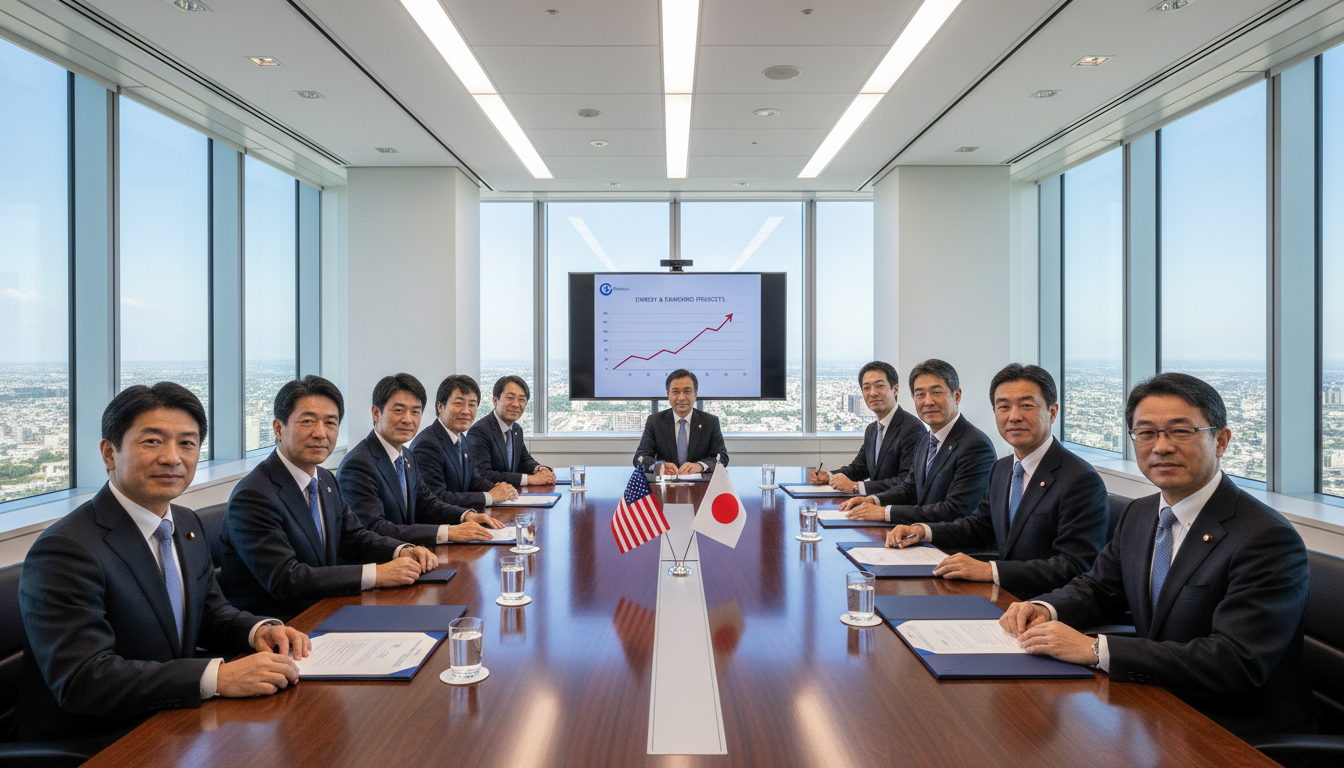
JBIC financing: Japan-backed lenders agree up to ¥350 billion for three U.S. projects
Japan Bank for International Cooperation-backed financing worth about ¥350 billion will support a U.S. power plant, crude oil facility and diamond project, strengthening economic ties.
The Japan Bank for International Cooperation (JBIC) said it has signed loan agreements with three major private-sector banks to provide up to about ¥350 billion (roughly $2.2 billion) in financing for three projects in the United States. JBIC financing will be channelled through a combination of syndicated credit lines and coordinated bank loans intended to support a power generation project, a crude oil facility and a diamond-related venture under a bilateral tariff arrangement. The package marks one of the largest instances in recent years in which state-backed Japanese finance has been combined with private lenders to back overseas infrastructure and energy initiatives.
Loan package and participating lenders
The agreements commit JBIC and three leading Japanese banks to share credit exposure and provide tranche-based funding for the projects. JBIC did not disclose the names of all participating institutions in its initial statement, but described them as top-tier domestic banks collaborating to mobilize both short- and long-term capital. The aggregate ceiling for the syndicated facilities is approximately ¥350 billion, with JBIC playing a central role in structuring and coordinating the financing.
Details of the three U.S. projects
The financing will support a U.S.-based power plant, a crude oil handling or processing facility, and a project in the diamond sector, according to the announcement. Officials said the power plant financing targets capacity expansion and modernization measures that aim to improve reliability and emissions performance. The crude oil facility funding is designed to underpin processing and logistics investments, while the diamond project involves mining and downstream processing components that require long-term capital.
Financing structure and risk-sharing
JBIC’s involvement is intended to lower transaction risk and attract private capital by providing state-backed credit support and coordination among lenders. The financing combines JBIC’s ability to offer longer tenors with the private banks’ commercial underwriting and market knowledge. Under the agreements, JBIC will assume portions of risk that are typically difficult for purely private lenders to absorb, facilitating loans with maturities and terms tailored to the projects’ infrastructure timelines.
Connection to bilateral tariff arrangements
JBIC said the loans were arranged under a bilateral tariff deal aimed at bolstering economic cooperation between Japan and the United States. The arrangement is intended to encourage mutually beneficial investment by aligning trade and tariff incentives with cross-border financing support. Observers note that pairing tariff arrangements with export and project finance can accelerate decisions by reducing policy uncertainty and improving the commercial viability of large-scale projects.
Market and policy reactions
Financial market participants and industry groups reacted to the announcement as a sign of Japan’s continued willingness to deploy policy-backed financing to secure economic access overseas. Analysts highlighted the significance of public-private cooperation in mobilizing capital for energy and resource-linked projects at a time when companies face higher borrowing costs and shifting regulatory expectations. Some environmental and civil-society observers said project specifics will need close scrutiny to ensure compliance with emissions and labor standards.
Strategic implications for Japan-U.S. cooperation
The financing package underscores a broader strategic shift toward deeper economic integration between Japan and the United States through coordinated industrial and infrastructure investment. By leveraging JBIC’s capabilities alongside major private banks, Tokyo is signaling an intent to support supply-chain resilience and critical resource access. The move also reflects a pragmatic approach to balancing commercial returns with national policy objectives, particularly in sectors tied to energy security and valuable commodities.
The lenders said next steps include finalizing detailed loan documents, due diligence with project sponsors, and phased disbursements aligned with construction and operational milestones. JBIC and its banking partners will monitor project compliance with agreed environmental and social safeguards and report progress to stakeholders as financing advances.

