
Japan’s regional diplomacy pivots as Prime Minister Takaichi courts Indonesia with cultural outreach
Japan’s regional diplomacy pivots after a March 31 summit with Indonesia’s President Prabowo, as Prime Minister Sanae Takaichi uses cultural outreach and strategic ties to strengthen ties.
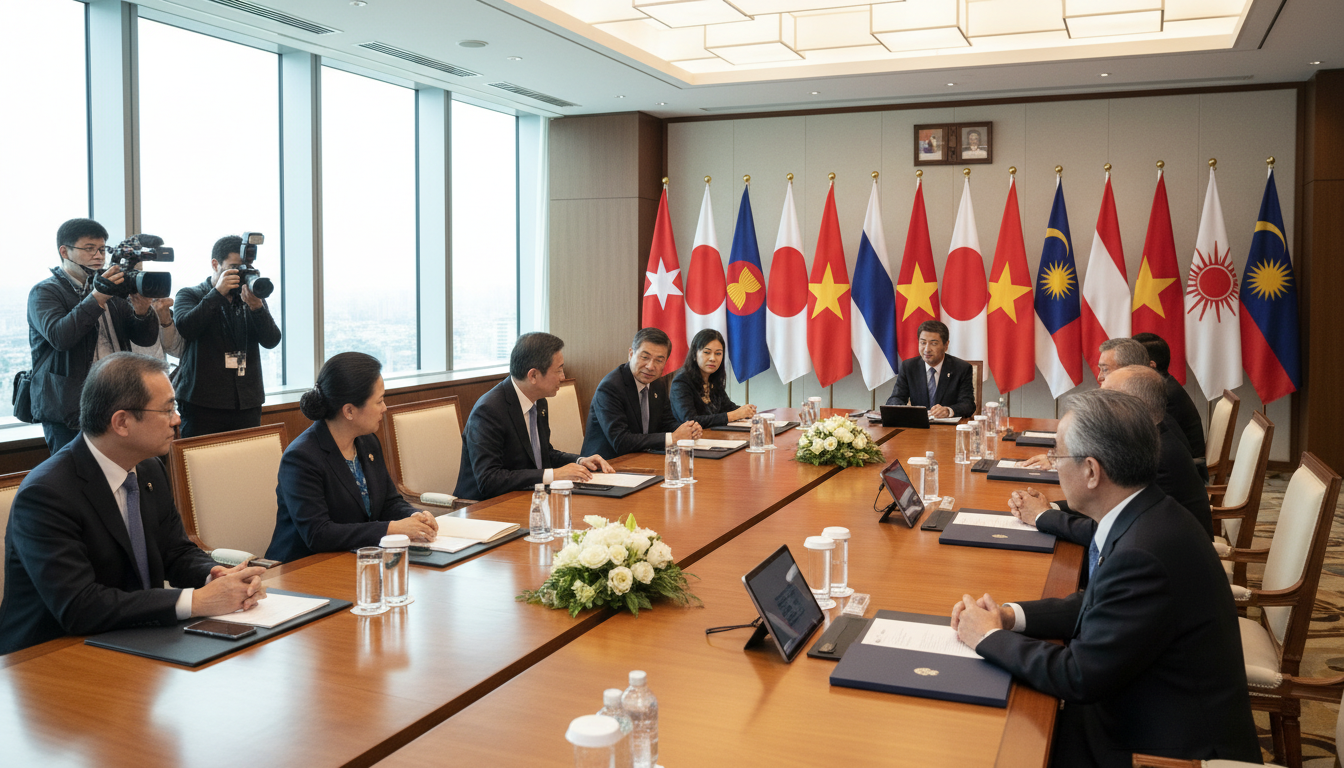
Japan’s Prime Minister Sanae Takaichi hosted Indonesian President Prabowo Subianto at the State Guest House in Tokyo on March 31, a meeting that mixed political substance with a conspicuous display of cultural diplomacy. After talks, Takaichi sang the 1961 Kyu Sakamoto classic "Ue o Muite Arukō" — known globally as "Sukiyaki" — a moment that drew attention across diplomatic and public circles. The event highlighted how Japan is attempting fresh approaches as its traditional economic leverage in the region softens.
Takaichi and Prabowo meet in Tokyo
Prime Minister Takaichi and President Prabowo discussed a range of bilateral issues during the Tokyo summit, including trade, investment, and cooperation on regional infrastructure. Officials framed the talks as a step to deepen a comprehensive partnership that spans economic and security dimensions. The leaders emphasized mutual respect and a shared interest in stable, open regional orders.
Cultural gesture underscores new outreach
The post-summit singing of "Sukiyaki" was widely noted as more than a light-hearted moment; it signaled a deliberate use of culture to bridge gaps between governments and publics. Japanese officials said cultural touchpoints can soften diplomatic interactions and create goodwill that complements formal agreements. Analysts view such gestures as part of a broader shift toward people-to-people diplomacy in Tokyo’s regional playbook.
Economic context: adjusting to reduced leverage
Japan’s longstanding economic dominance in Asia has been eroding as regional trade and investment channels diversify and competitors deepen ties across Southeast Asia. Slower growth at home, rising costs, and the emergence of alternative investors have constrained Japan’s traditional leverage. Tokyo is therefore seeking a combination of targeted infrastructure lending, private-sector partnerships, and complementary soft-power initiatives to remain influential.
Strategic cooperation with Indonesia expands
Beyond cultural outreach, Tokyo is pursuing tangible strategic cooperation with Jakarta on supply chains, critical minerals, and maritime security. Both countries have signaled interest in aligning on resilient supply networks and energy projects that reduce dependence on a single source. Japanese business delegations and government agencies are reportedly exploring joint ventures that could create practical incentives for closer collaboration.
Soft power and people-to-people ties
Education exchanges, tourism promotion, and cultural programs are being carried forward as tools to sustain Japan’s long-term presence in the region. Language and cultural institutes, scholarship schemes, and media partnerships are being highlighted by diplomats as lower-cost, high-impact investments. Officials say bolstering familiarity and trust among younger generations will pay dividends as economic influence shifts.
Domestic constraints shape outreach strategy
Tokyo’s ability to scale engagement is shaped by domestic political and fiscal constraints that limit large unilateral projects. Policymakers must balance ambitious external initiatives with budgetary discipline and competing domestic priorities. The government therefore appears to be favoring targeted, collaborative efforts that pair Japanese capital and technology with regional partners’ needs.
Japan faces a competitive environment in which multiple actors are vying to shape Southeast Asia’s economic and strategic landscape. By combining cultural moments with concrete partnerships, Tokyo is attempting to retool its regional diplomacy to be more adaptable and resilient. The performance at the State Guest House was a visible example of that recalibration, as leaders seek practical ways to maintain influence and build mutual confidence.

