
Japan and Australia Pledge to Build Resilient Supply Chains in Canberra Meeting
Japan and Australia pledged to deepen cooperation on resilient supply chains for energy, critical minerals, food and manufactured goods, citing growing concerns about China’s use of industrial leverage.
Prime Minister Sanae Takaichi of Japan and Prime Minister Anthony Albanese of Australia met at Parliament House in Canberra on May 4, 2026, and announced a joint effort to strengthen resilient supply chains across key sectors. The leaders said the initiative responds to recent disruptions and strategic risks, and highlighted energy, critical minerals, food and manufactured goods as priorities. Both governments framed the move as a pragmatic partnership to reduce vulnerability while maintaining open trade ties.
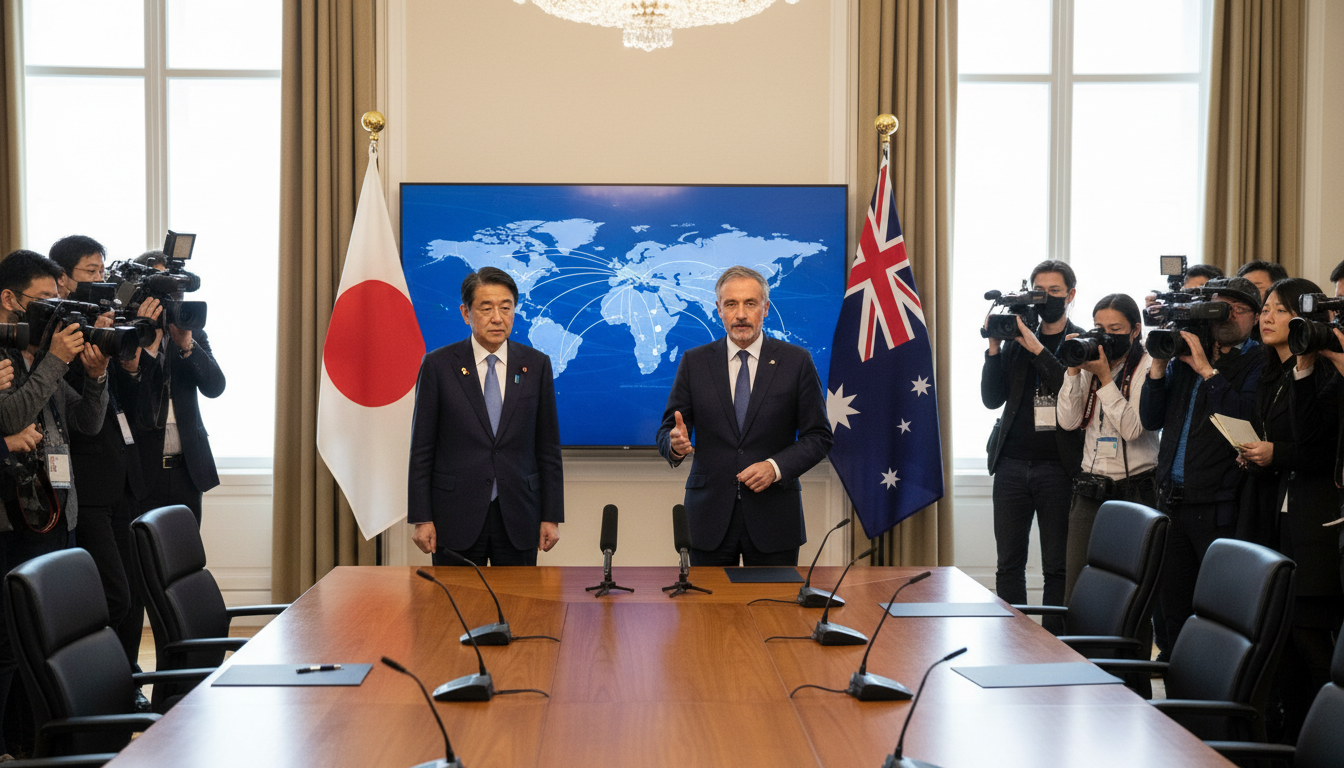
Takaichi and Albanese meet in Canberra
The leaders conducted a bilateral exchange of remarks and met with media after their talks at Parliament House, underscoring the political importance of the supply-chain agenda. Officials from both capitals described the meeting as a reaffirmation of longstanding economic ties and a step toward deeper industrial cooperation. The public messaging emphasized coordination rather than confrontation, while acknowledging shifting regional risks.
Joint pledge to broaden resilient supply chains across sectors
In a joint statement, Tokyo and Canberra pledged to expand efforts to build resilient supply chains for energy, critical minerals, food and manufactured goods. The commitment aims to diversify sources, increase processing capacity in partner countries, and better coordinate emergency responses to disruptions. Ministers and senior officials were tasked to pursue practical measures that enhance continuity of supply for critical inputs to both economies.
Critical minerals and energy security at centre
Critical minerals and energy featured prominently in discussions, reflecting Japan’s industrial reliance on secure inputs and Australia’s role as a major supplier of many of those resources. Both governments highlighted the need to move beyond raw exports toward greater upstream and downstream cooperation, including investment in processing and recycling. Strengthening links in battery metals, rare earths and energy infrastructure was presented as central to reducing strategic bottlenecks and supporting clean-energy transitions.
Food and manufactured goods to receive coordinated attention
Food security and resilience in manufactured goods supply chains were also cited as priorities, with leaders pointing to lessons learned from pandemic-era disruptions and global logistic strains. Canberra and Tokyo signalled intent to deepen agricultural trade ties, improve cold-chain logistics and promote mutual recognition of standards to ease export flows. For manufactured goods, the focus is on diversifying component sourcing and supporting supply-chain visibility for critical industries.
Concerns over industrial leverage and regional stability
Both governments explicitly referenced concerns about the increasing use of industrial dominance for political leverage in the region, saying that such dynamics underscore the need for diversified, reliable supply relationships. Officials framed their response in economic and strategic terms, arguing that resilient supply chains contribute to regional stability by reducing opportunities for coercive pressure. The language avoided direct confrontation while making clear that supply-chain security is now a central element of bilateral cooperation.
Next steps: coordination, private sector engagement and monitoring
Takaichi and Albanese signalled a series of next steps to translate the pledge into action, including intensified official consultations, greater private-sector engagement and exploration of joint investments. They encouraged business leaders and industry groups to pursue partnerships that strengthen processing, logistics and technological capabilities across the supply chain. Both governments said they will monitor progress and report back through established diplomatic channels, while keeping options open for broader regional collaboration.
The Canberra meeting marks a pragmatic phase in Japan–Australia ties, one that blends commercial priorities with strategic risk management to fortify resilient supply chains across multiple sectors. As officials move to implement the leaders’ pledge, observers will watch for concrete projects and investments that test how quickly the partnership can reduce vulnerabilities and bolster regional economic stability.

