
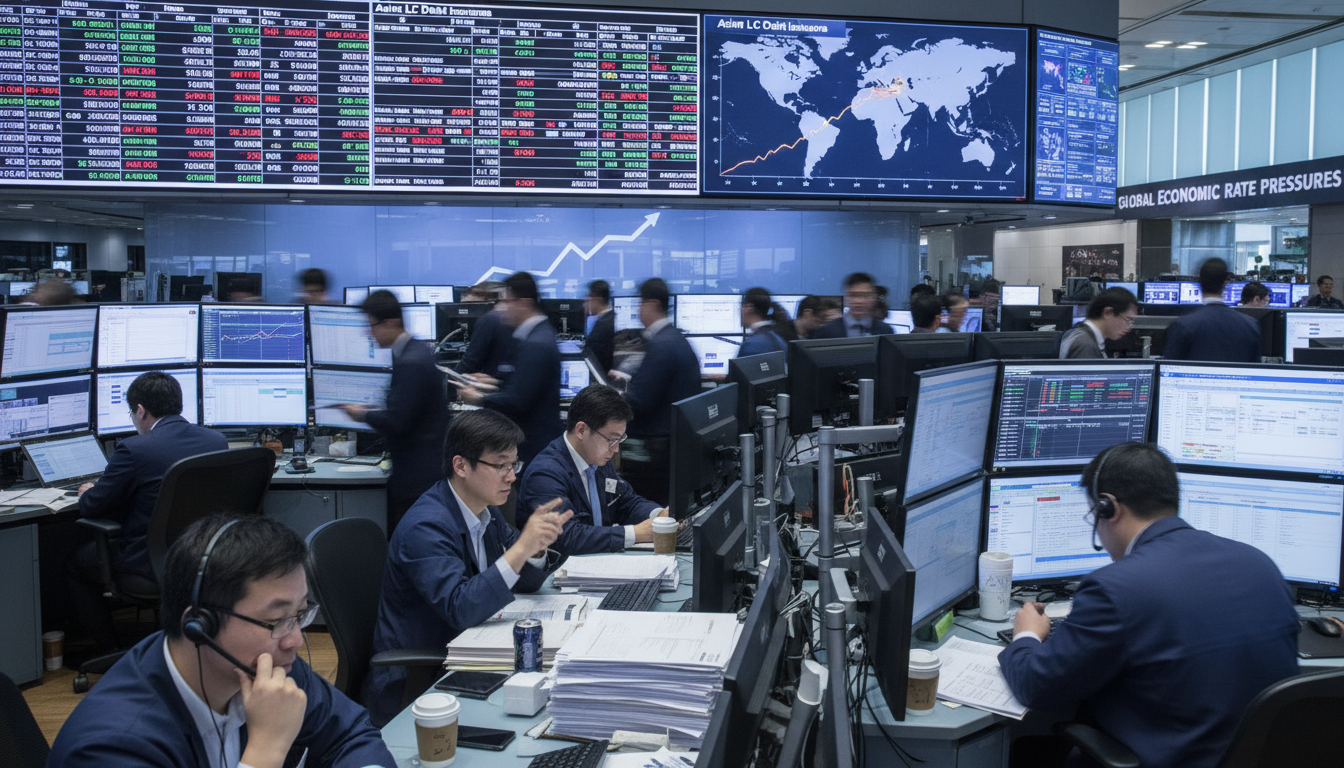
Asia local currency debt market posts record issuance as Hong Kong, Singapore and Australia see surge
Asia local currency debt market posts record issuance as Iran war, rising U.S. rates and dollar diversification boost bonds in Hong Kong, Singapore and Australia.
Asia’s local currency debt market has recorded a marked rise in issuance as borrowers and investors pivot away from dollar exposure amid the Iran war and higher U.S. interest rates. Dealogic data show developed markets in the region, notably Hong Kong, Singapore and Australia, reaching multiyear or record highs in bond volumes. The trend reflects a broader shift in global fixed-income strategies toward Asian currency debt as a diversification and risk-management tool.
Issuance Surges in Hong Kong, Singapore and Australia
Hong Kong dollar bond issuance has gained traction, with both sovereign-related and corporate borrowers taking advantage of strong demand from regional and global investors. Market participants say the Hong Kong market is increasingly viewed as relatively low-risk, attracting issuers who want to tap deep pockets without adding dollar liabilities.
Singapore and Australia have seen parallel rises, driven by governments, financial institutions and corporates raising funds in local units. The availability of high-quality paper in these markets has broadened investor choice and supported larger, more frequent transactions than in prior years.
Geopolitical Shock from Iran Conflict Spurs Repricing
The outbreak of conflict in Iran on Feb. 28 accelerated the move toward Asian currency debt as oil prices jumped and global risk sentiment shifted. That shock reverberated through U.S. Treasuries and other benchmark markets, prompting investors to reassess duration and currency exposure across portfolios.
With heightened geopolitical risk, some fund managers and corporate treasuries have explicitly sought to reduce dollar-dominated holdings and redeploy capital into local-currency instruments. The immediate response was a notable reallocation toward markets perceived as stable and liquid in Asia.
Higher U.S. Rates and Treasury Volatility Drive Demand
Sustained expectations of elevated U.S. interest rates have increased borrowing costs in dollar markets and amplified Treasury volatility, making local-currency issuance comparatively attractive for certain issuers. Investors chasing yield and diversification have been willing to accept regional currency risk in exchange for potentially higher spreads and shorter-duration exposure.
Issuers, meanwhile, have capitalized on these conditions to lock in financing in home currencies, thereby aligning funding profiles more closely with revenue streams and reducing exchange-rate mismatch on balance sheets.
Investor Appetite and Diversification Strategies
Global fixed-income allocators report rising allocations to Asian local-currency debt as part of a broader diversification strategy. Portfolio managers cite liquidity in key markets, improving issuer credit quality, and the depth of primary markets as reasons for the shift.
Demand has been sourced from a mix of sovereign wealth funds, institutional investors and regional asset managers, who view Asian currency markets as a pragmatic hedge against concentrated dollar risk. That diversified buyer base has helped sustain large deals and support pricing across maturities.
Dealogic Data and Market Statistics
Dealogic’s issuance tallies indicate that developed Asian markets are posting issuance volumes not seen in several years, with some windows registering record levels. The surge encompasses both public-sector and private-sector borrowers executing in local currency to meet funding needs and investor appetite.
Market desks note that the uptick in supply has been met by robust primary-market demand, although episodes of global risk-off still test liquidity. Still, overall statistics point to a structural increase in issuance that goes beyond temporary market dislocations.
Risks: Currency Volatility, Liquidity and Policy Shifts
Despite strong demand, issuing in local currency shifts exposure to exchange-rate and domestic policy risks. Corporates and foreign investors must weigh potential currency depreciation or volatility against the benefits of reduced dollar reliance.
Central bank policy in each jurisdiction, reaction to inflationary pressures, and regulatory considerations can alter the appeal of local-currency assets. Market participants caution that a rapid reversal in U.S. rate expectations or renewed geopolitical escalation could prompt swift repricing across regional bond markets.
Asia’s local currency debt market has taken on renewed significance as issuers and investors adapt to a landscape shaped by geopolitics and higher global rates. For issuers, the ability to match funding in local currency reduces currency mismatches and aligns financing with operating cash flows.
For investors, the market offers diversification and yield opportunities, but not without trade-offs related to currency and policy risks. As the region absorbs more issuance, monitoring liquidity conditions and central bank responses will be essential for both borrowers and holders of Asia local currency debt.

