
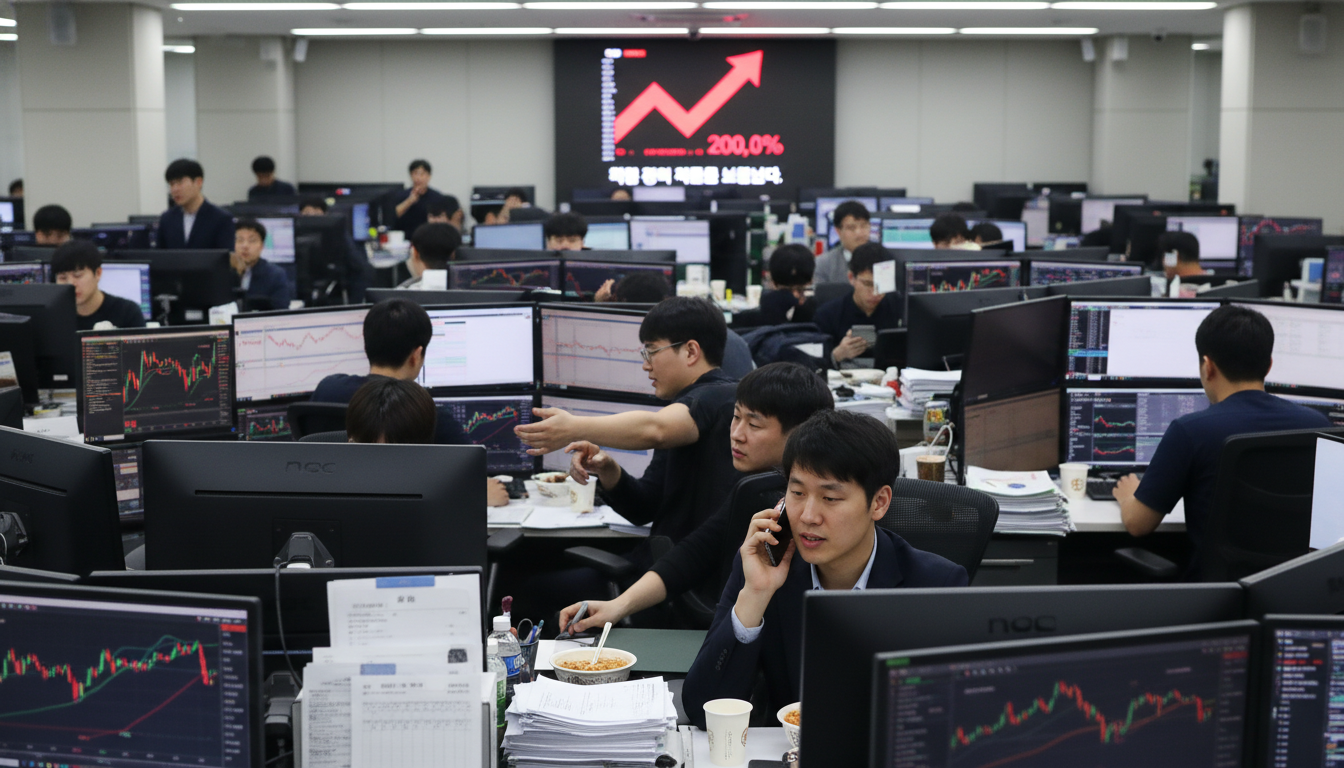
Debt-financed stock investing surges in South Korea as margin loans top 30 trillion won
Debt-financed stock investing has surged in South Korea, with margin loans topping 30 trillion won in April as home-price rises and pension concerns push retail investors toward leverage in 2026.
SEOUL — Debt-financed stock investing in South Korea has accelerated sharply, with margin lending to retail investors rising to more than 30 trillion won ($20 billion) in April, roughly double the level a year earlier. The rapid expansion of leverage coincided with a sustained rally in equities and mounting anxiety about housing affordability and future pensions. Authorities now face pressure to curb risky borrowing while balancing market stability and investor protection.
Margin Loans Surge to Over 30 Trillion Won
Official figures show margin loans extended to individual investors climbed dramatically in April, reaching above 30 trillion won compared with the same month last year. Market participants and analysts say the jump reflects both fresh buying and refinancing of existing positions as prices advanced.
The increase in debt-financed stock investing is unprecedented in recent years and has become a focal point for regulators concerned about the buildup of household risk. Financial institutions report stronger demand for credit products tied to equity purchases, raising questions about underwriting standards and margin calls in a volatile market.
Housing Prices and Pension Fears Drive Risk-Taking
A central driver of the leverage boom has been a sharp rise in residential property values that has squeezed household budgets and retirement planning. Young and middle-aged households, priced out of buying homes or facing heavier mortgage burdens, have turned to the stock market seeking higher returns.
At the same time, worries about the adequacy of public and corporate pensions have prompted retirees and near-retirees to reallocate savings into equities. The combination of housing stress and pension insecurity has encouraged some investors to accept higher leverage despite the attendant risks of margin trading.
Retail Investors Increasingly Leveraged
Brokerage data and market anecdotes indicate a growing share of retail trading is now conducted on borrowed funds, with margin accounts concentrated in a subset of highly traded individual and mid-cap stocks. This pattern amplifies price movements as leveraged positions are built up and can unwind quickly when sentiment shifts.
Industry analysts warn that concentrated leverage in specific sectors or names can create feedback loops, raising the probability of sharp corrections. The elevated use of debt-financed stock investing raises concerns about household balance sheets and the potential for contagion into the broader financial system.
Regulators Weigh Protective Measures
Policymakers have signaled that they are monitoring the rise in margin lending and assessing options to mitigate systemic and household risks. Possible measures under discussion include tighter margin requirements, enhanced disclosure for leveraged products, and limits on certain types of retail credit for equity purchases.
Any regulatory response will require balancing market access with investor safety, and officials say they prefer calibrated steps to blunt excess rather than sudden interventions that could destabilize markets. Supervisors have also reiterated the need for improved investor education and stronger risk warnings from brokers offering leveraged services.
Market Signals: KOSPI Breaks 6,000 Amid Leverage Rise
The Korea Composite Stock Price Index (KOSPI) breached the 6,000-point mark in February, a milestone that coincided with the expansion of margin lending. Market observers note that bullish momentum and record highs can attract leveraged flows even as valuations rise.
While some attribute part of the index’s ascent to fundamental gains in earnings and foreign investment, the increase in debt-financed stock investing has clearly been a material factor. Analysts caution that a rapid reversal in sentiment, or an external shock, could trigger forced liquidations that deepen a market downturn.
Final paragraph
As authorities weigh policy responses, investors and intermediaries face a delicate period in which access to credit is fueling both wealth creation and heightened vulnerability. The coming months will test whether regulators can temper the risks of debt-financed stock investing without curtailing legitimate market participation.

