
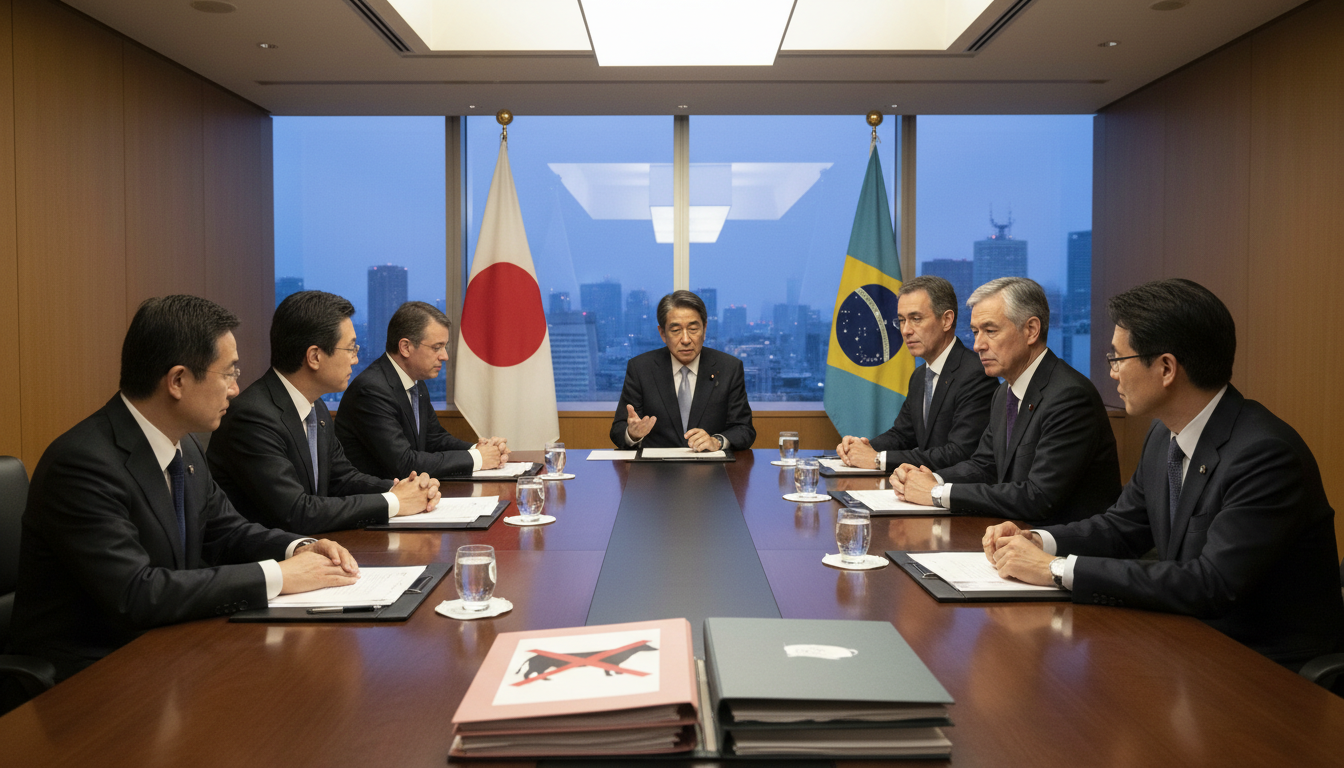
Japan to launch Japan-Mercosur talks by summer, faces Brazil beef hurdle
Japan to launch Japan-Mercosur talks by summer to secure resources and expand trade with a 300m market; Brazil beef imports and farm protections pose hurdles.
Japan will begin formal Japan-Mercosur talks by summer, Tokyo officials said, opening negotiations toward an economic partnership agreement with the five-member South American bloc. The government aims to deepen access to resources and to a market of nearly 300 million people, while balancing domestic agricultural sensitivities. The announcement makes the negotiations the first major free-trade push under Prime Minister Sanae Takaichi’s administration.
Government timetable and negotiation mandate
Tokyo has set a targeted start of formal talks this summer, with preparatory consultations to precede the opening round. Negotiators will be mandated to pursue market access for Japanese manufacturers and services firms while securing steady supplies of raw materials and energy inputs. Officials say the timeline is ambitious but intended to lock in negotiations before the end of the year.
Ministries in charge of trade and foreign affairs have been drafting a detailed mandate that includes rules on investment, services, and digital trade. The policy mix is intended to reflect Japan’s industrial priorities and long-term supply-chain resilience. Tokyo also plans technical working groups to address sanitary and phytosanitary (SPS) standards early in the process.
Economic priorities behind Japan-Mercosur talks
Japan sees Mercosur as a strategic partner for commodities, foodstuffs, and industrial inputs that are increasingly important for its manufacturing base. The government is emphasizing diversification of import sources, particularly for agricultural commodities and metals, as part of a broader economic security agenda. Business groups have urged negotiators to secure predictable access for Japanese exporters while protecting critical domestic sectors.
Service-sector access, intellectual property protections, and investment provisions are also expected to feature prominently in Japan’s negotiating text. Tokyo seeks commitments that would give Japanese firms clearer rules for operating across Mercosur markets, including dispute-settlement mechanisms and investor protections. These topics aim to raise the deal’s value for major exporters and financial firms.
Agricultural resistance and the Brazil beef issue
A major hurdle in the talks will be agricultural liberalization, with Brazil beef imports singled out by farm groups and some lawmakers as a particular concern. Japanese agricultural producers have long pressed for protective measures and phased liberalization schedules to shield domestic markets from sudden import surges. The beef issue could become a sticking point if Mercosur members demand tariff cuts or broader quota access early in negotiations.
Tokyo is expected to seek a calibrated approach that combines tariff quotas, rigorous SPS certification, and gradual market-opening schedules. Negotiators may consider targeted safeguards and transition periods for sensitive products to manage political risks at home. How Japan balances those protections with Mercosur’s push for expanded access will shape the talks’ pace and breadth.
Political and diplomatic dynamics
The negotiations will test Tokyo’s ability to manage domestic political constraints while engaging a bloc with diverse economic interests and policy priorities. Coordination with Japan’s agricultural ministries and parliamentary allies will be critical to obtaining necessary political support for any compromises reached. At the diplomatic level, Tokyo will need to demonstrate flexibility on issues such as market access, while maintaining firm positions on standards, governance and rule-based investment.
Mercosur partners will enter talks with their own domestic constituencies and geopolitical calculations, including a priority to expand exports to Asia. Brazil, as the largest economy in the bloc, will play an outsized role in negotiating access for agricultural goods and in framing the scope of tariff concessions. Smaller members will seek safeguards for local industries and may press for development-oriented provisions in any agreement.
Potential economic impact and next steps
If concluded, a Japan-Mercosur economic partnership could widen market access for Japanese manufacturers and services and provide Mercosur exporters with a major Asian trading partner. Analysts expect the agreement to include commitments on tariffs, investment protections, and regulatory cooperation, as well as chapters addressing digital trade and supply-chain resilience. The scale of economic gains, however, will hinge on the scope of agricultural concessions and the strength of enforcement mechanisms.
Tokyo plans to launch technical dialogues immediately, with ministers aiming to hold inaugural negotiation rounds before the end of the summer. The government has signaled it will consult industry groups and farming federations throughout the process to manage potential fallout. Political and technical negotiations could stretch into next year, depending on how quickly parties resolve core disputes such as beef access, sanitary standards, and rules of origin.
The Japan-Mercosur talks will therefore be a balancing act: pursuing strategic resource and market objectives while managing domestic sensitivities that have long shaped Japan’s trade policy.

