
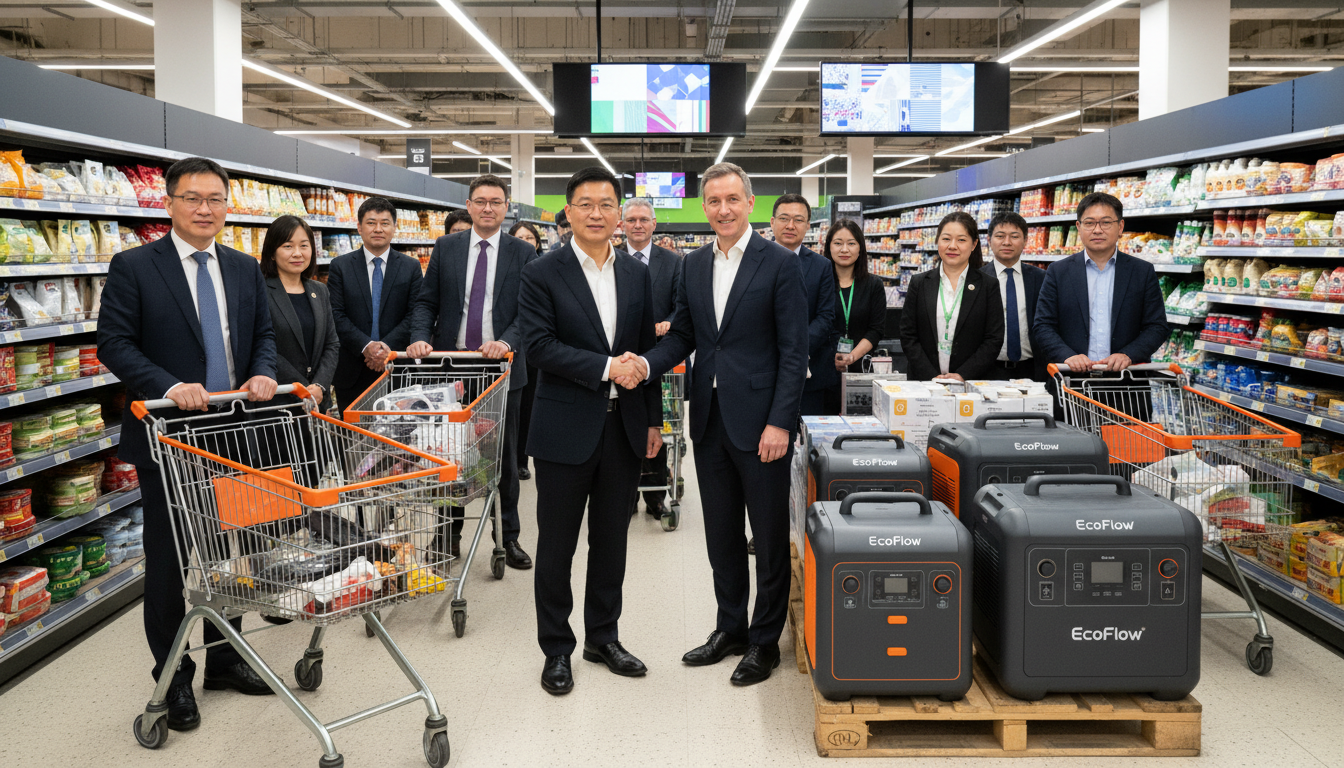
EcoFlow to Roll Out Plug-in Solar Products in UK Supermarkets
EcoFlow set to launch plug-in solar products in UK supermarkets within months to boost brand awareness and pursue commercial contracts nationwide.
EcoFlow plans to introduce its plug-in solar products to British supermarket shelves within months, the company’s European head said, marking a deliberate push into mass retail as part of a wider strategy to win commercial customers. The announcement follows the company’s appearance at the Solar and Storage Live expo in London on April 29–30, 2026, where executives outlined retail and business targets. The move is intended to raise awareness of the EcoFlow brand among mainstream consumers while building relationships with installers, distributors and corporate buyers.
London expo highlights retail ambition
The company showcased its latest plug-in offerings at the Solar and Storage Live event in late April, using the trade fair to signal a pivot toward consumer-facing retail. Company representatives described supermarket distribution as a means to increase visibility and stimulate demand for complementary commercial services. The exhibit drew interest from retail buyers and trade visitors seeking portable and grid-connected solar solutions.
Company officials said the retail strategy is not solely about unit sales but also about creating a recognizable presence that can be leveraged when seeking larger commercial contracts. Establishing shelf space in supermarkets is intended to shorten the purchase funnel for homeowners and small businesses considering solar and storage options.
Supermarket rollout and timeline
EcoFlow’s European head indicated agreements are in advanced stages and that products could appear in UK supermarkets “within months,” though no exact launch date was provided. The initial range is expected to focus on plug-in systems designed for easy home installation and upkeep, aimed at consumers who want immediate, tangible access to solar-backed power. Retail placement in national supermarket chains would give the company broad geographic reach and frequent consumer touchpoints.
Distribution via supermarkets typically involves promotional cycles and coordination with in-store buyers, meaning a phased rollout is likely rather than an immediate nationwide launch. Packaging, after-sales support and returns policy will be critical considerations for both EcoFlow and the retailers taking its products.
Strategic aims for commercial clients
EcoFlow’s stated objective is to translate household-level brand recognition into credibility with commercial buyers such as contractors, facilities managers and small businesses. Executives argue that visible retail presence lowers the barrier for trial, accelerating word-of-mouth and supporting sales channels that serve larger projects. The company plans to use retail sales data and consumer feedback to refine product offerings and inform pitches to commercial customers.
Commercial contracts often require demonstrable track records and service networks, so early retail success could be leveraged when bidding for installations or partnerships. EcoFlow will likely need to expand service, warranty and installation support to meet the expectations of business clients.
Market context and competition
The U.K. solar and storage market is populated by established manufacturers, specialist installers and a growing number of consumer brands entering mainstream retail. EcoFlow’s supermarket strategy places it in direct competition with other consumer-focused energy and electronics brands that have moved into household renewable products. Supermarket distribution offers scale but also exposes products to price comparison and promotional pressure.
Retail channels can complement, rather than replace, specialist installers and trade distributors, provided the company can maintain quality, technical support and supply chain reliability. Success will hinge on competitive pricing, ease of use and how well the products are positioned against incumbent offerings in both the retail and commercial arenas.
Implications for European expansion
EcoFlow framed the U.K. supermarket push as part of a broader European expansion plan, with the British market serving as a high-profile testing ground. Performance in the U.K.—characterised by a mature retail environment and significant interest in home energy resilience—could inform rollouts in other European countries. The company will monitor sales, customer satisfaction and partner feedback to decide where to focus subsequent efforts.
Scaling in Europe will require navigating different regulatory regimes, grid connection standards and retail landscapes, so the company’s ability to adapt packaging, marketing and post-sale service will be tested. Establishing relationships with local installers and commercial contractors will remain a parallel priority as the company seeks larger-scale projects.
EcoFlow’s retail initiative underscores a growing trend of energy technology firms moving into mainstream retail to accelerate brand building and reach new customer segments. Observers say the approach can shorten the path to market for new products but requires careful coordination between product design, supply and after-sales networks to convert consumer interest into sustainable business growth.

