
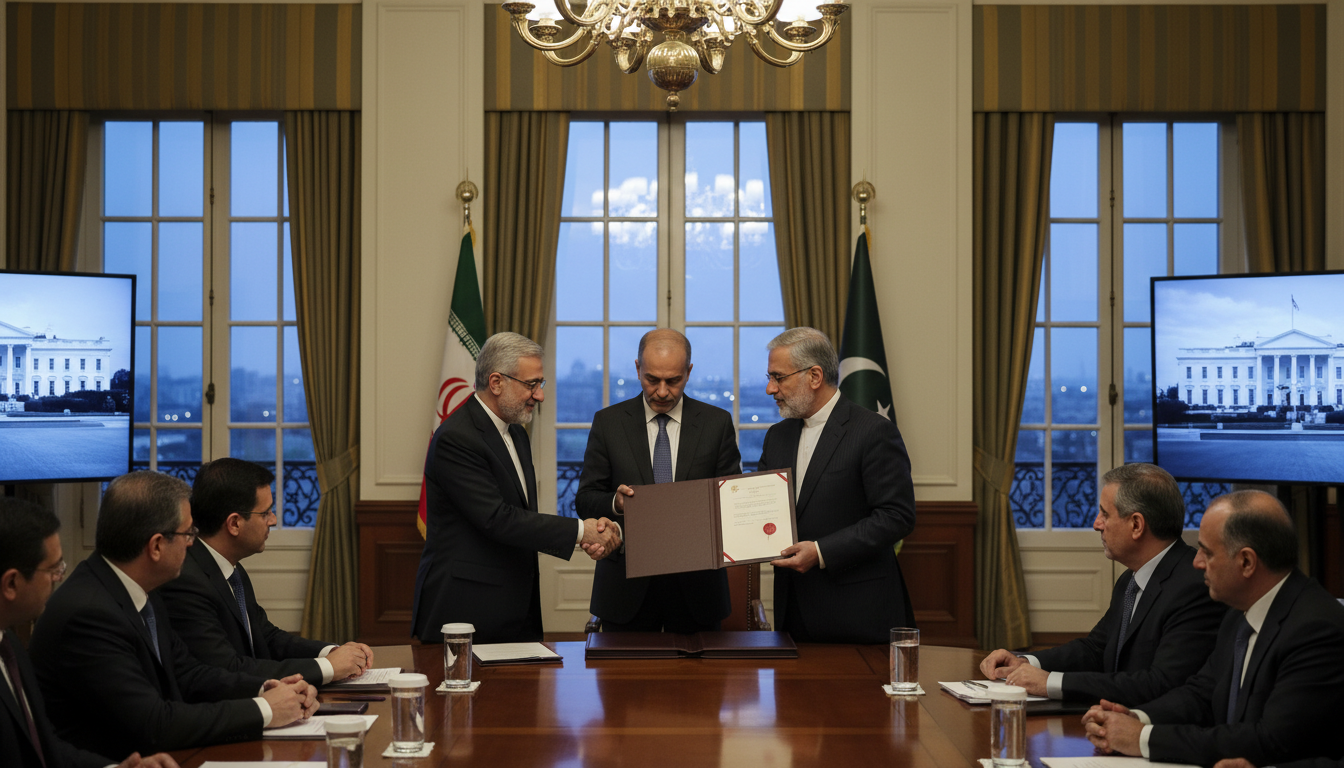
Iran Sends Response to U.S. Proposal via Pakistan in Talks to End Fighting
Iran sends response to U.S. proposal via Pakistan, state media reports; talks to focus on regional cessation of hostilities as Tehran resists fixed deadlines.
Iran’s state-run news agency reported on May 10 that Tehran has delivered its response to a U.S. proposal through Pakistan, the intermediary in negotiations aiming to halt fighting in the region. Iran sends response to U.S. proposal is the central development, and state media said the discussions will concentrate on achieving a regional cessation of hostilities, though it provided no further detail. The delivery marks a key step in a mediated engagement that U.S. President Donald Trump had said he expected to receive by May 8, a target Iran has publicly said it does not consider binding.
State Media Reports Delivery to Pakistan
The official Iranian report did not disclose the substance of the communication, saying only that the reply was sent to Pakistan, which has been acting as the intermediary in the talks. State media framed the exchange as a forward movement in negotiations focused on stopping fighting across the region, but left open whether Iran’s response accepts, rejects, or proposes amendments to the U.S. proposal. The lack of specifics leaves diplomats and analysts to speculate about whether Tehran’s reply addresses ceasefire mechanics, timelines, guarantees, or the role of third-party monitors.
Focus on Regional Cessation of Hostilities
Iran’s statement emphasized that the negotiations will be centered on ending combat within the region rather than on wider political arrangements, suggesting a narrow scope for the immediate talks. That focus could streamline discussions by concentrating parties on practical steps to halt violence, but it may also postpone contentious issues such as sanctions relief, territorial claims, or long-term security arrangements. By signaling restraint on scope, Tehran may be aiming to secure immediate de-escalation while leaving more complicated diplomatic questions for later stages.
U.S. Expectations and the May Timeline
President Trump had publicly stated he expected an Iranian reply by May 8, setting a short timeline that heightened global attention on the negotiation process. The U.S. push for a rapid answer reflected Washington’s desire to demonstrate progress and to exert diplomatic pressure on Tehran to accept terms that could halt hostilities quickly. That timeline was not met according to Iranian statements, and the appearance of the response on May 10 indicates that the exchange proceeded but did not conform to the U.S.-announced deadline.
Iran’s Position on Deadlines and Negotiating Pace
Iranian officials and state reporting stressed that Tehran is not constrained by imposed deadlines or ultimata, framing its approach as deliberate and principled rather than hurried. By rejecting externally fixed timetables, Iran signals that it intends to prioritize careful assessment of any proposal’s implications for regional security and domestic politics. This posture complicates efforts by mediators to expedite a settlement but also reflects Tehran’s historical caution about accepting rapid concessions under international pressure.
Diplomatic Roles of Pakistan and Other Intermediaries
Pakistan’s role as a conduit highlights the continuing importance of regional actors in mediating between Tehran and Washington, particularly where direct contact remains politically sensitive. Using a third country as an intermediary allows both sides to exchange proposals and responses while preserving diplomatic deniability and reducing the domestic political risks of direct negotiations. The extent to which Pakistan will continue to shuttle messages, propose bridging texts, or host discussions will shape the next phase of talks and may determine whether technical agreements on ceasefires can be translated into durable commitments.
Implications for Regional Security and Next Steps
If Iran’s response contains proposals that are acceptable to Washington, a short-term cessation of hostilities could follow, potentially easing immediate humanitarian and security pressures across affected areas. Conversely, if the reply is largely declarative or contingent on broader concessions, the talks may enter a protracted phase of bargaining that leaves active hostilities unresolved. Observers will watch for follow-up signals from both capitals and from Pakistan on whether the exchange leads to face-to-face meetings, a joint statement, or the establishment of monitoring mechanisms to verify any ceasefire.
The delivery of Iran’s response via Pakistan is an important procedural development in negotiations aimed at ending fighting, but significant uncertainties remain about the content of Tehran’s reply and the conditions under which both sides might formalize a cessation of hostilities.

