
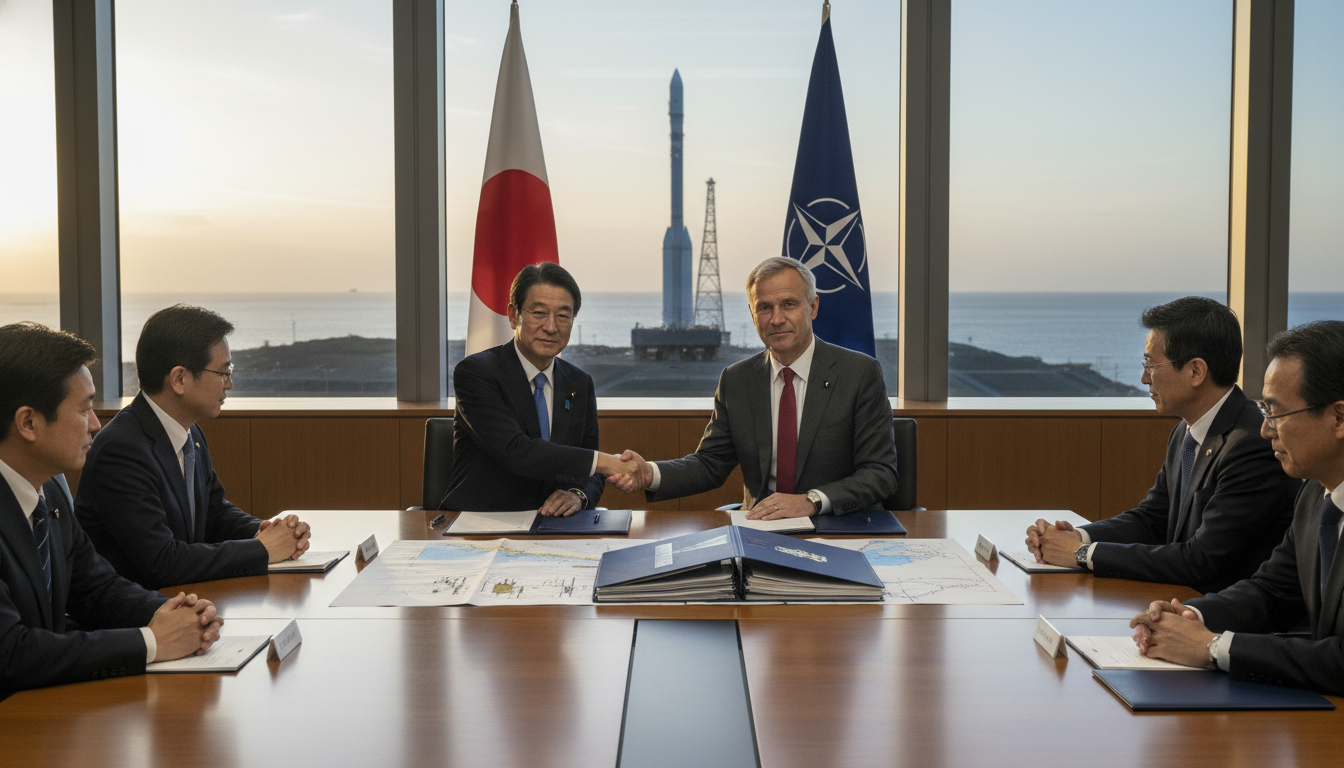
NATO Starlift project proposes shared satellite-launch access with Japan to speed replacements
NATO’s Starlift project seeks shared launch access with Japan to speed replacement of failed satellites and spur local economic activity near launch sites. (155 characters)
NATO Starlift project opens talks on shared launch access
NATO is advancing discussions on the Starlift project that would allow mutual use of satellite launch sites with Japan and other partners, Nikkei reported on May 9, 2026. The move is aimed at ensuring that disabled or failed satellites can be replaced quickly to maintain critical communications and surveillance capabilities.
Officials in Brussels say the proposal would create shorter windows for orbital replenishment and greater operational resilience for allied space assets. The plan remains at an exploratory stage and would require detailed technical, legal and diplomatic work before any agreements are finalized.
Rationale for rapid satellite replacement
Allied planners argue that the ability to launch replacement satellites on short notice reduces strategic vulnerability and operational gaps. Satellites provide essential services for navigation, communications, intelligence and disaster response, and prolonged outages can have cascading effects for military and civilian users alike.
Starlift proponents point to the increasing speed of events in space, from technical failures to anti-satellite activity, as a driver for redundancy. Faster access to multiple launch sites would allow partners to respond flexibly when an asset is lost or degraded.
How shared access would work in practice
Under the concept being discussed, NATO and partner states would establish protocols for prioritizing emergency launches, sharing range support, and coordinating launch windows. Practical arrangements could include reciprocal access to existing government and commercial launch facilities and pre-approved technical interfaces for payload integration.
Military and commercial launch providers would need to harmonize procedures for safety, tracking and airspace deconfliction. That coordination would be essential to avoid delays and ensure that replacement payloads can reach orbit on time and under controlled conditions.
Potential benefits for Japanese local economies
Japanese officials have flagged a possible economic upside if the Starlift model is adopted, saying regions near launch facilities could see increased investment and job creation. Local suppliers, logistics firms and service providers often expand around active launch sites, and steady demand for launches can underpin long-term regional growth.
Municipalities that host spaceports typically benefit from construction projects, specialized workforce development and new business opportunities in manufacturing and tourism. Japanese policymakers view participation as a way to bolster both national resilience and regional economic development.
Security, legal and regulatory hurdles
Implementing reciprocal launch access raises complex security and legal questions, including export controls, technology transfer restrictions and national licensing regimes. Japan and NATO members would need to reconcile different regulatory frameworks to permit third-party payloads and personnel on sovereign territory.
Analysts also note the need to address liability, insurance and environmental rules tied to launch operations. For military payloads, sensitive data and dual-use technologies will require strict safeguards to prevent unauthorized access and comply with international obligations.
Industry and diplomatic reactions under review
Industry stakeholders and allied governments are studying the concept and warning that commercial realities will shape any final design. Launch cadence, pad availability, and the readiness of integrated payloads are practical constraints that will affect whether Starlift can deliver the rapid replacement capability NATO seeks.
Diplomatically, the idea will require buy-in from partners beyond Japan, and its success depends on aligning strategic priorities across a patchwork of treaty obligations and national interests. NATO officials have emphasized that the proposal is intended to complement, not supplant, national launch capabilities.
Japan’s government has expressed interest in the potential economic and strategic benefits while underscoring the need for careful legal and safety reviews. Further consultations between Tokyo, NATO capitals and industry players are expected as officials assess technical feasibility and policy implications.
NATO and its prospective partners face a complex balancing act between operational resilience in space and the practical limits of launch infrastructure, regulation and international cooperation. The coming months should reveal whether Starlift moves from concept to an agreed framework that allows rapid satellite replacement while managing security and economic concerns.

