
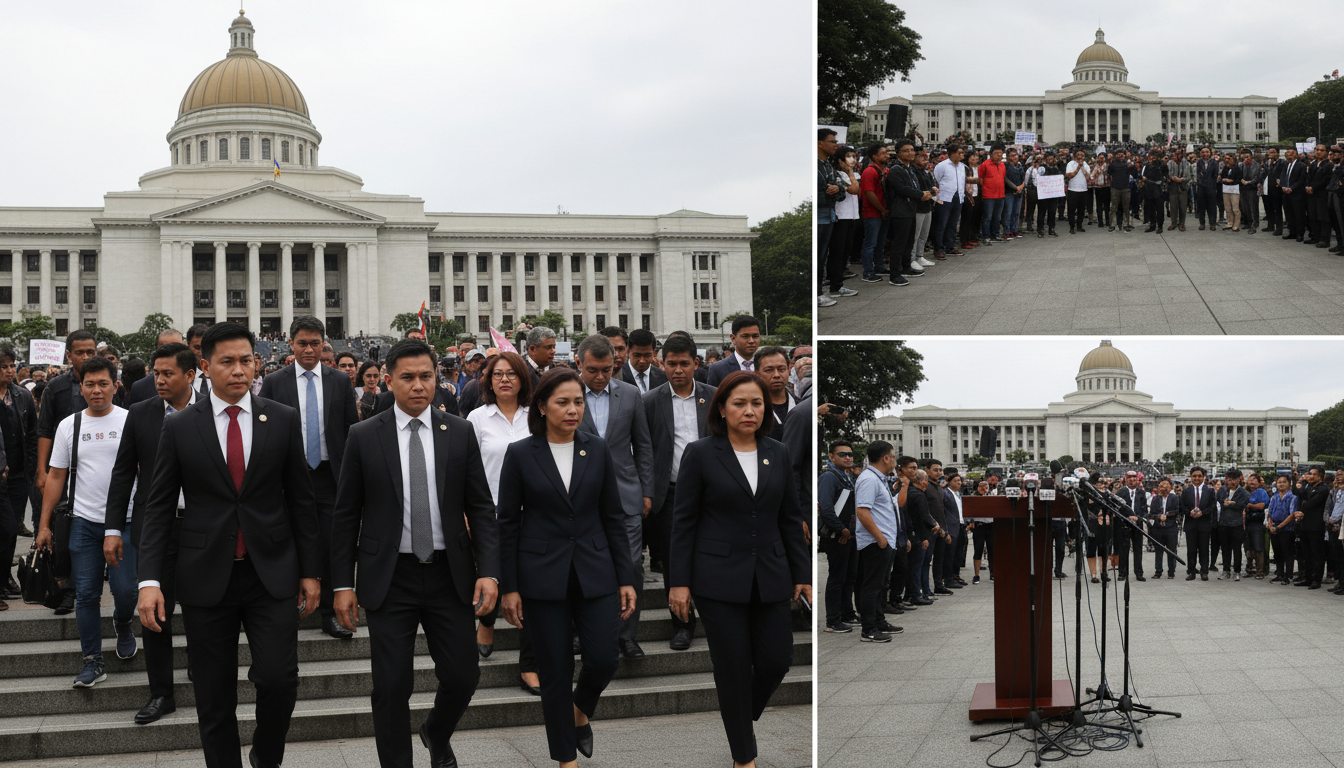
Sara Duterte impeachment: House votes to impeach vice president, Senate trial to decide removal
Philippine House votes to impeach Vice President Sara Duterte on May 11, 2026, sending the case to a Senate trial that could reshape the 2028 presidential race.
House votes to impeach Vice President Sara Duterte
On Monday, May 11, 2026, the House of Representatives voted overwhelmingly to impeach Vice President Sara Duterte, advancing a political process that may have major implications for national politics. The resolution passed by a decisive margin, setting the stage for a Senate trial that will determine whether she is removed from office. The move follows an impeachment complaint filed against Duterte earlier this year and now shifts the dispute to the upper chamber.
The House action reflects months of mounting political tension and marks one of the most consequential developments in the Duterte administration’s immediate orbit. Lawmakers debated the articles of impeachment before the vote, with proponents arguing that the allegations warrant a formal trial. Opponents described the proceedings as politically motivated but were unable to halt the passage of the articles.
Allegations cited in the impeachment complaint
The impeachment complaint submitted to the House lists a series of allegations that lawmakers said formed the basis for the vote, though the precise language of the articles covers multiple asserted violations. House leaders framed the complaint as a legal and constitutional matter requiring adjudication by the Senate. Supporters of impeachment argued that the charges, if proven, would justify removal from office.
Critics of the complaint have questioned the timing and motives behind the charges and urged due process during the Senate trial. Legal analysts have noted that impeachment in the Philippines is a political remedy that involves scrutiny of both legal and factual claims, and that the burden of proof and political dynamics in the Senate will be decisive.
Senate to hold trial that will determine removal
Following the House vote, the case will be transmitted to the Senate, which is constitutionally empowered to try impeachment cases and decide whether to remove an official from office. The Senate must follow procedural rules to receive the articles, schedule hearings, and establish evidentiary and trial procedures. If the Senate convicts with the required majority, removal and potential disqualification from future office can follow.
Senators will face complex decisions about timing, evidentiary standards and how to balance legal assessment with political considerations. Observers expect scheduling to be contested, with motions over witnesses, access to documents and the format of hearings likely to shape the pace of the proceedings. The outcome will hinge on both legal interpretation and the balance of political alliances within the Senate.
Implications for the 2028 presidential election
Political strategists and party officials said the impeachment could reverberate through the 2028 presidential contest, altering candidate lineups and voter calculations. As vice president, Sara Duterte remains a prominent political figure whose legal status and public standing could influence who chooses to run and where political allegiances land. A conviction could bar her from holding future office, reshaping the competitive field.
Even without removal, the proceedings could affect Duterte’s public image and campaign capacity by drawing sustained media attention and placing her under legal scrutiny. Rival camps may recalibrate strategies in response to trial developments, while party leaders could use the outcome to rally or distance themselves from particular political currents.
Reactions from Duterte, allies and opponents
Duterte and her allies have publicly rejected the impeachment allegations as unfounded and characterized the move as politically motivated, according to statements released by her office. Supporters have mobilized political and legal defenses, emphasizing constitutional rights and promising to contest the charges vigorously in the Senate. The vice president’s team has signaled readiness to present witnesses and evidence in its defense.
Opposition figures welcomed the House vote as an affirmation of institutional checks and a necessary step to hold leaders accountable. Some lawmakers urged restraint and adherence to due process throughout the Senate trial, warning against sensationalism. Civil society groups offered mixed responses, with some calling for transparency and others cautioning that impeachment should not substitute for ordinary criminal or administrative remedies.
Legal experts outline trial timeline and standards
Constitutional scholars and former prosecutors described the Senate trial as a hybrid legal-political process with few clear precedents for timing or outcome. They noted that the Senate rules allow for variations in procedure, and that the upper chamber could take weeks or months to receive and act on the articles. The required threshold for conviction is high, and achieving it would demand both legal substantiation and a political consensus among senators.
Experts emphasized that the Senate’s handling of evidence, witness credibility and procedural fairness will be scrutinized domestically and internationally. They also pointed out that ancillary legal actions—such as parallel criminal investigations or administrative cases—could proceed independently of the impeachment trial and influence public perception.
The House vote to impeach Vice President Sara Duterte has injected immediate uncertainty into the Philippines’ political calendar and set in motion a constitutional mechanism whose final outcome is difficult to predict.
Political leaders, legal authorities and voters will now turn their attention to the Senate, where the substance of the allegations and the balance of political forces will determine whether the vice president is removed from office. The coming weeks will test institutions, alliances and the public appetite for accountability in a high-stakes chapter of Philippine politics.

