
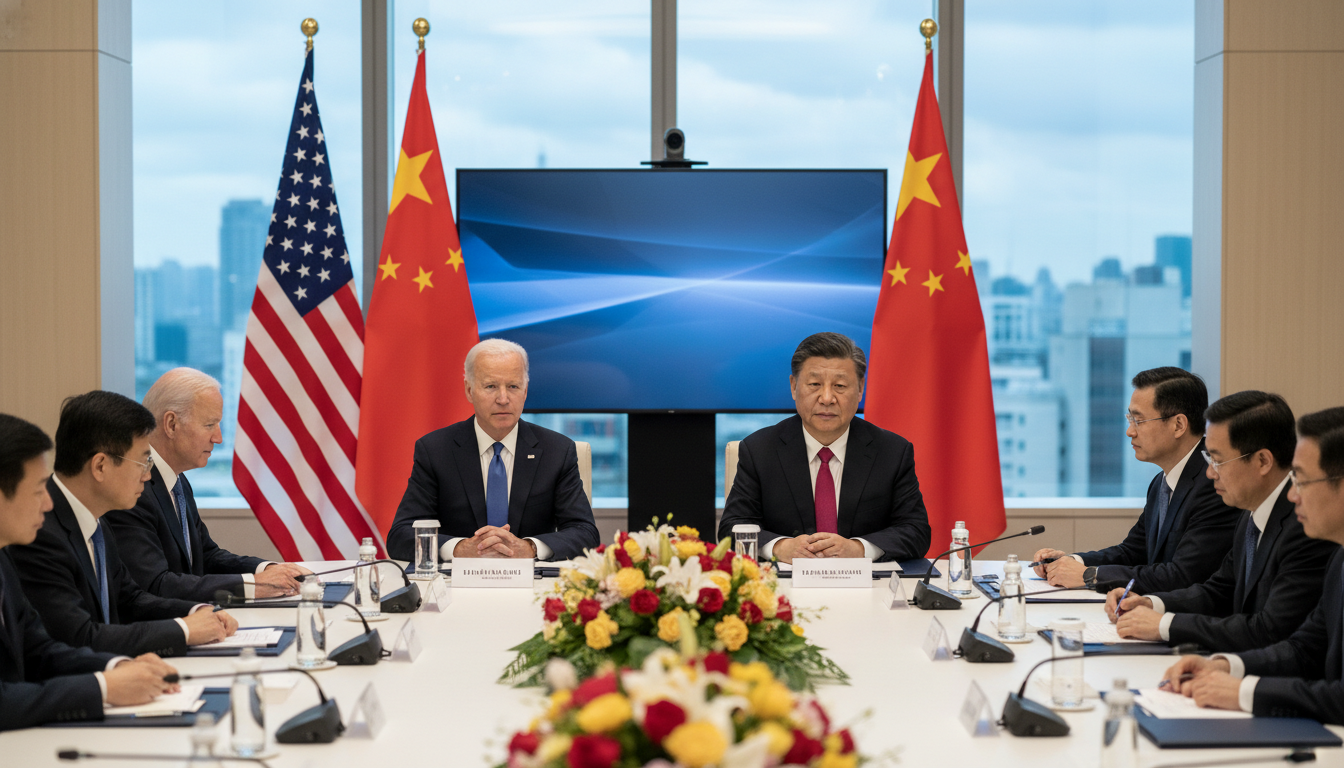
U.S.-China summit produces conciliatory rhetoric but leaves Taiwan and Iran energy issues unresolved
U.S.-China summit in Beijing: Trump and Xi pledged cooperation while key disputes—Taiwan, arms sales, and Iran-linked energy security—remain unresolved.
The U.S.-China summit held in Beijing on May 15, 2026, produced conciliatory language from both presidents but stopped short of resolving core strategic disputes. The meeting, billed as a signal of détente, saw leaders emphasize partnership even as tensions over Taiwan, arms transfers and Middle East hostilities persisted. The summit set a cooperative tone, yet analysts say the most consequential policy divides were left on the table.
Leaders’ public exchanges and political theater
Xi Jinping and U.S. President Donald Trump opened the summit with mutually upbeat statements that emphasized managing competition rather than escalating it. Both leaders framed the talks as a step toward stabilizing bilateral ties, projecting an image of coordination amid global uncertainty. Officials described the opening day as focused on restoring communication channels and reducing the immediate risk of miscalculation.
Behind the public rhetoric, each side pursued distinct political objectives that shaped the summit’s messaging and timing. For Washington, the visit offered a high-profile platform ahead of domestic elections and a chance to secure measurable deliverables. For Beijing, calming geopolitical friction and protecting economic access were priorities as global energy markets and growth prospects came under strain.
Taiwan remains a central point of contention
Xi reiterated that Taiwan is the most important issue in China-U.S. relations and warned that mishandling the matter could jeopardize the bilateral relationship. The Chinese leadership urged Washington to reconsider recent arms approvals and other policies that Beijing views as provocative. That message underscored Beijing’s insistence on a strict red line concerning sovereignty and reunification.
The Trump administration did not indicate any immediate change in policy regarding arms sales to Taiwan during the summit, maintaining a longstanding U.S. approach that treats such transfers as a separate consideration. U.S. officials framed arms sales as part of a broader security commitment and declined to characterize them as bargaining chips. The persistence of divergent positions suggests Taiwan will remain a diplomatic flashpoint.
Arms sales highlighted divergent strategic signaling
Washington’s historic arms packages for Taiwan have compounded mistrust in recent years and were a focal point of diplomatic friction during the talks. Beijing interpreted large-scale U.S. weapons transfers as undermining regional stability and directly challenged the concept of a peaceful cross-strait settlement. Chinese leaders sought assurances that such actions would be curtailed or at least discussed in advance, a request the United States did not accept publicly.
For the U.S., maintaining a degree of military support for Taiwan is tied to deterrence and to commitments under domestic law and long-standing policy instruments. U.S. officials emphasized that defense relationships and transactions are subject to legal processes and strategic calculations that are not easily negotiable in a single summit. The resulting gap in expectations underscores the limits of summit diplomacy when core security doctrines clash.
Energy security and the Strait of Hormuz agreement
Both leaders reportedly agreed on the need to end blockades in the Strait of Hormuz and to normalize global energy flows, framing energy security as a common interest. Disruptions tied to the conflict in Iran have pushed energy prices higher and complicated global supply chains, prompting shared concern. The public agreement on ending blockades signals recognition that economic stability is linked to maritime security and open shipping lanes.
Despite verbal alignment, practical actions diverged, with Beijing continuing to purchase oil from Iran while Washington has pursued measures that have tightened pressure on Tehran. Those contrasting policies reflect each country’s immediate strategic calculus: China prioritizes steady energy supplies and regional influence, and the United States prioritizes sanctions and coercive measures to counter Iran’s activities. The discrepancy leaves implementation of any joint energy-security objectives uncertain.
Economic incentives and the timing of the visit
Economic considerations shaped both the tone and substance of the summit, with China seeking to buffer its slowdown and the United States looking to demonstrate diplomatic wins at home. Beijing has faced growth headwinds that made cooperation on trade and stable energy supplies particularly appealing. Washington’s engagement also reflected a desire to secure short-term gains that could bolster political narratives ahead of electoral cycles.
Trade and technology disputes were not resolved, but both sides signaled interest in preventing competitive escalation that could damage their economies. Negotiators discussed mechanisms to reduce immediate tensions in critical areas such as semiconductors and market access, without committing to sweeping policy shifts. The outcome thus favored pragmatic, near-term steps rather than sweeping structural changes.
Unresolved structural tensions and future risks
Despite efforts at conciliation, summit participants left several structural conflicts unaddressed, leaving a risk of renewed friction in the months ahead. Deep-seated disagreements over technological competition, military posture, human rights concerns, and alliance dynamics were not bridged during the talks. Observers warned that absent sustained diplomatic follow-through, episodic cooperation may be fleeting.
Analysts say the summit established a working platform for further engagement but did not produce binding mechanisms to manage crises or prevent escalation. The durability of any détente will depend on subsequent policy choices in Washington and Beijing and on how both sides manage third-party flashpoints such as Taiwan and the Middle East. Without concrete frameworks for dispute resolution, the bilateral relationship will likely remain a mix of cooperation and rivalry.
The summit demonstrated that even high-profile meetings between major powers can deliver symbolism without resolving deep strategic divergences. For policymakers, the challenge now is to translate summit language into concrete, verifiable steps that reduce the chance of miscalculation and stabilize global energy and security environments.

