
CDP Tokyo federation chair election: Local councillor Kawana upsets Renho in May 15 vote
Kawana Yuji defeated Renho 124–81 in the CDP Tokyo federation chair election on May 15, 2026, reflecting a local councillor backlash and reshaping strategy ahead of spring 2027 races.
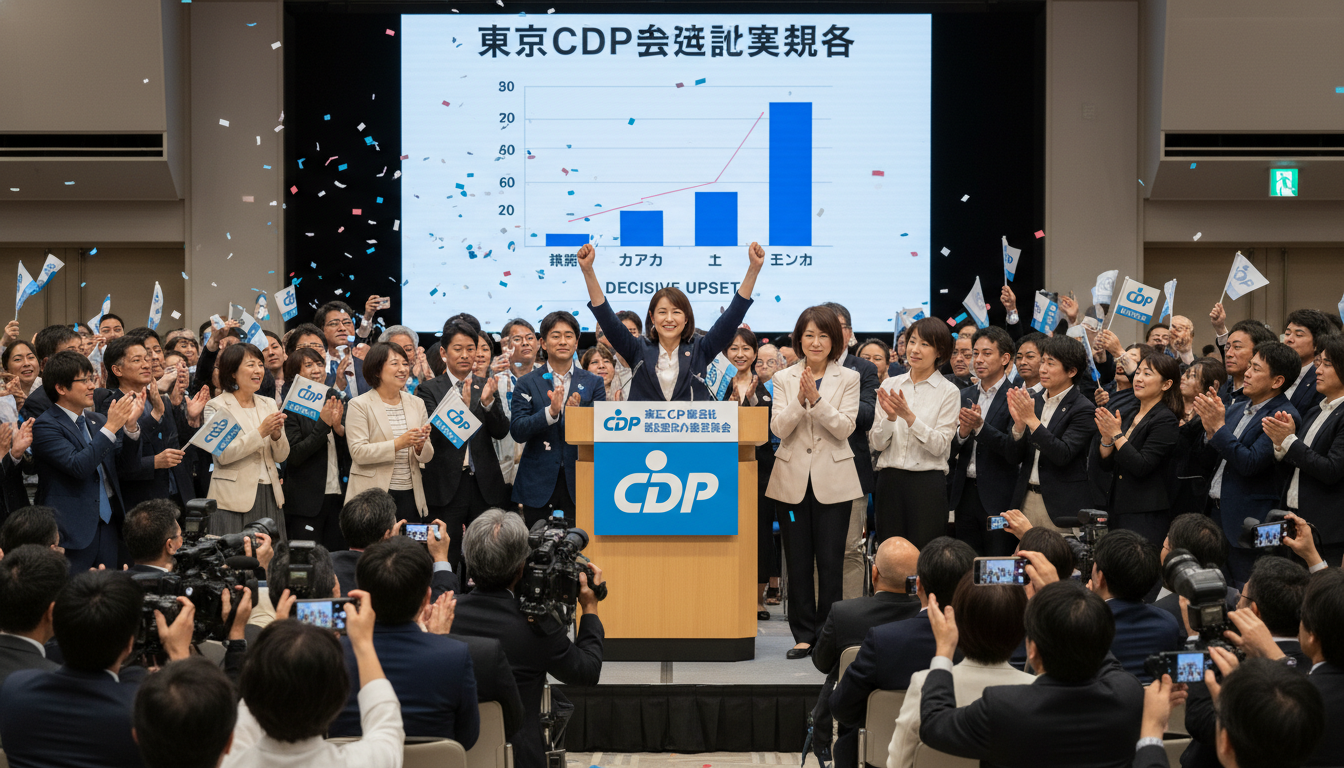
On May 15, 2026, the CDP Tokyo federation chair election produced a surprise result as Musashino city councillor Kawana Yuji defeated Upper House member Renho in a vote of Tokyo-based lawmakers and branch representatives. The contest, held amid friction between national parliamentarians and local council members, ended with Kawana winning 124 votes to Renho’s 81. The outcome signals a clear turn in the party’s Tokyo chapter management as it prepares for the unified local elections scheduled for spring 2027.
Vote count and electorate
The ballot was limited to Constitutional Democratic Party (CDP) members of the Diet, local councillors belonging to the Tokyo federation, and representatives from the party’s Tokyo branch offices.
Kawana secured 124 votes while Renho received 81, demonstrating a substantial margin in a relatively small, targeted electorate.
Observers noted that the tally reflected strong organization among ward and municipal councillors who had mobilized against the current federation leadership.
Significance of the first contested race since 2017
This was the first contested Tokyo federation chair election since the former federation was established in 2017, a period during which the chairmanship was filled without a vote.
Since that time, a Diet member had continuously led the federation, a pattern that local figures increasingly criticized as top-down.
The contest exposed growing impatience among grassroots elected officials who argued for greater local input into Tokyo federation decisions.
Reasons for local councillor discontent
Frustration among municipal and ward councillors intensified following the creation of the Centrist Reform Alliance and the party’s poor performance in the last lower house election.
Many local representatives complained that a Diet-centered executive had sidelined local needs and candidate selection, eroding trust with municipal bases.
Kawana campaigned on promises to rebuild the federation’s organization from the ground up and to open dialogue with centrist groups and coalition partners.
Candidates’ backgrounds and campaign themes
Renho, 58, is a veteran lawmaker who has held posts including administrative reform minister and party leadership roles, and who returned to the Upper House in the 2025 proportional election.
Kawana, 66, is serving his sixth term as a Musashino city councillor and framed his candidacy as a corrective to what he described as a centralized, top-down approach to Tokyo politics.
Both candidates emphasized party unity, but they diverged sharply on how the federation should balance national strategy with local autonomy.
Implications for spring 2027 unified local elections
Kawana is expected to lead efforts to reorganize the Tokyo federation and coordinate with centrist parties and potential partners such as Komeito ahead of the unified local elections in spring 2027.
His victory could shift candidate endorsement processes and campaign tactics to favor locally chosen hopefuls rather than centrally designated ones.
However, the transition may prove contentious, as at least one Tokyo assembly member who backed Renho indicated they might leave the party if Kawana’s leadership prevails.
Internal party reactions and potential fractures
The result has already prompted mixed responses within the CDP’s Tokyo ranks, with some national lawmakers expressing concern about cohesion and others welcoming a recalibration toward local branches.
Renho’s supporters include several metropolitan assembly members who fear the loss of national strategic coordination in Tokyo’s vital political turf.
Party leaders in Tokyo and at the national level will face immediate pressure to manage intra-party tensions while presenting a unified front to voters.
The outcome of the CDP Tokyo federation chair election underscores a broader struggle in Japanese opposition politics between central planners in Tokyo and assertive local actors seeking greater say over organization and strategy.
As Kawana begins his term, the federation’s ability to reconcile competing priorities will be tested by candidate selection, inter-party negotiations, and performance in the spring 2027 elections.
How the CDP balances local autonomy with national messaging in Tokyo could have lasting effects on its urban appeal and electoral prospects across the capital.

