
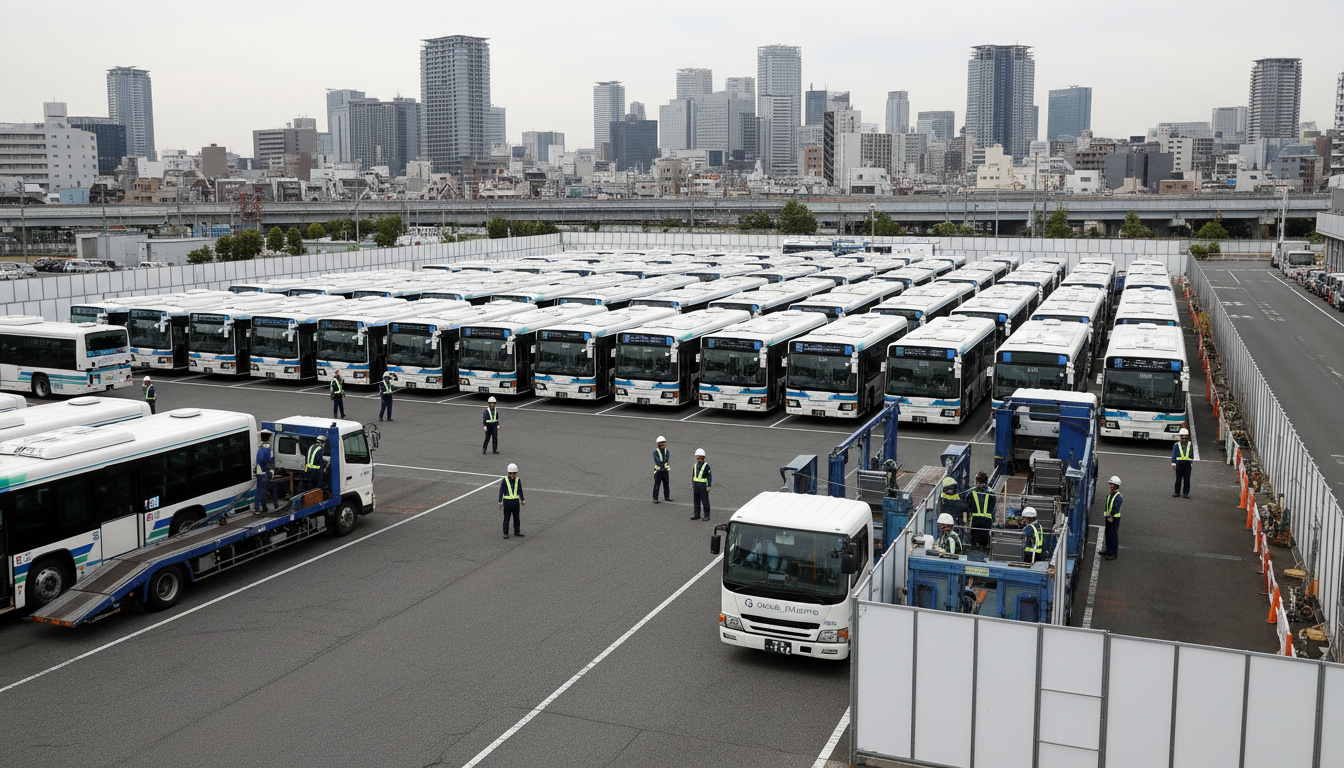
EV buses from Osaka Expo begin departure from Joto-ku ‘graveyard’ after defects prompt abandonment
Osaka Metro begins promptly transferring EV buses from a Joto-ku lot after defects and recalls; it booked ¥6.7 billion in losses and plans to finish by June 30.
Osaka Metro began moving electric buses that had been parked in a Joto-ku storage lot on May 18, 2026, after deciding to cease using the fleet following repeated vehicle troubles. The EV buses, which were deployed at the Osaka-Kansai Expo and on city on-demand routes, have been idle since late 2025 amid mounting safety concerns and public scrutiny. Metro officials say the transfer is the first step in resolving the operational and financial fallout from defects, recalls and a large-scale withdrawal from service.
Transfer operation begins on May 18, 2026
The relocation started on site in Joto Ward on Monday, May 18, 2026, with tow trucks and transporters carrying buses out of the fenced lot where more than 100 vehicles had been stored. The lot had been the focus of online attention and nicknamed a "graveyard" for the idled EV buses after they were taken out of regular service in December 2025. Osaka Metro said the company aims to complete the full transfer of all 190 buses by June 30, 2026, and is coordinating logistics to avoid traffic disturbances during the move.
Manufacturer recall and ministry inspection details
The 190 buses were procured by Osaka Metro between fiscal 2022 and 2024 and delivered by EV Motors Japan (EVMJ), which outsourced production to a Chinese contractor. The Ministry of Land, Infrastructure, Transport and Tourism conducted an on-site inspection of EVMJ in October 2025, after which the manufacturer filed a recall covering 85 vehicles. Osaka Metro has confirmed that 35 of the recalled units had been operating inside the Expo site, and additional defects were identified during subsequent inspections this year.
Reasons for abandoning use and canceled plans
Osaka Metro said a string of accidents and technical malfunctions prompted a comprehensive reassessment of the fleet’s safety and reliability, leading to the decision to stop using all 190 EV buses. Planned redeployment of the vehicles to regular route service and trials of autonomous bus technology were shelved as a result of unresolved mechanical and electrical issues. Company executives emphasized that passenger safety and regulatory compliance were the primary drivers of the decision to withdraw the fleet rather than attempting immediate repairs or repurposing.
Financial hit: Osaka Metro books ¥6.7 billion loss
In its financial statements announced on May 14, 2026, Osaka Metro reported a ¥6.7 billion (67 oku yen) loss tied to the purchase and subsequent abandonment of the 190 buses for the fiscal year ending March 31, 2026. The operator described the amount as an asset impairment and related costs associated with the vehicles, which it no longer considers fit for service without extensive remediation. Osaka Metro President Kawai Hideaki told reporters the company would move the buses quickly and handle the financial and logistical consequences transparently.
Operational and legal questions remain for the fleet
With the transfer under way, questions persist about the long-term disposition of the buses, including whether they will be repaired, sold, scrapped, or returned to the manufacturer under warranty or recall arrangements. EVMJ’s responsibilities and the contractual terms with its Chinese manufacturing partner will be central to any cost recovery or product-liability actions, while regulators may seek further information following the October inspection and the subsequent recall filing. Legal experts note that clarifying warranty claims, compliance with safety standards and the outcome of any additional government reviews will determine next steps.
Community reaction and reputational impact
Local residents and stakeholders raised concerns after photos and posts circulated online showing rows of parked EV buses, and the "graveyard" label amplified scrutiny of procurement and oversight practices. Osaka Metro faces reputational pressure to explain procurement decisions, maintenance records and the timeline of inspections and recalls, as civic groups and municipal leaders seek reassurance about public safety. The company has pledged to provide updates on the relocation process and any technical findings that emerge from further examinations of the vehicles.
The transfer of the EV buses marks a significant chapter in Osaka’s post-Expo operations and highlights the challenges of introducing large-scale electric fleets in complex service environments. As the moves continue through June, attention will focus on technical investigations, financial settlements with suppliers, and how Osaka Metro restructures its future plans for fleet modernization and on-demand mobility.

