
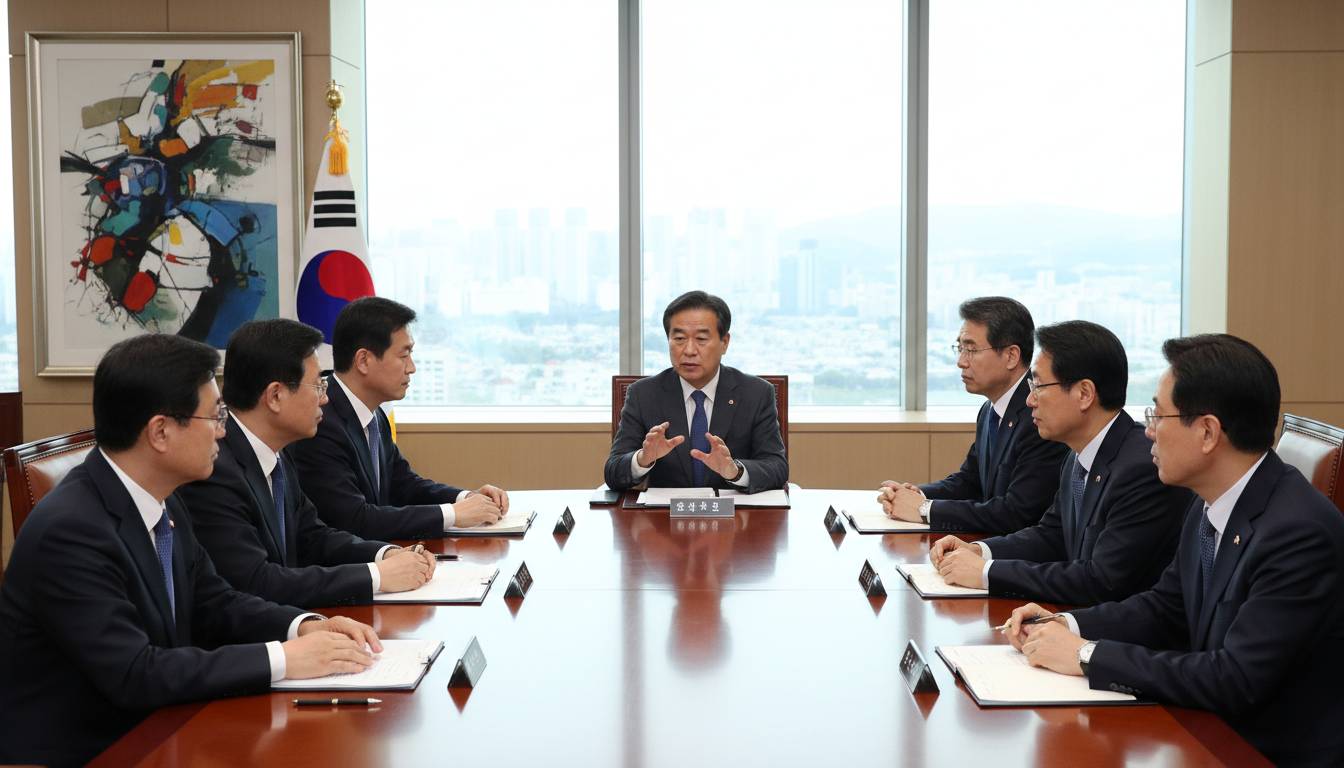
Samsung strike talks resume as Seoul weighs emergency arbitration to avert walkout
Samsung strike talks resumed in Seoul on May 18, 2026 as unions press for pay and bonuses; government weighs emergency arbitration to avert disruption.
Samsung strike negotiations between union leaders and company management resumed in Seoul on Monday, May 18, 2026, as officials signalled readiness to use emergency arbitration rights to prevent a walkout planned for Thursday, May 21, 2026. Union representatives are pressing for clearer pay structures and larger bonuses at a time when demand for semiconductors tied to artificial intelligence is driving record profits at the company. The talks follow intensified public attention on how a stoppage at Samsung Electronics could ripple through global chip supply chains.
Negotiations Resume as Samsung Strike Looms
Discussions resumed at the factory and corporate levels after a fresh round of local and national mediation efforts, according to union statements and company briefings. Both sides described the talks as substantive, with management reiterating a willingness to negotiate and unions emphasizing they would press on until pay and bonus proposals met their expectations. The immediate objective of negotiators is to reach an agreement before the strike deadline of May 21, 2026, when shifts at key manufacturing sites could be interrupted.
With the clock running, negotiators are reported to be focusing on specific bonus formulas and the transparency of salary bands. Unions say that clearer frameworks are necessary to ensure wage gains are tied to company performance and rising profits from AI-related demand. Management has expressed concern about maintaining output continuity and protecting long-term competitiveness while addressing worker grievances.
Union Demands Center on Pay Transparency and Bonuses
Union leaders have framed their demands around two core issues: more transparent pay structures and more generous, performance-linked bonuses. They argue that the benefits of the current AI-driven boom should be shared more visibly with frontline workers who operate and maintain production lines. Company-union talks have therefore turned technical, with debates over baseline increases versus one-off bonus payments and how to structure incentives across different job grades.
Workers have also raised broader workplace concerns tied to scheduling, overtime pay and the clarity of promotion pathways, though pay and bonuses remain the central bargaining points. Samsung’s unions have used public statements to underscore that the dispute is not only about immediate compensation but also about establishing longer-term mechanisms for equitable pay growth.
Government Mulls Emergency Arbitration
Seoul has signalled that it is prepared to consider emergency arbitration rights if talks fail to produce a settlement ahead of the strike date. Emergency arbitration would allow the government to impose a binding settlement or force mediation steps aimed at avoiding a shutdown that could affect national economic stability. Officials describe such measures as a last resort reserved for strikes judged to pose significant systemic risks.
The government’s involvement reflects concern over the potential impact on the semiconductor sector, which is central to South Korea’s export-led economy. Authorities are balancing the labour rights of workers with the broader imperative to safeguard production continuity amid a period of elevated global demand for chips.
Potential Impact on Semiconductor Production
Analysts warn that a strike at Samsung’s manufacturing sites could disrupt supply of memory chips and other components that feed into cloud computing, data centres and AI applications. Even short stoppages can create bottlenecks further down the supply chain, leading to shipment delays and price volatility for critical components. Suppliers and customers worldwide are monitoring the talks for signals about inventory adjustments and contingency sourcing.
Beyond immediate shipment delays, prolonged industrial action could affect investor confidence and slow the company’s ability to capitalise on surging orders tied to generative AI and data-driven services. Samsung’s role as a major global supplier means that disruption at its plants would reverberate across assembly partners and device manufacturers.
Market and Investor Concerns
Investor forums and market analysts have flagged the labour dispute as a near-term risk to Samsung Electronics’ operational outlook, though many note the company’s sizeable cash flow and diverse business lines. Stock-market responses to labour negotiations can be muted if a resolution appears likely, but uncertainty around arbitration and strike timing tends to increase short-term volatility. Credit-rating and industry watchers are also assessing whether repeated labour disputes could influence longer-term capital spending plans.
Corporate customers have reportedly begun contingency planning, including inventory rebalancing and discussions with alternative suppliers, a normal precaution when a major chipmaker faces potential disruptions. These moves underscore the interconnectedness of the semiconductor ecosystem and the practical consequences of a large-scale walkout.
Timetable and Next Steps
Negotiators have set a tight timetable aimed at resolving key outstanding issues before May 21, 2026, when the unions have stated their intention to commence strike action if no deal is reached. If talks stall, the government may announce next steps, including mediatory measures or an assessment of whether emergency arbitration is warranted. Both sides have signalled an appetite for further talks through the week, suggesting the immediate period will be decisive.
Labour leaders have said they will consult members on any proposed settlement, which means that even a managerial offer accepted in principle could require additional union ratification. Management has indicated it will present what it deems an equitable package while emphasising the need to avoid measures that would harm the company’s global competitiveness.
The outcome of the talks over pay and bonuses at Samsung Electronics will be closely watched by industry partners, investors and policymakers across Asia and beyond, as the dispute carries implications for workers’ pay standards and the uninterrupted flow of chips powering emerging AI services.

