
Thailand GDP growth accelerates in Q1 2026 as exports and investment counter early Iran conflict impact
Thailand GDP growth quickened in Q1 2026 as strong exports and rising investment offset early fallout from the Iran conflict, though higher fuel costs threaten momentum.
Robust first-quarter expansion
Thailand’s economy expanded more quickly in the January–March quarter of 2026, official figures showed Monday, with headline Thailand GDP growth driven primarily by external demand and investment flows. Export volumes rose across several manufactured goods categories, helping factories and ports record higher throughput despite a softer regional backdrop. Business investment strengthened alongside trade, providing an additional lift that helped the economy outpace many Southeast Asian peers in the same quarter.
Domestic demand contributed to the upturn but remained uneven, with household spending improving in some urban centers while rural consumption showed only modest gains. The combination of export-led gains and targeted capital expenditure helped blunt the early effects of volatility linked to geopolitical tensions affecting energy markets.
Exports and factories at the core
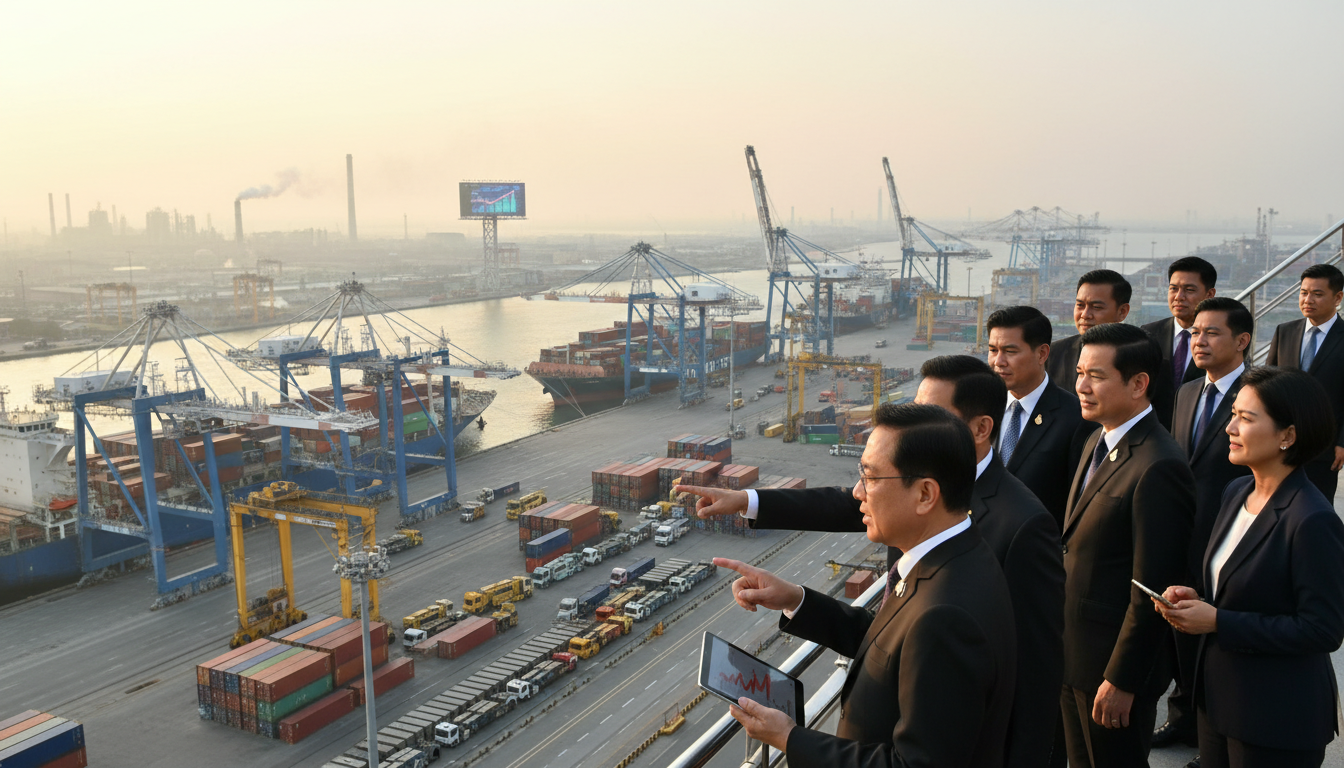
Manufacturing exports were the clearest engine of growth in Q1, according to the economic release, with shipments to major trading partners maintaining momentum. Electronics, automotive parts and commodities tied to regional supply chains were highlighted as key contributors to rising external sales. Ports and logistics operators reported busier activity, reflecting both order backlogs and new contracts secured during the quarter.
The export strength was reinforced by improved global demand in certain segments, even as other Southeast Asian economies experienced softer external conditions. Firms in export-oriented sectors responded by ramping up production and, in some cases, accelerating capital spending plans to meet anticipated orders.
Investment surge steadies the recovery
Private and public investment both played a supporting role in the rebound, cushioning the economy against external headwinds. Corporate capital expenditure was reported to have increased, with businesses citing stronger order books and the need to upgrade production capacity. Public investment in infrastructure projects also contributed, sustaining demand for construction and related services.
Analysts pointed to targeted policy measures that have helped maintain investor confidence, while foreign direct investment flows continued into manufacturing and logistics. The combined effect of these investment streams boosted industrial activity and employment in several regions, underpinning the broader GDP gains.
Geopolitical shocks and energy price pressures
Officials acknowledged that the early stages of the Iran conflict have posed risks, particularly through higher global energy prices and supply-chain anxieties. While the first-quarter gains indicate resilience, the rise in fuel costs is already expected to weigh on output and household purchasing power in subsequent months. Motor fuel price inflation has filtered into transport and production costs, squeezing margins for energy-intensive industries.
A photograph of a Bangkok gas station accompanying the figures illustrated the immediacy of the energy problem, with analysts warning that sustained high oil prices could shave growth from the April–June quarter. The interplay between geopolitical developments and global commodity markets remains a key downside risk for the near-term outlook.
Quarterly outlook: cautious but watchful
Looking ahead, policymakers and market watchers are taking a cautious stance on Q2 prospects, noting that the lagged impact of energy inflation and possible further disruptions to trade could temper activity. Consumer confidence could be tested if fuel-related inflation persists, and smaller enterprises remain vulnerable to higher input costs and tighter margins. However, if global demand in key export markets holds and investment growth continues, the economy may sustain a positive, if more moderate, growth path.
Financial markets have factored in both the stronger-than-expected Q1 result and the emerging risks, producing mixed signals in currency and bond markets. The interplay between monetary policy response and fiscal measures will be closely observed as authorities weigh the need to support growth against the imperative to anchor inflation expectations.
Regional comparison and policy implications
Thailand’s outperformance in the first quarter stands in contrast with a broader slowdown across parts of Southeast Asia, where weaker external demand and domestic headwinds have slowed recoveries. The divergence underscores the importance of export composition and the timing of investment cycles in shaping national outcomes. For policymakers, the Q1 report reinforces the case for policies that bolster competitiveness, address supply-chain bottlenecks and mitigate the inflationary effects of energy shocks.
Continuing efforts to diversify export markets, support small and medium enterprises, and accelerate strategic infrastructure projects were cited by experts as measures that could help sustain momentum. Macroprudential and targeted fiscal responses may also be needed if external pressures intensify.
The coming quarter will test whether the combination of exports and investment can offset persistent external pressures and high fuel prices, shaping Thailand’s growth trajectory for the remainder of 2026.

