
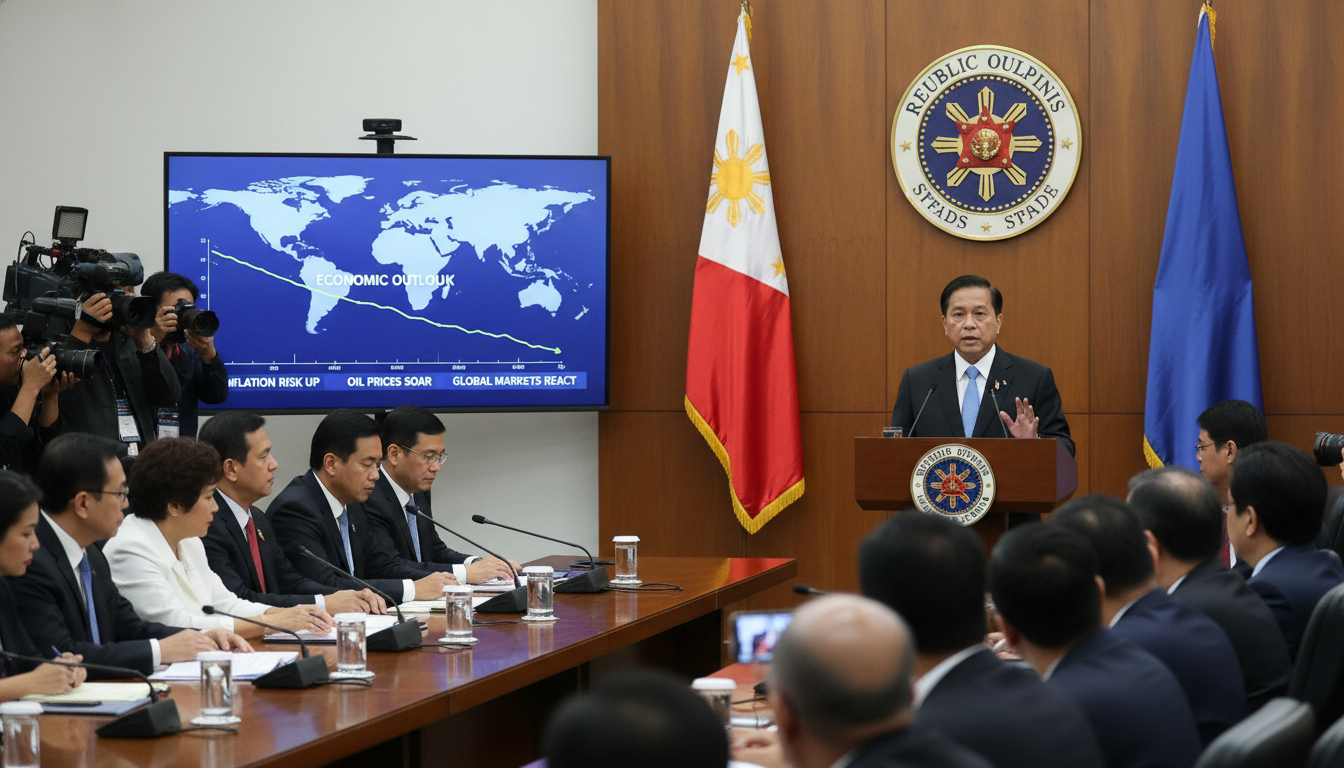
Marcos Orders 10% Budget Cuts as Iran War Deepens Stagflation Fears
Philippine President Ferdinand Marcos Jr. on May 18, 2026 ordered at least a 10% cut in government spending, saying the Iran war is deepening economic risks and could push the country toward stagflation. The planned savings amount to roughly $4.8 billion and aim to shield the fiscal position as global energy and food costs rise.
Marcos orders 10% reduction across agencies
President Marcos directed all government departments to trim operating budgets by a minimum of 10%, a move he framed as urgent fiscal prudence in response to external shocks. The administration calculated the aggregate reduction at about $4.8 billion, signaling a broad-based effort rather than isolated line-item pruning.
The instruction to agencies comes amid warnings from the palace that prolonged international conflict will raise import bills and squeeze public finances. Officials said the cuts will be identified quickly to meet the immediate fiscal target without delaying essential public services.
Stagflation warning underscores economic vulnerability
Marcos explicitly invoked the risk of stagflation — a combination of slowing growth and accelerating inflation — as justification for the austerity drive. He cautioned that if energy and food prices remain elevated, consumer purchasing power and business activity could both erode simultaneously.
Economists and policymakers have for months been monitoring how higher global commodity prices feed into domestic inflation while dampening investment and demand. The president’s language marks one of the clearest signals yet from Manila that policymakers view the Iran war as a serious near-term threat to macroeconomic stability.
Rising fuel and food costs at center of pressure
Government briefings pointed to escalations in oil and commodity markets tied to the Iran war as primary drivers of the policy shift. Higher crude prices raise the cost of imports, widen the trade deficit and translate quickly into transport and production costs for businesses.
Food-price shocks also pose political risks, particularly for low‑income households that spend a large share of income on basic staples. The combination of imported inflation and potential output weakness forms the core of the administration’s stagflation concern.
Fiscal math and where $4.8 billion might come from
The 10% target equates to the $4.8 billion figure cited by the president, but officials acknowledged that final allocations will be subject to line-by-line reviews by finance and budget agencies. Priority spending areas such as debt servicing, social protection, and disaster relief were described as likely to be protected where possible.
Cutting recurrent operational costs, delaying nonurgent capital projects, and reducing discretionary spending were outlined as likely avenues to achieve the savings. Finance officials said they will issue implementing guidance to ministries and state agencies in the coming days to translate the president’s directive into concrete measures.
Implications for social programs and public services
Civil society groups and local officials warned that deep cuts could strain public services if implemented without careful targeting. Education, health, and social assistance programs are politically sensitive and could face pressure if austerity is applied too broadly.
The administration has said it will aim to shield core social programs, but it also signaled readiness to reprioritize spending to preserve macroeconomic stability. How the balance is struck will shape public sentiment ahead of later budget cycles and could influence near-term growth trajectories.
Regional and diplomatic ripple effects
Manila’s policy shift underscores how geopolitical conflicts, even distant ones, can reshape domestic policymaking across Asia. The Philippines’ move to tighten spending may prompt neighboring governments to reassess fiscal cushions and contingency plans amid uncertain global markets.
The president also used the occasion to underscore the need for diplomatic efforts to reduce volatility in global energy supplies. Manila reiterated support for measures that stabilize trade and shipping routes, given the Philippines’ heavy reliance on imports for fuel and food.
The government will now face the task of implementing budget cuts while monitoring inflation and growth indicators closely. Close coordination between the finance ministry, central bank, and line ministries will be essential to mitigate downside risks without undermining essential services.
Economic pressures linked to the Iran war will likely remain a central policy challenge for the Philippines in the months ahead. The size and speed of the adjustments announced on May 18, 2026 will be watched by investors, rating agencies, and households as the administration balances fiscal consolidation with social and growth priorities.

