
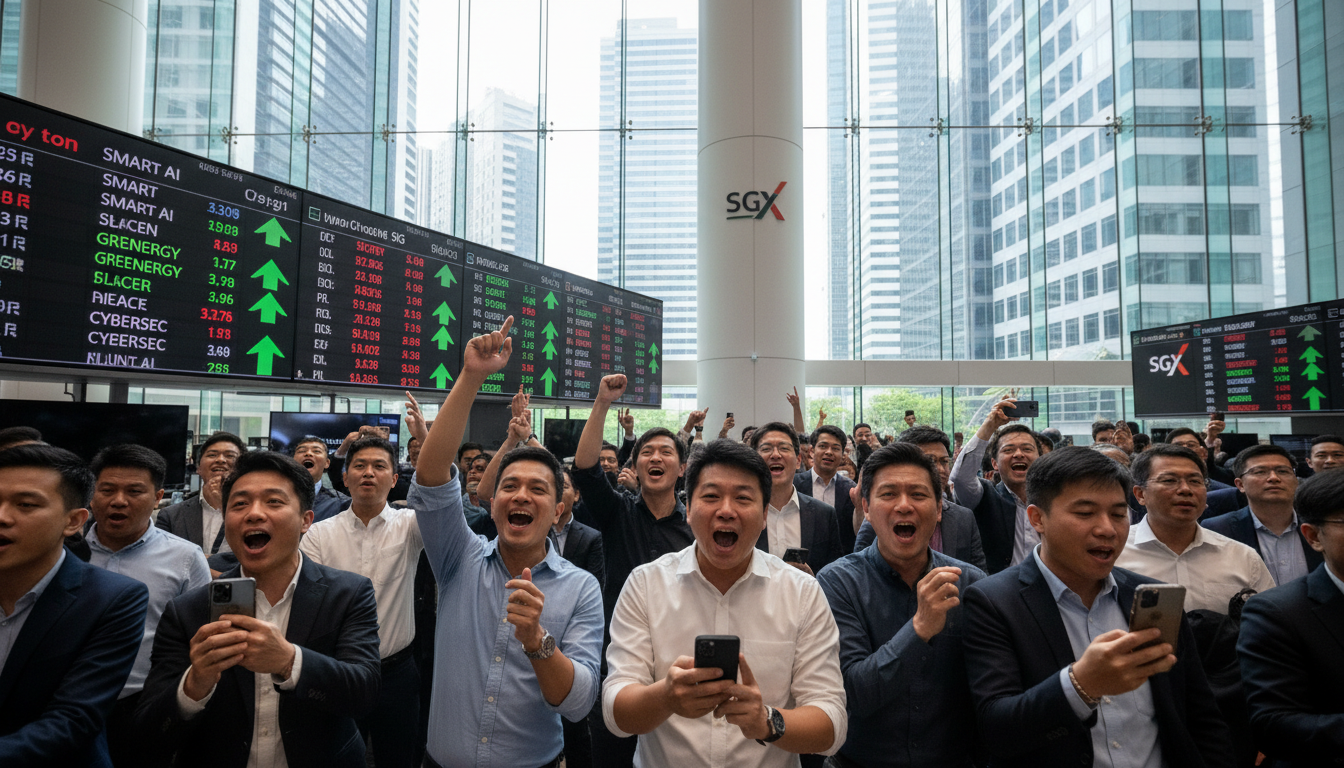
Singapore small-cap stocks rally as SGX market reforms boost liquidity and lift tech firms
Singapore small-cap stocks rally as SGX market reforms boost liquidity, lifting technology firms and drawing investor interest despite Middle East tensions.
Small-cap stocks listed in Singapore have staged a pronounced rally in recent trading, led by technology companies, as market reforms introduced by the Singapore Exchange (SGX) appear to be improving liquidity. The surge comes even as regional and global investors weigh unfolding tensions in the Middle East, underscoring a divergence between headline geopolitical risk and trading behavior in the local small- and mid-cap universe. Market participants and traders say the combination of structural changes and renewed investor focus on growth names is reshaping sentiment on the bourse.
Small-cap stocks lead Singapore rebound
Several small-cap segments outperformed broader indices in recent sessions, with technology-related names among the strongest performers. Traders attribute the outperformance to a concentration of buying interest and improved order execution conditions that have made it easier for funds to accumulate positions. The rebound has drawn attention from both domestic asset managers and regional investors seeking higher growth exposure amid subdued returns in larger, blue-chip stocks.
Market strategists note the rally is selective rather than broad-based, with mid-cap stocks showing mixed results depending on liquidity and corporate fundamentals. Companies with clearer paths to profitability or exposure to fast-growing software and hardware niches have been most favored. This selective pattern has allowed lofty moves in some names without triggering uniform market exuberance.
SGX reforms aimed at strengthening liquidity
The SGX has rolled out a series of market-structure changes intended to bolster liquidity and improve price discovery for smaller listings. Measures focus on enhancing matching efficiency, widening participation, and introducing incentives designed to narrow bid-ask spreads for less-traded stocks. Exchange officials and industry groups say these reforms are intended to make it easier for institutional investors to trade small- and mid-cap stocks without significantly affecting prices.
Market operators and brokers report that improved trading protocols have translated into more consistent order flow in stocks that historically suffered from episodic illiquidity. While reforms are not a panacea, several dealers said the combination of exchange changes and broker-level initiatives has materially improved execution for certain tickers. The shift has encouraged some managers who previously avoided thinly traded names to re-enter the market selectively.
Technology names at the forefront of gains
Technology companies listed on the Singapore market have led the advance as investors search for growth and innovation exposure within the region. Semiconductor-linked suppliers, enterprise software providers, and niche hardware producers have seen heightened trading interest. Analysts attribute the focus on technology to a multi-year thematic shift toward digitalisation and supply-chain reconfiguration across Asia.
Earnings trajectories and strategic partnerships have also played a role in re-rating several tech small-caps, with management teams touting clearer revenue visibility or contract wins. That combination of fundamental updates and improved liquidity conditions has reduced the execution risk that often kept institutional investors on the sidelines.
Investor sentiment balanced against regional risks
Despite the upbeat moves in small-cap names, many market participants remain cautious due to lingering geopolitical uncertainty in the Middle East. Portfolio managers said the broader risk environment has restrained position sizes and increased the use of stop-losses and hedging strategies. The net effect has been a cautious reallocation rather than a full-scale rotation into risk assets.
Investment houses also emphasised that volatility tied to external events can reverse short-term gains quickly, especially in stocks with lighter volumes. As a result, investors are combining the opportunity presented by increased liquidity with tighter risk management, favouring names with transparent reporting and credible management teams.
Trading desks report changes in market behaviour
Brokers and trading desks are reporting notable changes in order-book dynamics, with more sustained bid-side interest and narrower spreads in selected small- and mid-cap issues. This has eased the execution challenge for larger orders, making it feasible for institutional funds to build positions over time. Market makers and liquidity providers have responded by increasing quoted sizes in some segments, further improving tradability.
Execution quality improvements have also altered how strategies are implemented, with algorithmic execution tools increasingly used to minimise market impact. Several buy-side traders said they now consider Singapore small-caps as a complement to regional holdings, using phased buying strategies rather than relying on short-term momentum plays.
Analysts outline near-term outlook for mid- and small-cap market
Analysts expect the renewed interest in Singapore small-cap stocks to persist as long as liquidity improvements continue and macro conditions remain stable. They caution, however, that such rallies can be fragile and subject to reversal if external shocks intensify or if corporate news fails to meet elevated expectations. Long-term performance will hinge on corporate governance, earnings delivery, and sustained participation from institutional investors.
Market watchers say the SGX reforms provide a structural foundation for deeper and more resilient markets, but emphasize that investor confidence must be earned through consistent results. Companies that combine credible execution with clear growth prospects are most likely to attract lasting investor support.
The rally in Singapore small-cap stocks underlines how targeted exchange reforms and shifting investor priorities can change trading dynamics, even amid global geopolitical uncertainty. Continued improvements in market structure and disciplined risk management by investors will be crucial to whether this rally broadens into a sustained recovery for the wider small- and mid-cap segment.

