
Takaichi to Consider Supplementary Budget to Restart Summer Electricity and Gas Subsidies
Prime Minister Sanae Takaichi will consider a supplementary budget to resume summer electricity and gas subsidies, citing Middle East supply risks and market stability concerns.
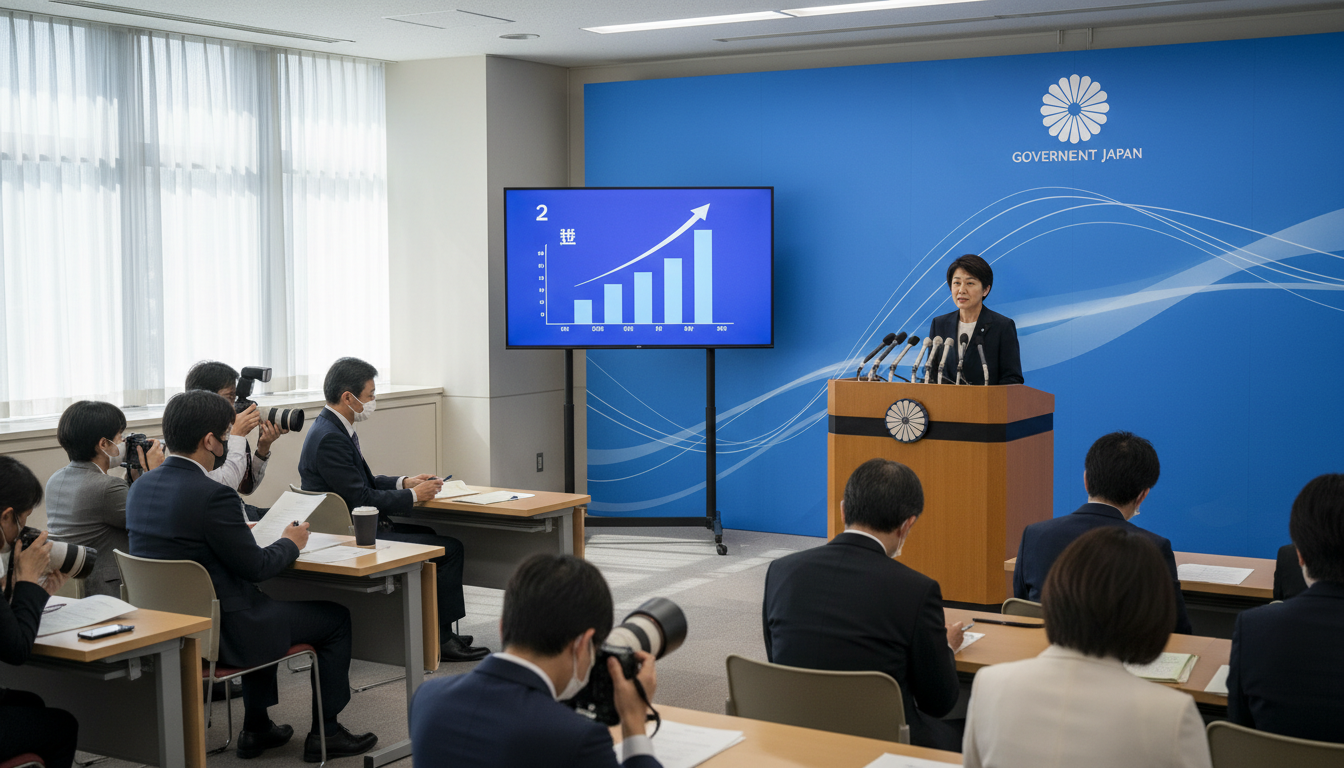
Prime Minister Sanae Takaichi on May 18 signaled a significant policy shift by announcing she will consider a supplementary budget to restart electricity and gas bill subsidies this summer. The decision marks the first time her administration has publicly opened the door to amending the 2026 fiscal framework to address energy cost pressures. The announcement underscores growing concern in government circles about the durability of energy supply disruptions and the need to shield households and businesses from rising costs.
Reason for Policy Reversal
Takaichi had repeatedly said a supplementary budget was unnecessary, but officials described the worsening situation in the Middle East as a central factor in the reversal. Disruptions around the Strait of Hormuz and reports of crude shortages affecting Asian suppliers have increased the risk of prolonged fuel market volatility. With U.S.-China summit talks failing to produce measures that would ease immediate supply concerns, the administration judged that a pre-emptive fiscal response could be warranted.
The prime minister’s decision also reflects an attempt to avoid delayed responses that could deepen public anxiety over utility bills. Government advisers said the administration wants to present concrete options to the public and markets rather than appear reactive after prices spike. That calculus appears to have outweighed earlier reluctance to reopen fiscal planning for the year.
Parliamentary Timing and Political Pressure
The timing of the announcement is tied in part to the parliamentary calendar. A scheduled party leaders’ debate on May 20, in which opposition parties planned to press for relief measures for households and firms, intensified pressure on the ruling coalition. LDP lawmakers reportedly urged the prime minister to make an early statement to avoid the perception that the government would only act under parliamentary pressure.
Opposition parties pressed for immediate support, arguing that households and small businesses face mounting bills. The administration’s move to examine a supplementary budget can be seen as an effort to shape the policy narrative ahead of public debate and to set the parameters for potential measures rather than having those details dictated by rivals.
Design Choices for Electricity and Gas Subsidies
Key decisions now center on how any subsidies would be designed. Options under consideration include direct bill subsidies for households, targeted support for low-income and vulnerable groups, temporary rate caps, and relief measures for energy-intensive industries. Each approach carries different cost profiles and administrative demands, and ministers will need to balance speed of delivery with precision in targeting.
Officials from the Ministry of Economy, Trade and Industry and the Finance Ministry are expected to model scenarios that weigh the reach of assistance against the fiscal cost. Designing a subsidy that stabilizes household finances without creating perverse incentives for consumption will be a technical and political challenge.
Fiscal Implications and Market Sensitivity
The most contested issue will be the size of any supplementary budget and how to finance it. Government sources say policymakers will consider a mix of options, such as reallocating existing contingencies, drawing on reserve funds, or issuing new debt. Any decision will be made against the backdrop of Japan’s long-term public debt concerns and the need to avoid destabilizing financial markets.
The government has signaled it will monitor market reactions closely while formulating proposals. Officials noted that premature or overly large fiscal moves could unsettle bond and currency markets, while insufficient measures risk failing to reassure households and businesses. That tension will shape deliberations in the coming days and weeks.
Stakeholder Responses and Industry Concerns
Household groups and business associations have reacted to the announcement with cautious approval, urging clarity on eligibility, timing, and duration. Energy suppliers and utilities are watching for policy detail that might affect billing practices, cash flow and investment planning. Industry observers stressed the importance of alignment between any subsidy scheme and longer-term energy policy, including demand-side measures and incentives for efficiency.
Within the ruling coalition, some lawmakers emphasized the political necessity of visible relief, while fiscal conservatives warned against open-ended commitments that could complicate fiscal consolidation. The administration faces the task of reconciling these competing pressures while maintaining credibility on both economic stewardship and social protection.
Cabinet offices will now begin formal consultations with party leaders and relevant ministries to scope options, cost estimates and implementation mechanisms. The government has not yet fixed a timetable for submitting a formal supplementary budget to the Diet, and officials said decisions will depend on evolving energy prices and market signals.
The unfolding deliberations will determine whether the government can present a clear, targeted package that calms households and preserves market confidence, or whether political and technical divisions will slow delivery of relief during a period of continued uncertainty.

