
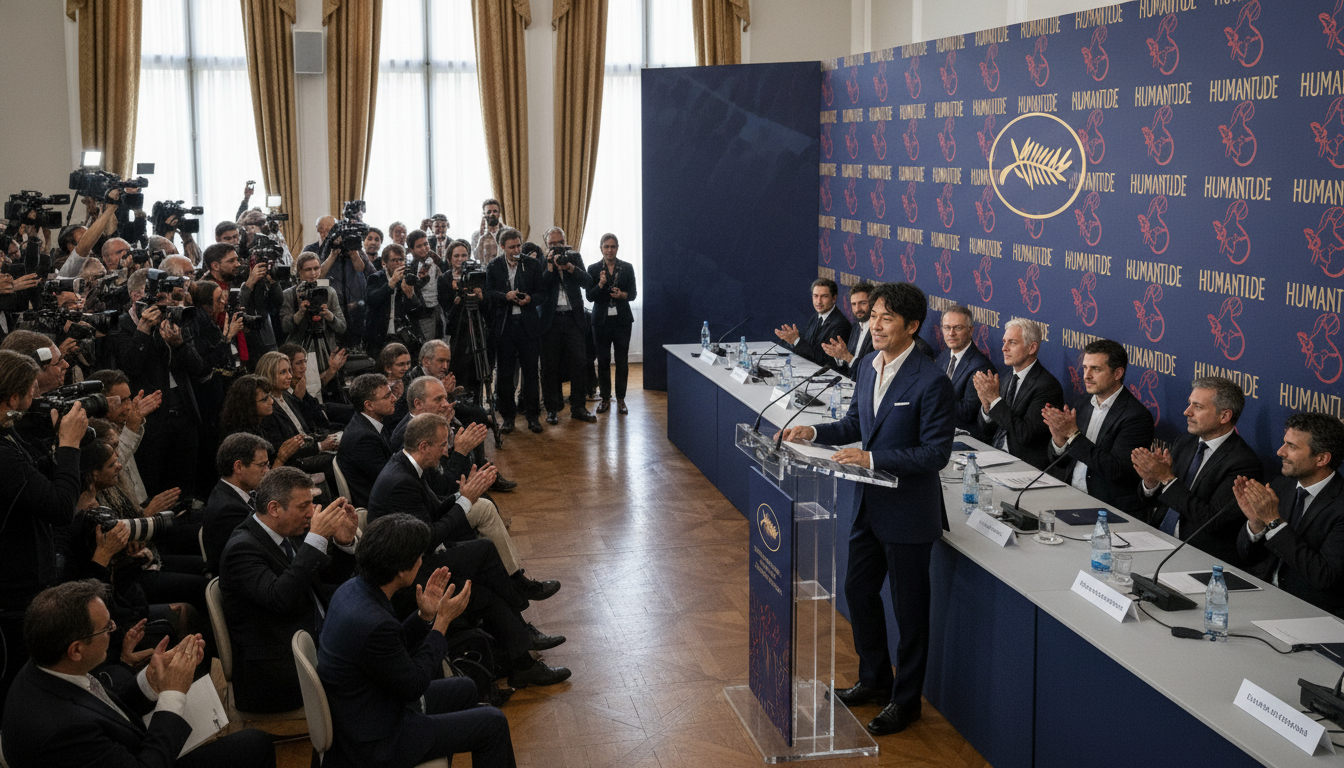
Ryusuke Hamaguchi’s All of a Sudden Wins Praise at Cannes for Patient Portrait of Caregiving
Hamaguchi’s All of a Sudden earned praise at Cannes for its three-hour look at Humanitude caregiving, shot in a Paris care home and noted for a humane pace.
Ryusuke Hamaguchi’s latest film, All of a Sudden, emerged as one of the standout works of this year’s Cannes Film Festival, drawing attention for its measured storytelling and humane focus. The three‑hour drama centers on caregiving practices tied to the Humanitude method and was shot largely inside a Paris elderly care facility over several months. Critics and festivalgoers praised the film’s unhurried rhythm and its insistence on showing people the time and attention they deserve.
Hamaguchi’s turn toward deliberate pacing
Ryusuke Hamaguchi has become known for films that allow scenes to breathe, and All of a Sudden continues that approach with a patient, observational tempo. The director said the work is rooted in a desire to recover the time necessary for genuine human connection, an idea that informs both the film’s structure and its on-screen interactions. Rather than chase plot mechanics, the film lets relationships develop gradually, permitting small gestures and silences to carry emotional weight.
Storyline and central performances
All of a Sudden follows Marie‑Lou Fontaine, the manager of an elderly care facility, as she attempts to implement Humanitude — an approach that emphasizes eye contact, respectful handling and extended personal attention. Virginie Efira portrays Marie‑Lou, and her performance anchors the film’s quiet moral urgency. The narrative expands when Marie‑Lou meets a theater director, played by Tao Okamoto, whose production includes a role for a young actor with developmental disabilities, played by Kodai Kurosaki, and their evolving bond becomes a vehicle for the film’s central questions about care and connection.
Filming inside a Paris care home
Hamaguchi shot All of a Sudden over five months in an operational care facility in Paris, incorporating many residents as extras to preserve an authentic atmosphere. That immersion into daily life at the home informed both the film’s texture and its ethical perspective, according to the director. The presence of real residents gave scenes an improvisatory quality and compelled the cast and crew to adapt to rhythms not dictated by conventional production schedules.
Humanitude and on‑set philosophy
The Humanitude method is a throughline in the film, not only as a plot element but as a guiding principle for Hamaguchi’s process. He has drawn explicit parallels between caregiving practices and how film sets should treat actors and staff, advocating for more time and respect rather than brisk, efficiency‑driven exchanges. Hamaguchi described an ambition to capture reactions that arise in the moment, arguing that prepared emotion is different from responses born of genuine interaction and available time.
Cannes reception and industry interest
At Cannes the film stood out amid the festival’s usual rush, attracting attention for its refusal to hurry and for its compassionate gaze. Festival audiences responded warmly, and industry observers noted the film’s potential for international distribution; Neon is slated to release it in the United States later this year. For many viewers, All of a Sudden functions as both a cinematic experience and a prompt to reconsider how contemporary life allocates attention to the elderly and to one another.
Connection to Hamaguchi’s previous work
All of a Sudden arrives after Hamaguchi’s international breakthrough with Drive My Car, a film that earned multiple awards and expanded expectations for Japanese cinema on the global stage. While Drive My Car explored grief and performance through extended scenes and conversational depth, Hamaguchi’s new film focuses more narrowly on caregiving institutions and the labor of attention. Yet both films share an interest in allowing scenes to unfold slowly enough for interpersonal complexity to surface.
The film’s central argument is deceptively simple: meaningful human connection requires time, attention and a willingness to slow down. All of a Sudden does not dramatize this thesis with melodrama; it practices it, giving its characters and its audience room to breathe and to notice. For viewers left breathless by the festival’s pace, Hamaguchi’s film offered a rare invitation to linger.

