
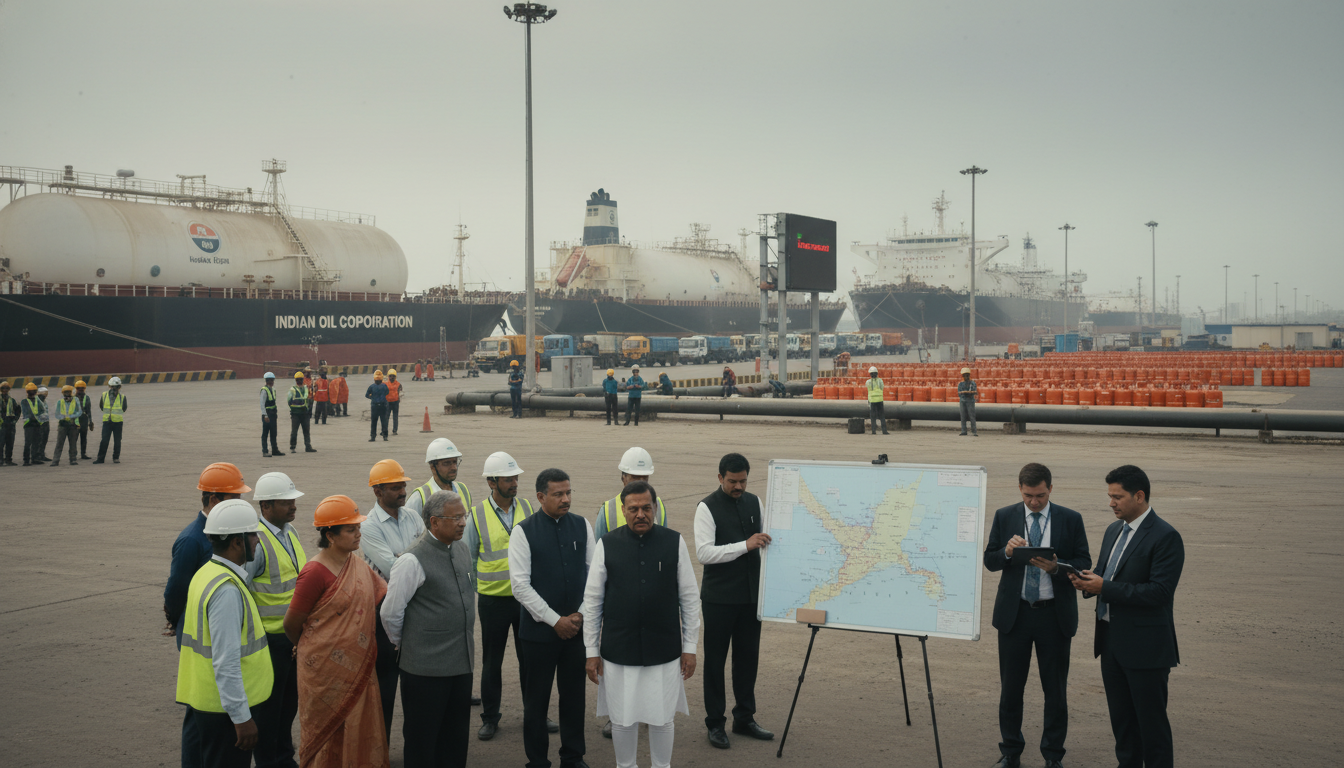
India Faces 400,000 bpd LPG Supply Gap After Iran War Disruptions
India faces a 400,000 barrels-per-day LPG supply gap after Iran war import cuts, straining cooking gas availability and forcing government responses soon.
India, the world’s third-largest consumer of liquefied petroleum gas (LPG), is confronting a substantial LPG supply gap of about 400,000 barrels per day from pre-war levels, officials and industry sources said. The shortfall comes after a sharp decline in imports linked to the Iran war, and domestic production has increased only marginally, leaving households and businesses exposed to tighter supplies. The emerging deficit in the LPG market is prompting scrutiny of import strategies and domestic capacity as authorities weigh immediate and medium-term responses.
Supply Shortfall Linked to Iran War
The current LPG supply gap is directly traced to disruptions in imports caused by the Iran war, which curtailed volumes India had relied upon before the conflict. Industry observers say that shipments that once helped meet a sizable share of the country’s cooking-fuel demand have fallen away, creating an abrupt swing between pre-war supply patterns and present-day availability. The 400,000 barrels-per-day figure represents the estimated difference between historical import-dependent supply and what the combined domestic output and remaining imports now deliver.
The timing and scale of the import shortfall have intensified pressure on local distribution networks and storage systems, especially in densely populated urban and peri-urban areas. Traders and distributors report tightened allocations of cylinders and bulk LPG to retailers in some regions, compounding logistical strains already felt across supply chains. The situation has elevated focus on how long the disruption will persist and whether supply can be steadied before peak demand seasons.
Domestic Production Rises Only Marginally
Despite efforts to boost output, domestic production of LPG has increased only slightly and has not closed the gap left by falling imports. Refinery and gas-processing operators have reported incremental production gains, but those increases remain a fraction of the overall shortfall. Structural limits within the refining and petrochemical sectors, together with feedstock constraints, are understood to constrain how rapidly local output can scale up.
Investment cycles and operational timelines mean that large-scale increases in local production cannot be delivered overnight, industry analysts note. Enhancing capacity typically requires months to years of planning and execution, including feedstock availability, refinery turnarounds and regulatory approvals. In the near term, therefore, most market participants see imports and distribution management as the primary levers to shore up supplies.
Household Availability and Price Pressure
The LPG supply gap is affecting the availability of cooking gas cylinders for millions of households and creating upward pressure on retail prices in several markets. Where allocations have tightened, consumers report longer waits for cylinder refills and higher spot prices, particularly in areas where supply chains are less resilient. For many urban families that rely on LPG as the main cooking fuel, such disruptions translate into immediate household inconvenience and potential increases in living costs.
Smaller commercial users, including restaurants and small enterprises that depend on uninterrupted LPG supply, are facing operational challenges when deliveries are delayed. Price volatility can ripple through food services and retail sectors, potentially leading to temporary closures or reduced operating hours for establishments unable to secure affordable fuel. The social and economic impacts of sustained fuel tightness would be greater in lower-income communities where alternatives are limited.
Government and Industry Measures Under Consideration
Authorities and industry leaders have begun discussions on a range of measures to mitigate the short-term supply gap and to build resilience into the system. Options cited in public and private briefings include rebalancing imports from alternate suppliers, optimizing distribution logistics, and tapping strategic stock reserves where available. Officials are also said to be examining regulatory and fiscal steps to ease market distortions and to prevent undue price spikes for vulnerable consumers.
At the same time, the industry is exploring demand-management tools and emergency allocation mechanisms to prioritize household supply over non-essential uses during acute shortages. Stakeholders emphasize coordination across ministries, state governments and private companies as essential to execute rapid, targeted interventions. Any policy response will need to weigh immediate relief against longer-term market implications and fiscal costs.
Outlook for Supplies and Medium-Term Adjustments
Looking ahead, the pace at which alternative import channels can be established and the scale of additional domestic output that can be mobilized will determine how quickly the LPG supply gap narrows. Market participants expect a phased recovery if imports from other sources can be arranged and if refineries can incrementally raise LPG yields. However, the degree of uncertainty around the Iran war and broader geopolitical dynamics means that risks to supply continuity remain elevated.
Industry analysts recommend that medium-term adjustments include diversification of import sources, investments to increase domestic LPG yields and enhancements to storage and distribution infrastructure. Such measures would reduce reliance on any single supplier and improve the system’s capacity to absorb future shocks. Policymakers must balance these investments with affordability concerns to ensure that expanded capacity also translates into stable prices for households.
The combination of an immediate 400,000 barrels-per-day shortfall, limited near-term gains in domestic output, and persistent geopolitical risk underscores the challenge facing India’s LPG market. Addressing the gap will require coordinated action across government and industry, pragmatic allocation of existing supplies, and fast-tracked measures to broaden import options while protecting consumers from acute price and availability shocks.

