
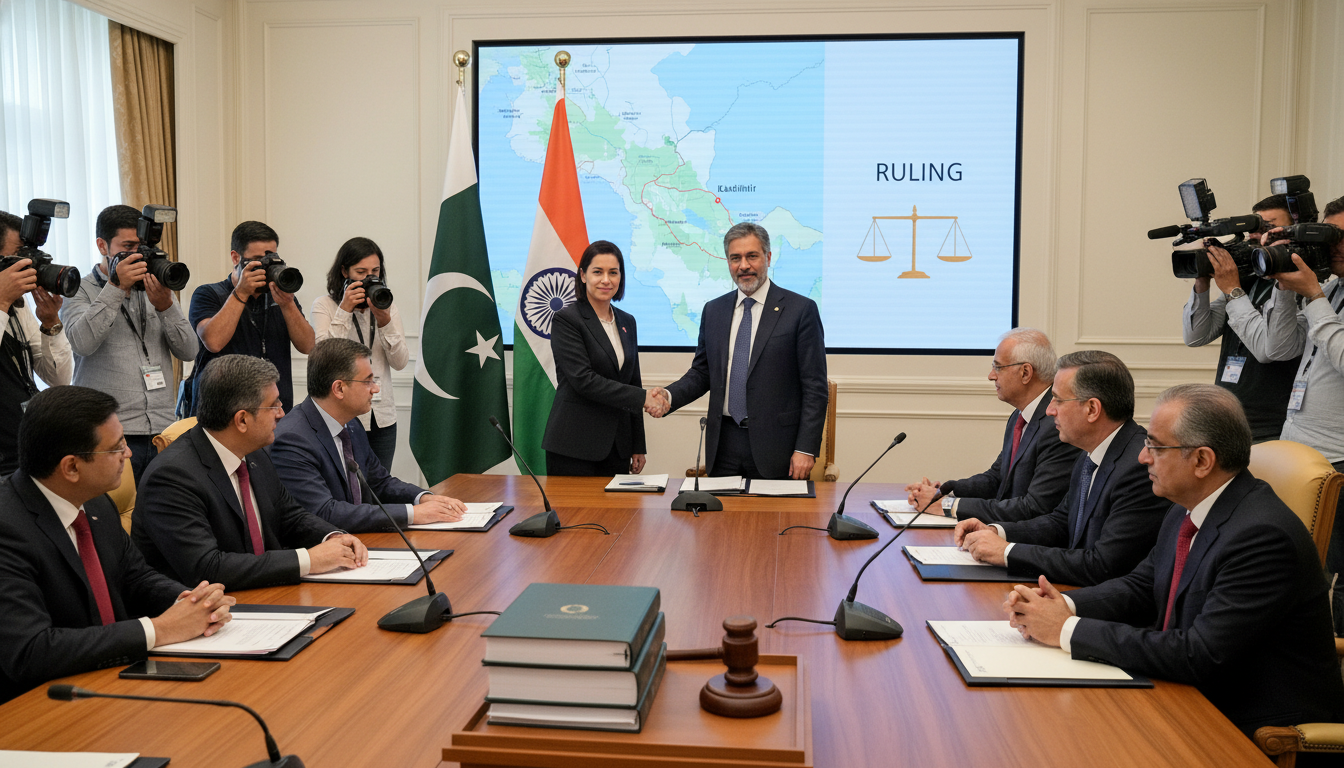
India Pakistan clash over Indus Waters Treaty after court backs Islamabad on pondage dispute
International court upholds Pakistan’s plea against India’s pondage at two Kashmir hydro projects, reinforcing Islamabad’s position under the Indus Waters Treaty. (156 characters)
The Indus Waters Treaty was cited on Monday after an international court upheld Pakistan’s plea over India’s pondage at two hydroelectric projects in the New Delhi-administered Kashmir region. The ruling bolsters Islamabad’s legal position as both countries remain at odds over water management under the Indus Waters Treaty. The dispute comes against the backdrop of India’s April 2025 declaration that it would unilaterally suspend the 1960 treaty, deepening tensions over transboundary rivers.
Court Upholds Pakistan Complaint
An international tribunal found merit in Pakistan’s challenge to India’s use of pondage at the contested projects, effectively endorsing Islamabad’s interpretation of treaty protections. The court’s decision focuses on operational measures that Pakistan argued could alter flows and harm downstream rights guaranteed by the Indus Waters Treaty.
Officials in Islamabad described the ruling as a legal confirmation of Pakistan’s long-standing concerns about water regulation and downstream impacts. New Delhi has faced sustained criticism from Pakistan that its construction and operational practices on upstream infrastructure have not fully respected treaty safeguards.
Dispute Centers on Pondage at Two Kashmir Projects
The contested measures involve temporary ponding of water behind hydroelectric dams, a practice Pakistan says risks changing timing and quantity of flows into the Indus basin. Pakistan’s complaint targeted operations at two New Delhi-administered Kashmir projects that Islamabad says exceed permissible storage and control under the agreement.
India has defended the projects as legitimate uses of waters for power generation and flood management, while Pakistan argued the pondage arrangements effectively enable upstream control of downstream resources. The court’s finding narrows the scope for such operational latitude and underscores the technical complexities of river management between the rivals.
1960 Indus Waters Treaty Allocations and Legal Groundwork
The Indus Waters Treaty, signed in 1960, allocates control of the six-river Indus system and established dispute-resolution mechanisms that have endured through diplomatic crises. Pakistan and India agreed then to detailed rules on construction, diversion and storage that were intended to prevent unilateral harm and provide predictable water sharing.
Over decades the treaty’s engineering and legal provisions have been tested repeatedly by infrastructure projects, seasonal variability and political friction. The recent court ruling highlights how technical treaty clauses are now being adjudicated in legal forums rather than resolved solely by bilateral negotiation.
Reactions From Islamabad and New Delhi
Pakistan’s government welcomed the court decision and framed it as validation of its right to seek legal remedies under the treaty’s dispute mechanism. Islamabad said the ruling strengthens its case for binding oversight of upstream operations that affect downstream flows and communities.
India has previously signalled that it would review its commitments after announcing a suspension of parts of the Indus Waters Treaty in April 2025. New Delhi’s public statements following the court’s decision were cautious, emphasizing sovereign rights to develop infrastructure and the need to balance water use with national priorities.
Regional Water Security and Diplomatic Consequences
Water experts say the court decision could prompt new operational limits at the disputed projects and encourage closer scrutiny of other planned or operating dams in the Indus basin. Any legal constraints on upstream pondage would have practical implications for power generation, flood control and seasonal storage in the region.
Diplomatically, the ruling adds pressure on both capitals to re-engage on technical and legal channels even as political relations remain strained. Observers caution that unresolved water disputes can feed broader tensions, particularly as climate variability increases the importance of predictable flows and cooperative management.
Potential Next Steps and Enforcement Questions
The court’s determination sets a precedent for how treaty clauses on storage and pondage are applied, but enforcement will depend on follow-up procedures and political will. Islamabad may seek specific operational remedies or monitoring mechanisms, while New Delhi will weigh legal obligations against developmental plans and domestic energy needs.
International intermediaries and technical experts could play a role in translating the legal decision into on-the-ground changes, such as revised operating rules, independent monitoring and confidence-building measures. Absent cooperative implementation, the practical gap between legal rulings and river operations may persist.
The international court’s ruling underscores the centrality of the Indus Waters Treaty to South Asian water diplomacy and highlights the technical legalities that now shape water-sharing disputes. As both countries assess the implications, the decision is likely to reverberate through regional planning, bilateral relations and discussions on how to protect shared water resources amid growing demand and climatic uncertainty.

