
Naphtha supply tensions expose widening gap between government assurances and industry action
Naphtha supply tensions prompt firms to take defensive measures as government insists overall volumes are sufficient, raising industry-government friction.
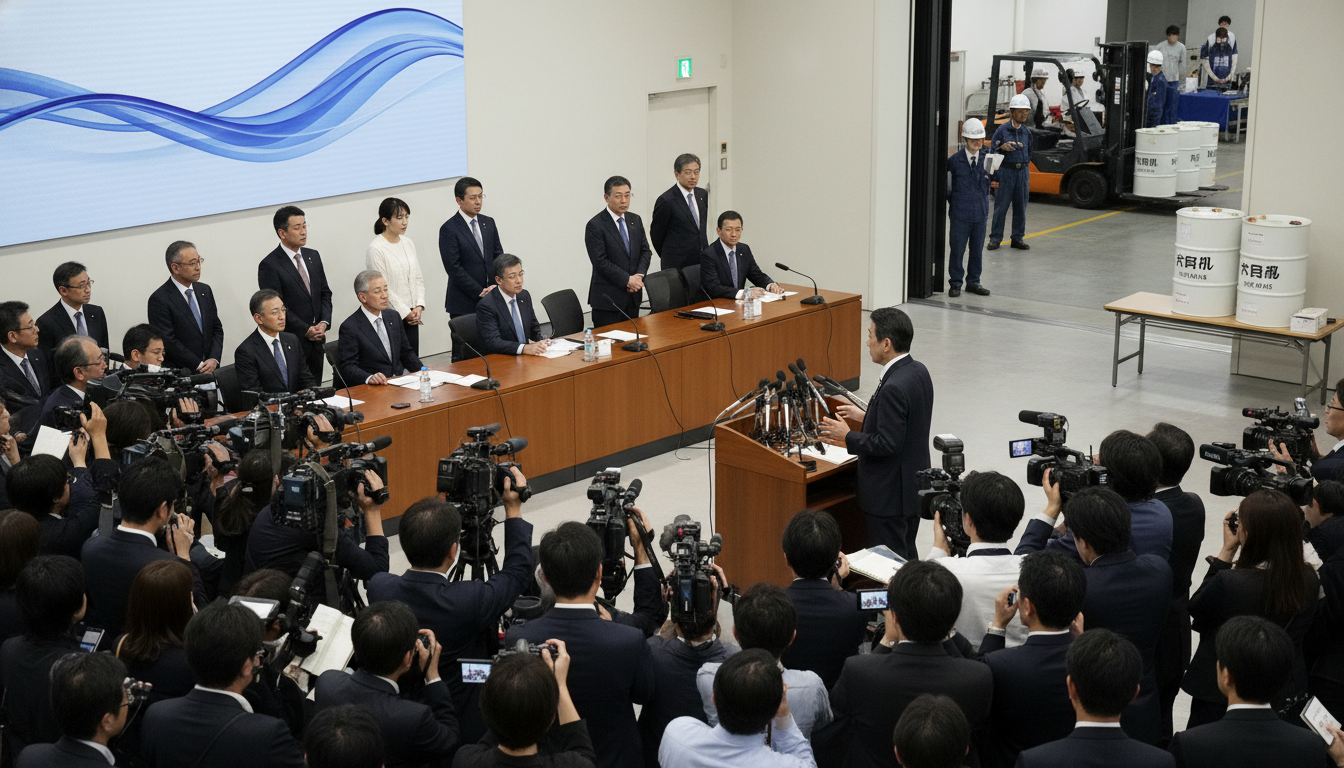
On May 20, 2026, a heated party leaders’ debate underscored growing concern over naphtha supply, with the prime minister reiterating that total national volumes remain sufficient even as companies and suppliers adopt defensive measures. The keyword naphtha appears at the centre of the dispute, as firms cite bottlenecks in procurement for naphtha-derived materials while the government seeks to contain public unease. The clash has produced an uneasy dynamic between Tokyo’s reassurances and precautionary steps taken across manufacturing and consumer goods sectors.
Prime Minister reiterates ‘total supply is sufficient’ at May 20 debate
The prime minister told lawmakers that, on a national level, available naphtha and related intermediate products meet current needs and that the government is monitoring distribution problems. Officials said the message aims to calm markets and prevent widespread social anxiety that could spill over into the broader economy.
Government sources stressed they are aware of localized shortages and logjams in supply chains, and that ministries are working to smooth allocations where bottlenecks appear. The repeated public assurance is intended to avoid panic buying and keep inflationary expectations in check.
Calbee’s package change triggers official unease
Food firm Calbee announced on May 12 that it would temporarily switch the packaging of 14 potato chip and snack items to black-and-white printing, citing unstable procurement of inks derived from naphtha. That move drew immediate attention from government officials, some of whom privately questioned whether the action was necessary and warned of contagion effects across sectors.
Calbee has defended the decision as a measure to ensure stable product supply to consumers, and company spokespeople said the change is aimed at preserving availability rather than stoking shortages. Government interlocutors subsequently held discussions with the company to understand the procurement issue and to confirm whether alternative sourcing or adjustments could restore color printing without risking supply.
Ministries intervene directly in corporate supply chains
In an unusual step, ministries have conducted direct inquiries into private-sector supply decisions. In April, the economy ministry opened a probe after builder TOTO temporarily paused new orders for some unit-bath systems because of concerns over solvents linked to naphtha production. Following the inquiry, TOTO gradually resumed accepting new contracts as its procurement lines stabilized.
Officials describe a pattern of targeted interventions intended to identify and alleviate specific chokepoints, rather than to impose blanket controls. Still, ministry staff report increasing workload as they respond to company-level reports, and some describe the effort as akin to repeatedly addressing individual problems as they surface rather than resolving a single systemic shortage.
Manufacturers broaden hedging and contingency plans
Corporate responses have gone beyond packaging changes: multiple manufacturers are reported to be diversifying suppliers, increasing inventory buffers where feasible, and accelerating searches for alternative chemical inputs. These defensive steps reflect business risk assessments that place value on continuity of production and retail supply even if bulk naphtha volumes remain adequate.
Smaller suppliers and contract manufacturers say they face higher logistical costs when shifting sources or ordering larger safety stocks, and some admit those measures are only partial fixes. Industry groups are also in talks with government agencies to seek guidance on coordinated approaches that would minimize disruption and costs.
Supply chain mechanics reveal why perceptions diverge
Analysts and procurement officers point to two principal reasons for the gap between government statements and on-the-ground concern: timing and distribution. National-level inventories and scheduled imports can produce sufficient overall volume, yet localized delays, quality differences in available grades, or contractual allocation rules can leave certain manufacturers temporarily short of the precise naphtha-derived inputs they require.
The Strait of Hormuz situation and broader Middle East instability have elevated risk premiums and complicated shipping patterns, prompting some traders to reprioritize allocations. As a result, companies that depend on particular solvent grades or ink precursors report more acute difficulty than aggregated national figures indicate.
Political risk management shapes official messaging
A central motive behind the government’s firm public reassurances is political: officials fear that visible consumer shortages or rising prices could erode public confidence and, by extension, the administration’s strong approval that underpins policy momentum. For that reason, authorities are emphasizing that they will not adopt demand-reduction measures, such as widespread electricity-conservation appeals, unless conditions deteriorate sharply.
At the same time, the government signals it will continue efforts to expand alternative crude and feedstock channels and to coordinate targeted relief for companies experiencing distribution pressure. Messaging thus combines calm reassurance with discreet operational responses aimed at preventing a broader crisis.
Looking ahead, the trajectory of naphtha supply stress will hinge both on developments in key shipping lanes and on how quickly distribution imbalances are corrected at the factory and port levels. For now, the contrast between central assurances and company-level caution highlights the delicate balancing act Tokyo faces between stabilizing public sentiment and addressing the practical needs of industry.

