
Starbucks boycott in South Korea grows after ‘Tank Day’ promotion sparks outrage
Starbucks boycott in South Korea deepens after a ‘Tank Day’ tumbler promotion evoked the May 18, 1980 Gwangju massacre; CEO fired and company apologised.
Starbucks is facing a widening boycott in South Korea after a themed promotion for a new tumbler series — billed internally as “Tank Day” — drew sharp condemnation for its perceived reference to the 1980 Gwangju democratic uprising. The campaign, which ran over mid-May and coincided with the 46th anniversary of the Gwangju protests, prompted immediate outrage from civic groups, political leaders and customers across the country. (koreajoongangdaily.joins.com)
Controversial ‘Tank Day’ promotion
The marketing push promoted a “Tank” tumbler with playful copy that some people interpreted as trivialising the military crackdown that left dozens dead in Gwangju in May 1980. Critics argued that the event’s name and on-screen phrasing resonated disturbingly with images of armoured vehicles used during the suppression of pro-democracy protesters. (aljazeera.com)
Company materials were rapidly shared on social media, where users flagged the timing and language as tone-deaf and historically insensitive. The reaction spread quickly from online discussion boards to mainstream outlets, amplifying calls for an explanation and formal accountability. (cincodias.elpais.com)
Timing on the May 18 anniversary
The promotion’s overlap with May 18, the date South Korea commemorates the Gwangju Democratization Movement, intensified the backlash and framed the incident as more than a marketing misstep. Memorial ceremonies and public events on that date made the perceived connection between the campaign and the crackdown particularly painful for survivors and bereaved families. (english.hani.co.kr)
Observers said the overlap transformed what might otherwise have been a local branding error into a national controversy, because it was seen as happening when many were publicly honouring the victims of the 1980 events. The social and political sensitivity of the anniversary left little room for corporate lapses of judgment. (koreajoongangdaily.joins.com)
Presidential condemnation and political pressure
President Lee Jae-myung publicly condemned the campaign, calling it an insult to the “blood-soaked struggle” of Gwangju citizens and urging a proper apology and corrective action from the company. His statement, issued on the same day as the memorial observances, amplified public anger and placed additional pressure on the brand’s local operator. (en.sedaily.com)
Lawmakers and civic leaders across the political spectrum demanded clarity on how the promotion was approved and called for stronger oversight of marketing practices that touch on painful chapters of national history. The political outcry made the controversy a subject of wider debate about corporate responsibility and historical memory. (english.hani.co.kr)
Corporate response and management changes
Starbucks Korea halted the promotion and issued a public apology, saying the wording had been inappropriate and that it regretted the hurt caused to the Gwangju community and the wider public. The company’s parent operator in Korea, the Shinsegae Group affiliate that licenses Starbucks in the country, also released statements expressing regret and pledging to review internal controls. (world.kbs.co.kr)
In a swift move to placate critics and restore confidence, Starbucks Korea dismissed its chief executive for the region and announced an internal review. Shinsegae Group executives additionally travelled to Gwangju in an attempt to offer apologies in person, though some visits were rebuffed by victims’ groups seeking fuller explanations. (koreajoongangdaily.joins.com)
Gwangju groups and public reaction
Groups representing survivors and families of the May 18 uprising rejected the initial apology as insufficient and demanded more detailed disclosures about how the promotion was conceived and approved. They called for concrete steps to ensure that corporate activities do not exploit or trivialise historical trauma. (chosun.com)
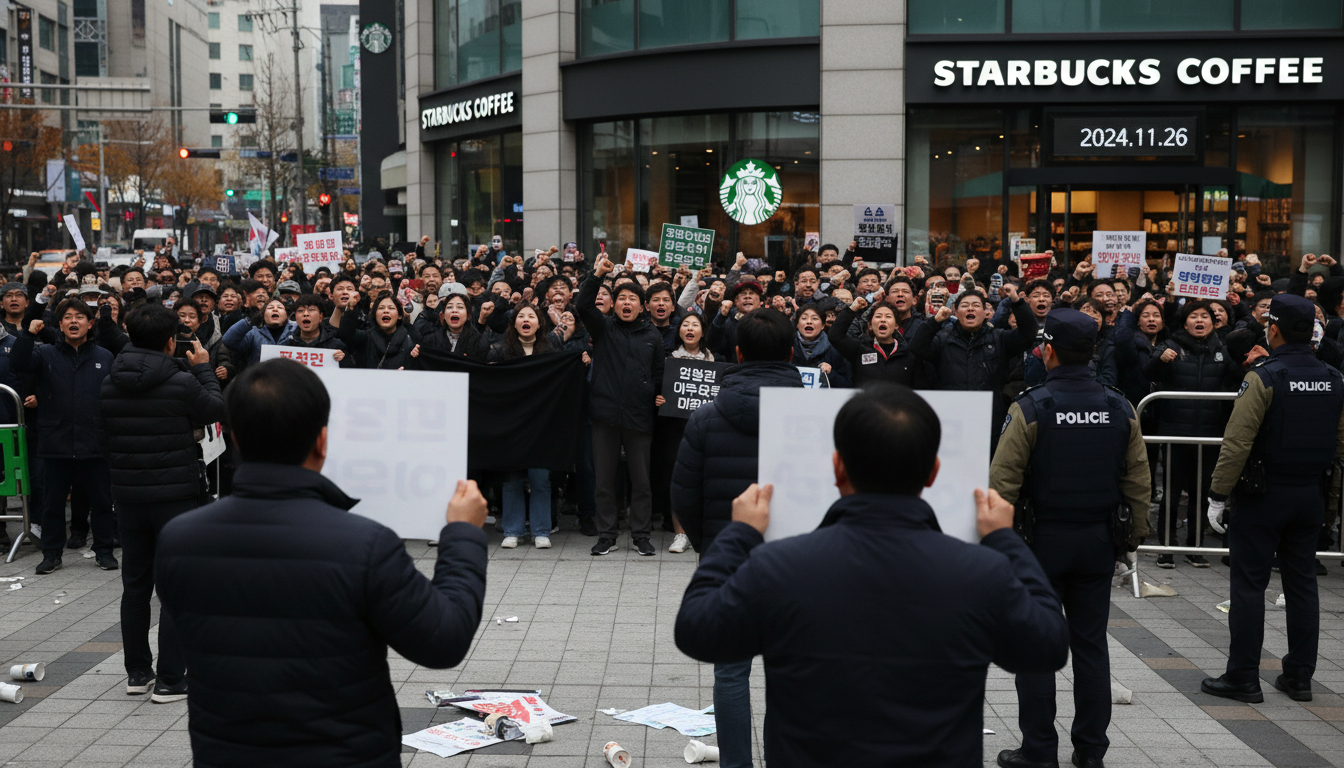
On social media and in stores, many customers expressed their anger through refunds, subscription cancellations and visible acts such as destroying branded merchandise. Videos and images of people returning tumbler purchases or discarding cups circulated widely, signalling a grassroots element to the boycott that could sustain consumer pressure beyond formal statements. (cincodias.elpais.com)
Potential economic and brand fallout
Analysts say the immediate financial impact may be limited to short-term sales dips in a single market, but reputational damage could linger if restoration of trust is not managed transparently. South Korea is one of Starbucks’ largest and most important markets, where the brand competes in a dense coffee retail landscape and relies heavily on local goodwill. (koreajoongangdaily.joins.com)
Company officials have promised new review protocols, training and stricter approval processes for future campaigns, but stakeholders say the measures must be accompanied by meaningful engagement with affected communities. How quickly Starbucks can demonstrate accountable change will likely determine whether the boycott is a flashpoint or a protracted drag on local operations. (world.kbs.co.kr)
The incident has prompted renewed conversation in South Korea about the responsibilities of multinational brands when addressing national memory and sensitive historical events, and about the limits of marketing in a society where anniversaries of trauma remain central to civic identity.

