
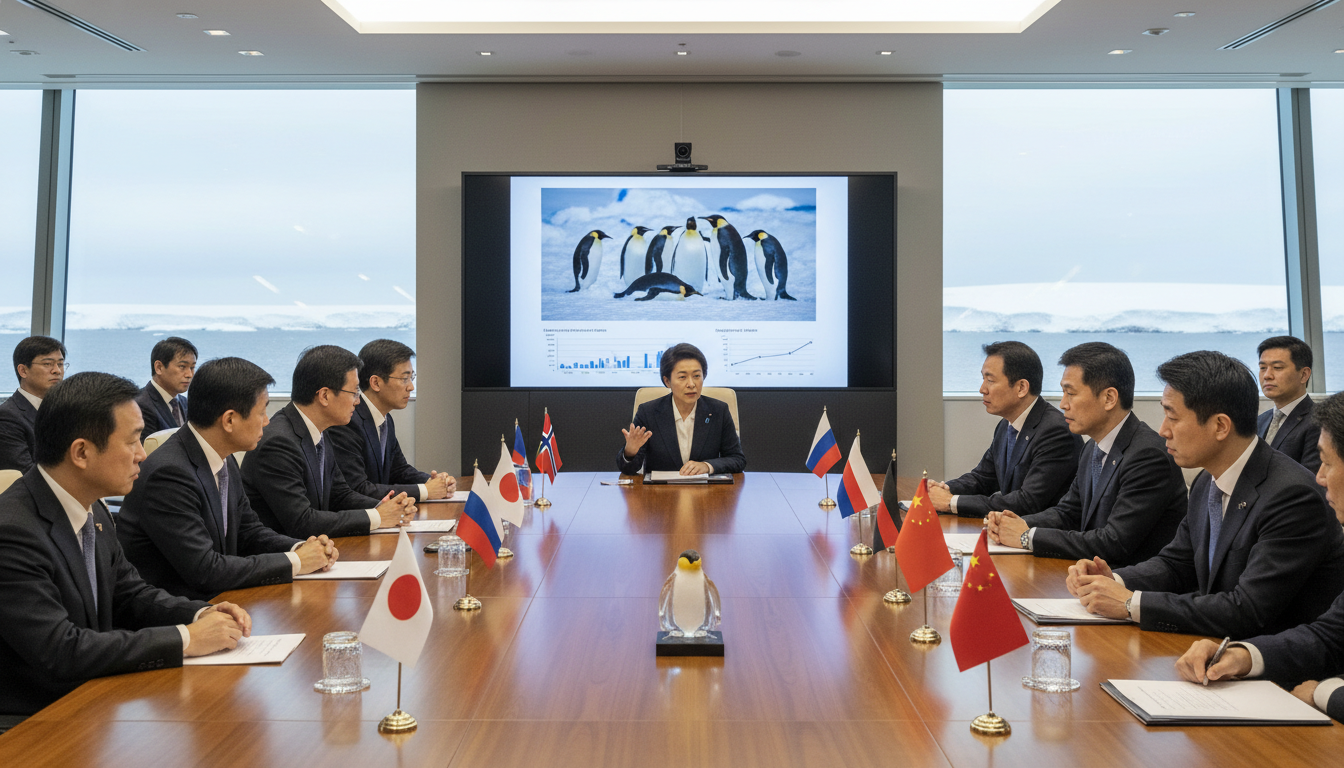
Antarctic Treaty Consultative Meeting in Hiroshima nears close as emperor penguin protection and tourism rules face deadlock
Antarctic Treaty Consultative Meeting in Hiroshima heads into its final plenary with disputes over emperor penguin protection and tighter tourism regulations.
Hiroshima hosts ATCM as talks reach final plenary
The Antarctic Treaty Consultative Meeting convening in Hiroshima entered its final stages on Wednesday, with ministers and experts preparing for a plenary session scheduled for the meeting’s last day. Delegates hope the plenary will adopt a final report that records agreed measures and next steps on conservation and governance of Antarctica.
About 400 participants from 44 countries, including delegations from the United States, China and Russia, have taken part in two weeks of closed-door negotiations that began on May 11. Japan is presiding over the meeting for the first time since it hosted the consultative talks in Kyoto in 1994.
Emperor penguin protection emerges as a central dispute
One of the most contentious agenda items has been a proposal to list emperor penguins as a specially protected species under the Antarctic Treaty framework. Proponents argue that rapid sea-ice loss linked to climate change threatens breeding grounds, while opponents warn that strict conservation measures could impose far-reaching restrictions.
The International Union for Conservation of Nature moved to classify emperor penguins as Endangered in April, citing projections that populations could fall by half by the 2080s under current warming trajectories. That IUCN assessment has been central to calls from many Consultative Parties for stronger legal protections.
China and Russia resist expanded protections
Delegations from China and Russia have consistently opposed designating the species as specially protected, according to participants familiar with the talks. Beijing and Moscow appear to be concerned that tougher protections could limit scientific, logistical or economic activities in and around Antarctic waters.
Japanese officials acknowledged the impasse privately, saying repeated discussions have not yet yielded a breakthrough. Negotiators have worked in small working groups on legal and institutional options, but diplomatic differences remain the main barrier to consensus.
Surge in Antarctic tourism draws regulatory scrutiny
A separate but related debate has focused on a dramatic rise in tourism to Antarctica and whether the treaty system should adopt new limits on landings and visitor activities. Industry data show roughly 120,000 visitors to the 2024–2025 season, a figure that represents a sharp increase over the past three decades.
Tourist activity has diversified from traditional cruise ship sightseeing to include flights, shore excursions and even recreational events on land, raising concerns among scientists and conservationists. Authorities warn that concentrated landings can stress wildlife, damage fragile habitats and increase the risk of introducing non-native species.
Scientific voices call for precautionary measures
Members of the scientific delegation stressed the need for rapid action to reduce disturbance to breeding colonies and to maintain biosecurity standards. Satoshi Imura, vice director general of the National Institute of Polar Research and a member of Japan’s delegation, told the meeting that growing visitor numbers make environmental damage more likely unless rules are strengthened.
Working groups have discussed possible approaches, including zoning of vulnerable sites, limits on the number of landings and stricter visitor protocols. Proposals differ on whether measures should be binding under the treaty or recommended as best-practice guidance for operators.
Japan’s presidency seeks measurable outcomes
As this year’s rotating chair, Japan has pushed for tangible deliverables in the closing report, balancing conservation priorities with the need to preserve the Antarctic Treaty’s cooperative spirit. Tokyo’s agenda has emphasized both species protection and enhanced management of human activities, aiming to reinforce the treaty’s scientific and peaceful mandate.
Diplomats said Japan’s task has been complicated by the need to bridge divergent views while maintaining the inclusive, consensus-driven decision-making that underpins the consultative system. Observers expect the final plenary to record agreed language on next steps even if the most polarizing proposals are not adopted in full.
Final negotiations will attempt to reconcile scientific recommendations, tourism management options and geopolitical sensitivities before the meeting concludes on Thursday. The outcome will shape Antarctic governance in the near term and set the tone for how the treaty system responds to accelerating environmental and human pressures.
The meeting’s concluding report is expected to indicate which measures received broad support and which items will require further work, leaving the Consultative Parties to decide how and when to return to unresolved issues.

