
Sanrio museum opens in Kai, Yamanashi, honoring founder Shintaro Tsuji
Sanrio museum opens in Kai, Yamanashi, honoring founder Shintaro Tsuji; exhibits feature a giant Hello Kitty, archival displays and installations to attract visitors.
Opening day draws fans to Kai
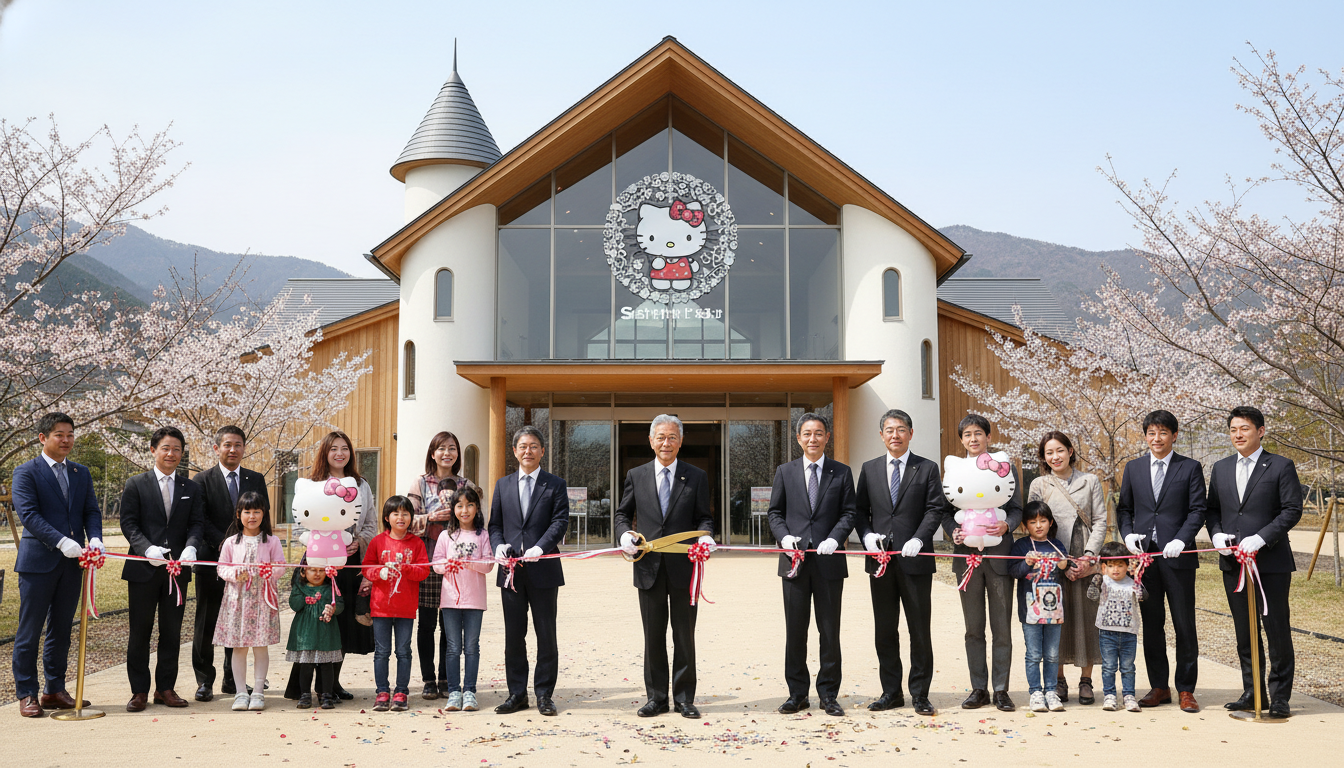
The Sanrio museum opened in Kai, Yamanashi Prefecture on April 3 and drew steady crowds on its first day, with families and longtime fans among the visitors. The opening ceremony featured Sanrio honorary chairman Shintaro Tsuji, who appeared in a wheelchair, and a ribbon-cutting attended by Yamanashi Governor Kotaro Nagasaki and Kai Mayor Takeshi Hosaka alongside Hello Kitty. Visitors described the event as both celebratory and reverent, reflecting the company’s broad popular appeal and local significance. City officials said the turnout underscored high interest in the new cultural attraction.
Museum architecture and exhibit layout
The facility comprises two log cabin–style wooden buildings totaling 568 square meters, divided into a Sanrio history museum and the Shintaro Tsuji memorial hall. Inside, large-scale displays include a towering Hello Kitty sculpture and a roughly four‑meter-tall tree-like installation composed of character plush toys. Curators also recreated Tsuji’s office, exhibiting his actual desk and personal effects to provide a sense of the founder’s working life. The layout mixes interactive installations with archival material to appeal to both children and adult collectors.
Historical archives and magazine legacy
The museum traces Sanrio’s corporate history from its origins as Yamanashi Silk Center in 1960 through its global character business and merchandising model. Exhibits highlight the evolution of product design and marketing, and showcase materials related to Gekkan Ichigo Shimbun, the company’s monthly magazine first published in 1975. Tsuji’s longstanding contributions to the magazine, written under the pen name “The Strawberry King,” are presented alongside correspondence, sketches and early promotional items. The archival displays are intended to document Sanrio’s role in Japan’s postwar consumer culture.
Commemorating Shintaro Tsuji’s life and philosophy
The museum places particular emphasis on the life of Shintaro Tsuji, now in his late 90s, who founded the company after surviving wartime air raids in Kofu. Tsuji’s corporate philosophy of harmony and “everyone getting along together” is woven through exhibits that trace his decision to develop character goods as a means of promoting goodwill. The collection underlines the scale of his creative output, noting the company’s development of hundreds of characters over decades. Visitors can read excerpts of Tsuji’s essays and see artifacts that illuminate his personal commitment to community and peace.
Site selection tied to local heritage and scenic appeal
City officials said Kai was chosen after they highlighted historical and scenic connections, including Tsuji’s admiration for the local Edo-period scholar Yamagata Daini. Municipal representatives presented a hilltop site with views of Mount Fuji and emphasized the area’s cultural relevance, persuading Tsuji to visit and approve the location. The city anticipates the museum will serve as an anchor for broader revitalization efforts in the surrounding neighborhood. Officials noted plans to coordinate transport, signage and promotional activities to integrate the museum into regional tourism routes.
Regional development plan and visitor logistics
Kai launched the “A KAI KAWAII PROJECT” last October in collaboration with the local chamber of commerce, East Japan Railway Company and Central Nippon Expressway Company to maximize the museum’s impact. The initiative addresses infrastructure, transit links and marketing strategies, with a basic concept slated for completion within the current fiscal year. The museum is open daily from 10 a.m. to 5 p.m., closed on Tuesdays except national holidays, and entry requires advance reservation to manage visitor flow. Staff advised prospective visitors to consult the museum’s official website for booking details and the latest visitor information.
A visitor from Toyama Prefecture praised the museum’s depth, saying the exhibits were “richer than expected” and offered a fun way to learn about the characters. Local leaders and business groups are already planning complementary events and merchandise collaborations aimed at encouraging overnight stays and spending in nearby shops and restaurants. City officials emphasized the intention to attract both domestic travelers and international tourists, positioning the museum as part of a wider cultural route in Yamanashi. The municipal government said it will monitor visitor numbers and economic indicators as the project develops.
The new Sanrio museum in Kai combines nostalgia, design history and local engagement in a compact facility that seeks to honor a founder while contributing to regional tourism. Interested visitors should check the museum’s official channels for hours, reservation rules and special exhibitions before traveling.

