
US and China Open Youth Leadership Programs in Nepal Amid Post‑Protest Political Shakeup
United States and China open youth leadership programs in Nepal to engage activists after 2025 protests, and escalating diplomatic competition in Kathmandu.
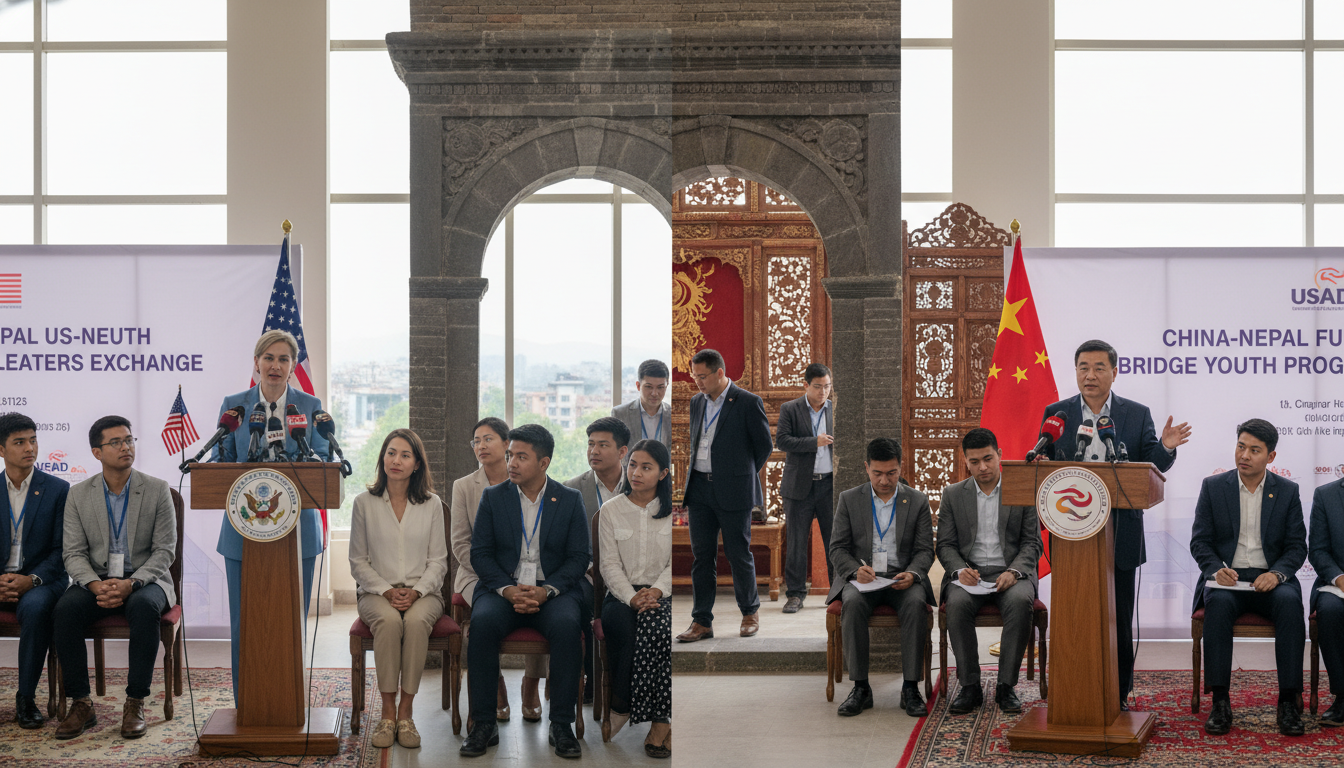
The United States and China have each launched application drives for youth leadership programs in Nepal, signaling an intensified effort to court a generation that played a central role in the mass protests that toppled Kathmandu’s government in 2025. The simultaneous outreach, announced this month, aims to cultivate ties with young Nepalis who could occupy future political and civic leadership positions. Observers say the moves reflect a broader geopolitical contest for influence in South Asia routed through targeted engagement with youth.
Programs Announced Almost Simultaneously
The two programs opened submissions within days of one another, offering workshops, fellowships and short-term exchanges focused on leadership, civic engagement and public policy. Both Washington and Beijing are emphasizing capacity-building and networking, with curricula that include mentoring by officials and exposure to governance models. Organizers describe the initiatives as long-term investments in people-to-people relations rather than immediate political interventions.
Participation criteria and program lengths differ, with one emphasizing study tours and internships abroad and the other prioritizing in-country training and regional exchanges. Application windows are limited, and both governments have signaled selective intake aimed at emerging leaders from universities, activist groups and local governments. Nepali officials and civil society groups have been briefed on the offerings as part of routine diplomatic outreach.
Context of the 2025 Protests
Young demonstrators were at the forefront of nationwide unrest that culminated in large-scale demonstrations and a dramatic breach of the parliamentary complex on Sept. 8, 2025. The protests exposed deep public frustration with governance and accelerated a period of political realignment in Kathmandu. Analysts say the prominence of youth organizers during that period has made them a target for international outreach campaigns seeking to shape future policy networks.
The street mobilizations were widely covered and prompted international concern about stability and democratic norms in Nepal. The high profile of youth leaders during the unrest increased the perceived strategic value of engaging this cohort now, while they remain politically active and visible within civil society and party movements.
Diplomatic Objectives Behind the Initiatives
U.S. officials describe their program as aimed at strengthening democratic governance, rule of law and civic participation among Nepali youth. Washington frames the initiative as part of a broader partnership to support institutions and pluralistic politics. Chinese authorities present their program as focused on economic skills, vocational training and regional cooperation, highlighting infrastructure, technology and trade links as areas of emphasis.
Both capitals, however, view youth programs as means to build networks of influence over the long term, an approach diplomats often call “soft power.” For Kathmandu, the offerings present opportunities for training and international exposure, but they also risk entangling domestic actors in external strategic competition. Nepali leaders face the challenge of balancing benefits from multiple partners while preserving policymaking autonomy.
Reactions from Nepali Parties and Civil Society
Political parties and youth groups in Nepal have met the announcements with cautious interest. Some activists welcomed the chance to receive training and broaden their professional contacts, while others warned against accepting programs that might come with strings attached. Civil society organizations pressed for transparency in selection processes and safeguards to ensure participants can return to independent public roles.
Senior members of several parties urged the government to set clear guidelines for engagement with foreign-sponsored programs, calling for equal access and accountability. Student unions and activist networks emphasized the need for programs to be nonpartisan and to support a pluralistic civic space rather than advance foreign policy agendas.
Analysts See a Win‑Win but Warn of Strategic Risks
Experts on South Asian geopolitics say both the U.S. and China gain from early engagement with young Nepalese leaders, who may later hold positions in government, media, and business. Building relationships now can yield influence as these individuals advance in their careers. However, analysts caution that overt competition for young elites could polarize domestic politics and create expectations that participants align with particular external actors.
Independent analysts recommend that Kathmandu set transparent rules, allow diverse participation, and encourage programs that strengthen local institutions. They also note that successful long-term partnerships typically emphasize mutual benefit and respect for national sovereignty rather than one-sided messaging.
Nepali officials say they will monitor the programs while seeking to maximize training opportunities for youths from diverse backgrounds. Several domestic think tanks have offered to evaluate program content and advise on candidate selection to prevent favoritism and ensure community representation.
The arrival of multiple foreign-sponsored youth leadership programs in Nepal marks a new chapter in how external powers seek to cultivate influence through education and exchange. For many young Nepalis, the initiatives offer practical benefits and a chance to shape their country’s future, but they also place Kathmandu at the center of a careful balancing act between competing international priorities.

