
Chinese EV makers buy idle production lines worldwide, raising trade and compliance concerns
Chinese EV makers buy idle plants across the globe as automakers cut gasoline-car output; deals ease trade frictions but could raise costs and regulatory risks.
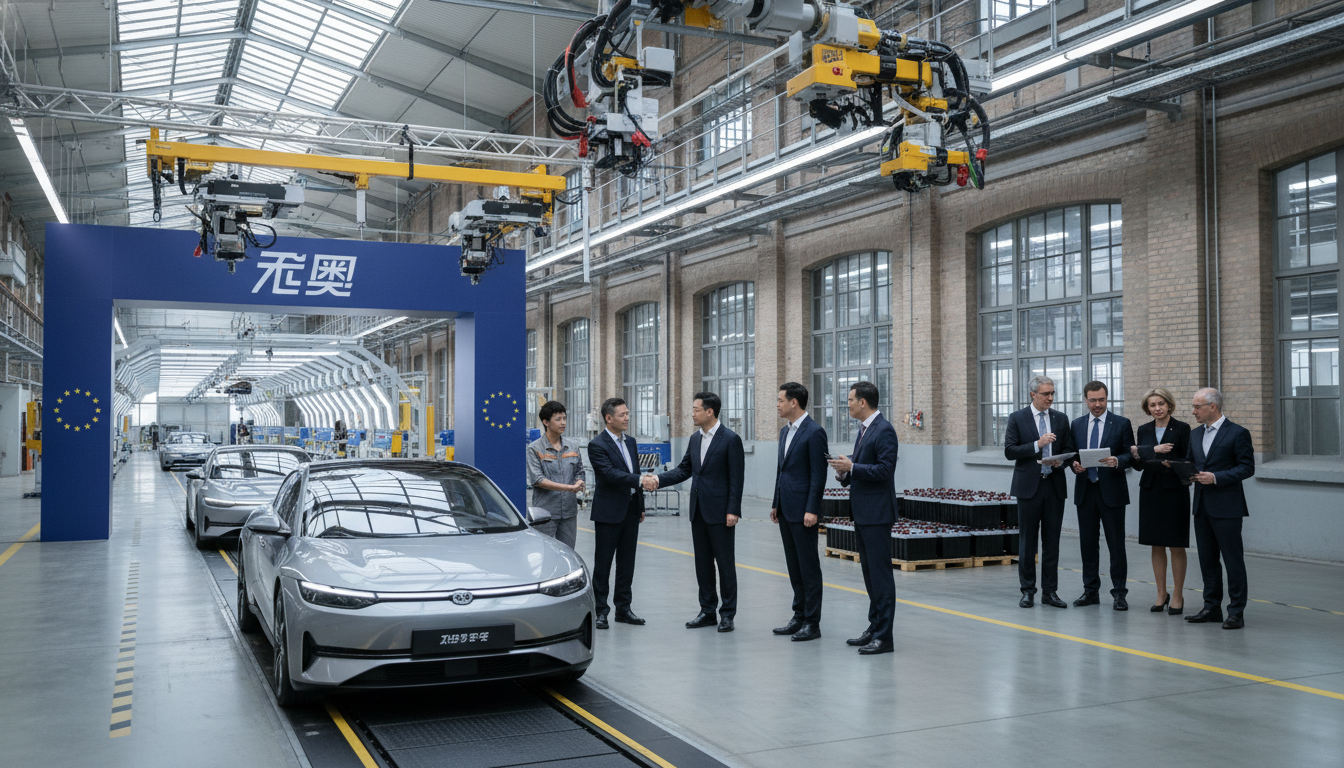
Chinese EV makers are increasingly acquiring or partnering to use idle production lines abroad, capitalizing on reduced gasoline-car output by Western automakers. The trend is driven by a desire to expand manufacturing footprint, avoid tariffs and move closer to key markets. Automakers such as Stellantis have responded by deepening ties with Chinese partners, a move that highlights both opportunity and friction in global auto supply chains. Observers warn the tactic could shift trade dynamics while creating new cost and compliance pressures for companies involved.
Chinese EV Makers Expand Overseas Footprint
Chinese electric vehicle makers are pursuing capacity outside their domestic market to accelerate exports and local sales. By taking over underused lines, they can shorten delivery times and better adapt vehicles to regional tastes and regulations. This strategy also allows them to sidestep some trade barriers and quotas that can impede imports of fully built cars. The expansion is less about immediate volume and more about long-term positioning in competitive foreign markets.
Stellantis Partnerships Highlight Strategy
European groups have started to forge closer relationships with Chinese firms to fill empty factories and share technology. Stellantis, for example, has tightened cooperation with Chinese partners Leapmotor and Dongfeng, in part to address underused European capacity. Such arrangements can convert fixed costs into shared investments and keep domestic production sites active. At the same time, they expose traditional manufacturers to new commercial and operational dependencies with Asian suppliers.
Tariff Avoidance and Trade Tensions
Sourcing components or assembling vehicles locally through joint ventures is a common way to reduce exposure to import tariffs and trade disputes. For Chinese EV makers, local production or licensing agreements can blunt the impact of protectionist measures while making models more price-competitive. Governments and trade authorities, however, are watching these patterns closely because they can complicate rules of origin and antidumping investigations. The result is a delicate balancing act between commercial advantage and potential regulatory scrutiny.
Costs and Compliance Risks for Automakers
Repurposing idle lines and creating cross-border production ties is not cost-free. Companies often face high upfront expenses to retool factories, train staff and certify new models against local safety and emissions standards. There is also an elevated compliance burden: customs authorities may question whether production meets local content rules, and penalties for misclassification can be sizeable. Legal and logistical complexities can erode the expected savings from tariff avoidance and increase the total cost of market entry.
Impact on European and Global Capacity
Western automakers’ retreat from gasoline-car production has left tangible spare capacity in Europe and elsewhere, creating openings for new entrants. This idle capacity presents both an economic problem for suppliers and an opportunity for firms seeking immediate manufacturing space. Local communities and labor unions face uncertainty as ownership and production models change. Policymakers must weigh industrial policy goals against the immediate benefits of keeping plants operating through foreign partnerships.
Industry Response and Outlook
Automakers, suppliers and regulators are adapting to a more fluid global production landscape driven by electrification and shifting demand. Some incumbents are opting to convert plants entirely to electric-vehicle production, while others prefer partnerships that reduce capital exposure. Regulators in several markets may tighten scrutiny of deals that appear structured primarily to circumvent trade controls. Over time, competitive pressure and regulatory action will likely determine whether the current wave of capacity deals becomes a sustained pattern or a short-term adjustment.
Chinese EV makers’ overseas moves are reshaping the auto sector at a time of rapid technological and market change. Close attention to contractual detail, regulatory compliance and long-term cost structures will be essential for companies on both sides of these partnerships. Observers say the next 12 to 24 months will be pivotal as more capacity deals close and authorities clarify how rules apply to new production models. The evolution of these arrangements will have lasting consequences for industry competition, employment in manufacturing regions and the shape of global vehicle supply chains.

