
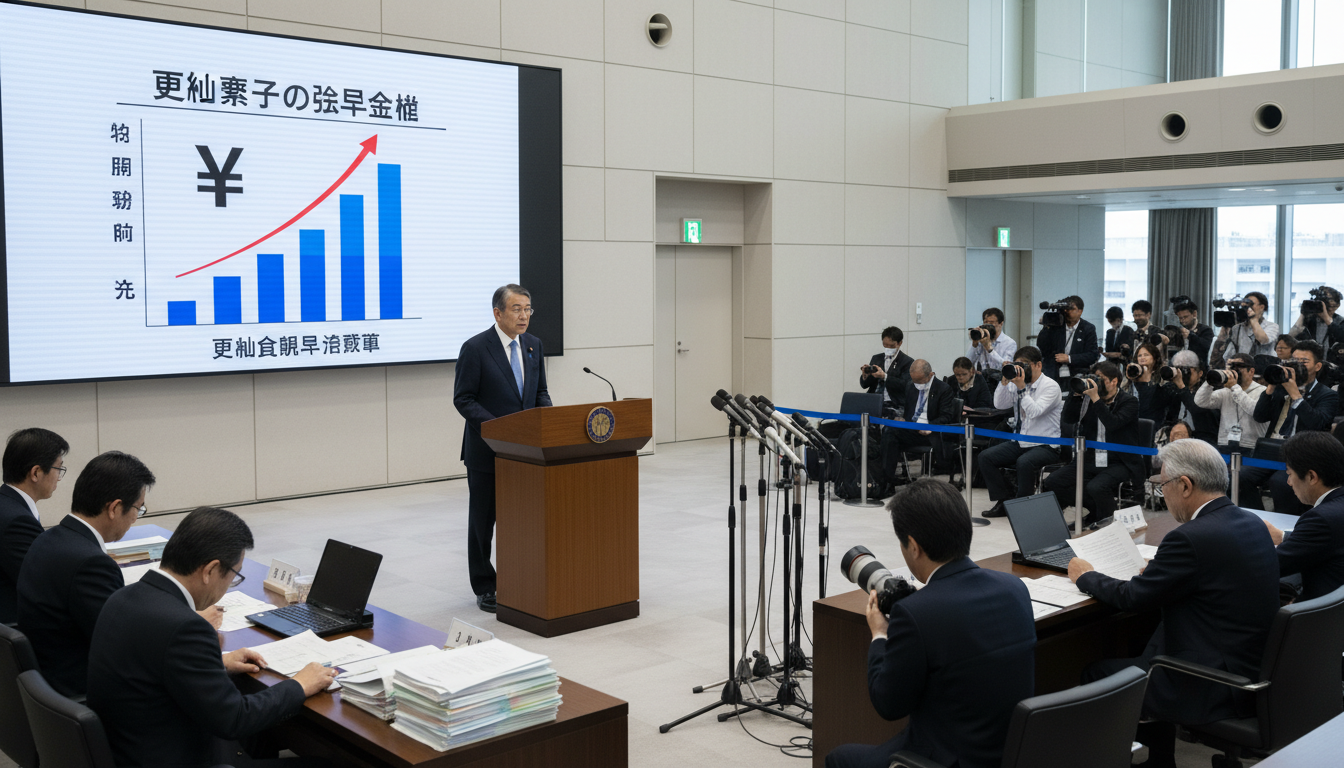
Government and Ruling Party Move to 3 Trillion Yen Supplementary Budget to Extend Gasoline Subsidies
Japan to boost contingency funds in a roughly 3 trillion yen supplementary budget to maintain gasoline subsidies, funded by deficit bonds amid market and fiscal concerns.
The government and the ruling Liberal Democratic Party are adjusting plans for a supplementary budget of roughly 3 trillion yen to secure funding for continued fuel support and broader contingency needs. The move, driven by a deterioration in Middle East tensions, would add unspecified contingency funds and provide the financing needed to sustain the gasoline subsidy program resumed in March 2026. Officials say the package is intended to be dispatched quickly, but it raises questions about fiscal sustainability and market reaction.
Cabinet decision and timetable
Government leaders have converged on a target size of about 3 trillion yen for the supplementary budget, sources involved in the discussions said on May 22, 2026. The package is being designed to bolster the government’s contingency reserves while preserving funds for the gasoline subsidy that is currently under strain.
Cabinet ministers are aiming for a swift approval process to ensure subsidies continue without interruption into the summer months. Officials note the draft preserves flexibility by not tying large portions of the new funds to specific projects, instead increasing the general contingency pot.
Contingency fund increase and gasoline subsidy mechanics
The plan centers on bolstering the budgetary contingency (yobi-hi) to supply the gasoline subsidy that has been keeping retail prices near about 170 yen per liter. The government has been spending an estimated 400–500 billion yen per month on the program, and current allocations could be exhausted by late June 2026 if no additional funding is approved.
By raising contingency funds in the supplementary budget, officials intend to provide a financial buffer that will allow monthly gasoline support to continue while preserving the ability to respond to other energy or security-related contingencies. The government has not publicly published a detailed schedule for disbursement or duration of the subsidy under the new plan.
Funding through deficit-covering bonds and fiscal concerns
The proposed package would be financed predominantly by issuing deficit-covering government bonds (shakkin kokusai), a measure that has prompted concern among fiscal watchdogs and market participants. Finance Minister Satsuki Katayama said after a Cabinet meeting on May 22, 2026, that the government wants to “respond in a way that does not rely on additional deficit bonds,” indicating sensitivity to debt growth.
Despite that remark, officials told reporters the supplementary budget’s issuance plan is being calibrated to remain within the lower-than-expected bond issuance projected for the fiscal year, thanks to stronger tax revenue. The government hopes keeping new issuance within that narrower range will help limit upward pressure on long-term interest rates.
Existing energy subsidies and near-term allocations
For electricity and gas price support scheduled for July–September 2026, the government plans to draw about 500 billion yen from contingency funds already allocated in the current fiscal budget, which contains roughly 1 trillion yen in reserve. That allocation is intended to cover household and business relief as summer demand rises and energy markets remain volatile.
To replenish the contingency tapped for the July–September subsidies and to fund the gasoline support, the supplementary budget will include top-ups to the reserve. Officials say this approach preserves the ability to respond to unforeseen developments while smoothing fiscal flows across the coming quarters.
Political debate inside the ruling party
Voices within the Liberal Democratic Party have signaled unease about maintaining current subsidy levels indefinitely. Takanobu Kobayashi, chair of the LDP Policy Research Council, warned that continuing the existing level of support without adjustment is not realistic, reflecting concern about the program’s fiscal cost and political sustainability.
Some ruling party lawmakers argue for phased reductions or tighter eligibility to limit monthly expenditure, while others emphasize the political risks of removing fuel support ahead of the summer driving season. That internal tug-of-war is likely to shape final decisions on the subsidy’s scale and duration when the supplementary budget is finalized.
Market outlook and risks to interest rates
Financial market participants are watching the supplementary budget closely, concerned that additional bond issuance could accelerate the rise in long-term interest rates. Officials hope that by keeping issuance within the reduced amounts made possible by higher tax receipts, market reactions can be muted.
Economists caution that reliance on deficit bonds to fund recurring subsidies risks blurring the line between short-term relief and longer-term fiscal commitments. Monetary and fiscal authorities will need to coordinate messaging to reassure markets while delivering targeted relief.
As the government moves to formalize the roughly 3 trillion yen supplementary budget, officials face a narrow window to balance immediate energy relief against fiscal credibility. Decisions taken in the coming days will determine whether gasoline subsidies can be extended past late June 2026 and how Japan manages the trade-offs between market confidence and social support during a period of heightened global uncertainty.

