
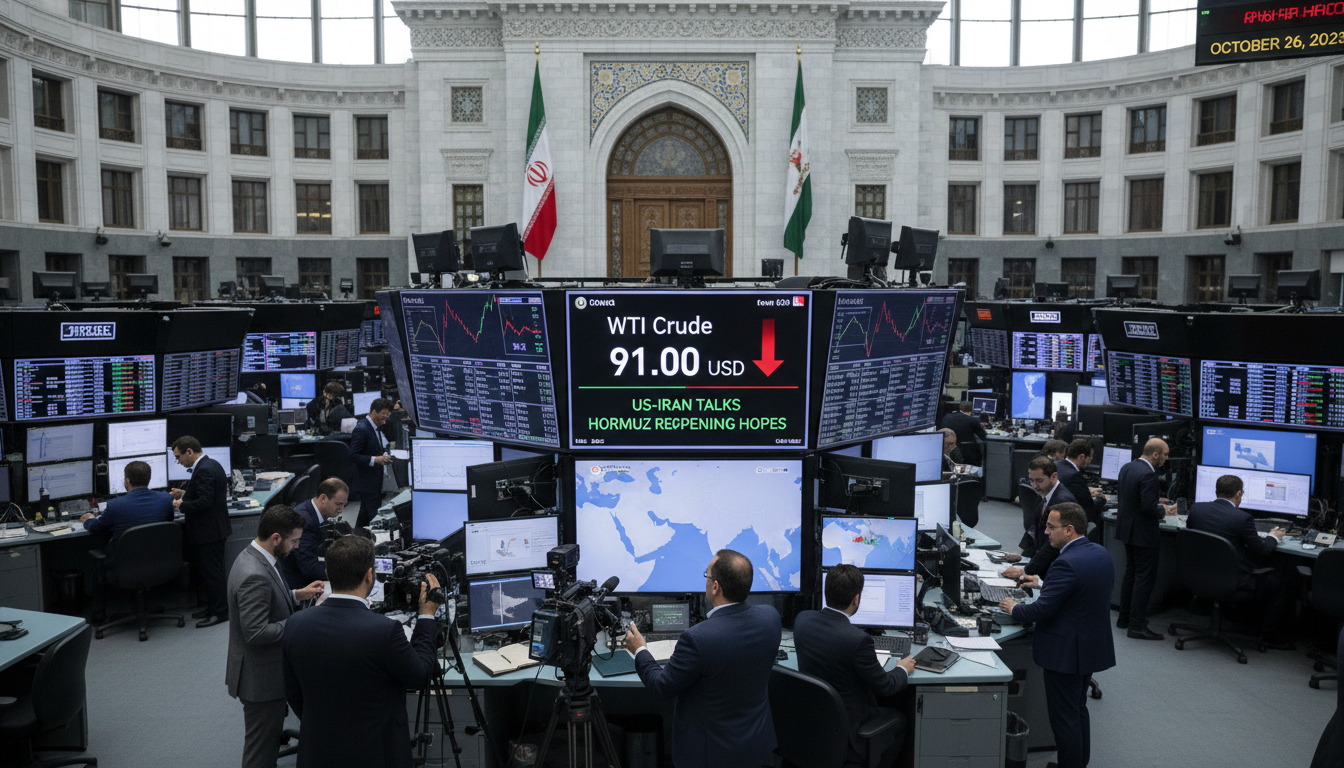
WTI futures fall to low $90s as US‑Iran talks fuel hope of Strait of Hormuz reopening
WTI futures fell to about $91 a barrel on May 24, 2026, as progress in US–Iran talks and hopes of reopening the Strait of Hormuz pushed oil prices lower.
WTI futures slide to low $90s on May 24
WTI futures dropped into the low $90s on May 24, 2026, slipping roughly 5 percent from last week’s levels. The decline marked a notable reversal in a market that had been trading with a premium for perceived supply risk.
Traders said the sell‑off was driven largely by reports of progress in negotiations between the United States and Iran aimed at ending hostilities. Those developments raised expectations that the Strait of Hormuz, effectively choked by fears of disruption, could see safer passage for tankers.
Investors price in easing Strait of Hormuz risks
Market participants have been treating the Strait of Hormuz as a major risk factor after months of effectively disrupted flows and higher insurance costs. Any credible signal that the waterway could reopen without significant security incidents immediately reduces a premium built into benchmark oil prices.
Analysts noted that markets often move quickly to reflect a change in geopolitical risk, even before formal agreements are finalized. The prospect of resumed shipments from Gulf producers would alleviate immediate supply concerns and lower the return investors demand for holding physical crude and futures.
Market reaction and trading patterns
The sell‑off on May 24 was accompanied by increased volatility as algorithmic funds and hedge funds adjusted positions. Commodity desks reported heavier-than-normal selling in front‑month WTI contracts and a flattening of the futures curve as near‑term risk perceptions eased.
Physical market indicators were mixed, with some buyers delaying purchases in anticipation of additional price declines. At the same time, refiners locked in cargoes where margins still made commercial sense, underscoring that fundamentals remain uneven across regions and product streams.
Comments from Washington complicate outlook
Statements from Washington added nuance to the market’s reaction, with one prominent figure stressing a refusal to accept a “bad deal.” That comment tempered some of the optimism and left traders cautious about the durability of any agreement.
Officials’ insistence on stringent terms means the timeline for a durable resolution remains uncertain. Market participants said that while talks can reduce the probability of immediate disruption, the final outcome and the pace of any de‑escalation will determine whether lower prices hold.
Implications for global oil supply and prices
If negotiations succeed in securing safe passage through the Strait of Hormuz, global crude availability would improve and downward pressure on prices could persist. Conversely, a breakdown or protracted, fragile agreement could quickly restore risk premia and push prices higher again.
Market watchers emphasized that supply from non‑Gulf producers and strategic reserves has helped cushion the market in previous crises. Nonetheless, the concentration of exports through the Hormuz choke point means that any return to normal flows would have an outsized impact on short‑term pricing dynamics.
What this means for Japan and Asian markets
Japan and other Asian importers stand to benefit from a reduction in disruption risk, since a stable Strait of Hormuz eases logistics and insurance costs for seaborne cargoes. Lower crude benchmarks can feed through to refined product prices and provide relief to energy‑intensive industries.
Regional markets will nonetheless monitor the durability of the political settlement closely, as any renewed tensions would rapidly reverse gains. Asian refiners and utilities typically plan around multiple scenarios, and the current talks will be factored into buying strategies over coming weeks.
The drop in WTI futures on May 24 underscores how closely oil markets remain tied to geopolitics, with investor sentiment shifting rapidly as diplomatic developments unfold. Market participants said they will continue to watch official statements and on‑the‑ground reporting for concrete signs of a lasting de‑escalation.

