
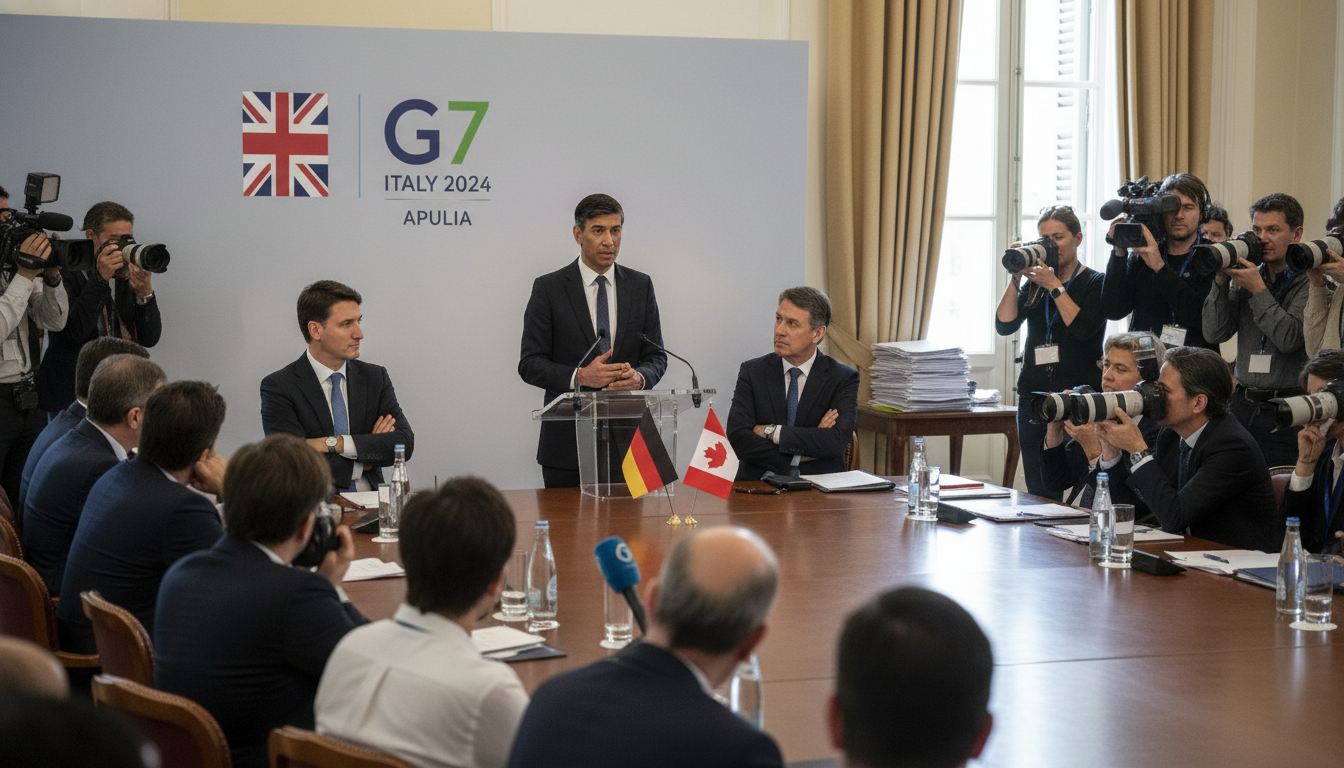
Britain urged to approve Global Combat Air Programme funding as Germany and Canada eye participation
Britain must decide soon on funding for the Global Combat Air Programme as Germany and Canada signal interest in joining the UK–Japan–Italy fighter project.
Britain is facing mounting pressure to approve near-term funding for the Global Combat Air Programme, the trilateral effort with Japan and Italy to develop a next-generation fighter jet. Allies including Germany and Canada have indicated interest in participating, adding political weight to a decision that could shape European and Indo-Pacific defence collaboration. The programme has emerged as a focal point in debates over industrial sovereignty and strategic autonomy from U.S. platforms.
Funding deadline pressures on UK decision-makers
The United Kingdom government is being urged by defence officials and industry leaders to commit funds shortly to keep the project on schedule. Delays could disrupt workstreams shared across the UK, Japan and Italy and complicate potential expansions to include other partners.
Ministers are weighing domestic fiscal constraints against job guarantees and long-term industrial benefits, with supporters arguing that timely investment will secure contracts for British suppliers. Parliamentarians from several parties are expected to press the treasury and defence ministry for clarity before any final sign-off.
Germany and Canada signal interest in joining GCAP
Senior officials in Berlin and Ottawa have privately and publicly discussed the possibility of joining the Global Combat Air Programme, according to defence observers. Both countries see potential advantages in accessing advanced sensor and weapons integration built into the programme rather than relying solely on established U.S. platforms.
Their interest, if formalised, would broaden the programme’s industrial base and raise questions about cost-sharing and governance arrangements. UK negotiators are likely to face complex talks over workshare, intellectual property and export controls should Germany or Canada seek membership.
Industrial partners and technology goals for the Global Combat Air Programme
The three-nation effort brings together major aerospace contractors and government agencies with competing but complementary capabilities. The programme has presented concept models publicly — notably at the Farnborough International Airshow in July 2024 — to illustrate the aircraft’s intended low-observable shape and sensor-rich design.
Officials describe GCAP as aiming to integrate advanced stealth, sensor fusion, and networked systems to operate alongside unmanned platforms. Ensuring that UK firms secure meaningful industrial roles will be central to political support for additional public funding.
Strategic motivations for diversifying away from U.S. systems
A key driver behind allied interest is the desire to diversify military supply chains and operational concepts beyond established U.S.-led fighters. Supporters argue that an independent or multinational European–Japanese capability could offer greater strategic autonomy and resilience in contested regions.
Detractors caution that fragmentation risks higher overall costs and reduced interoperability with long-standing allies. The balance between interoperability with NATO and a push for sovereign capabilities is shaping political debate in London, Ottawa, and capitals across Europe.
Timetable, approvals and the path forward
Officials say a formal UK funding decision is required to unlock the next tranche of technical development work and to confirm industrial partnerships. Timelines for prototype development, testing and potential production runs depend on those initial commitments remaining on track.
Should Germany or Canada move to join, ministers will need to reconfigure programme governance and revisit budgets, potentially extending the schedule but also spreading costs. Observers expect a sequence of defence ministry announcements and parliamentary reviews in the coming months as stakeholders seek to reconcile urgency with fiscal scrutiny.
The outcome of Britain’s funding decision will influence not only the technical trajectory of the Global Combat Air Programme but also the broader architecture of allied defence collaboration. A commitment now could accelerate a multinational push for next-generation air capability, while delay risks strategic and industrial consequences that reverberate across Europe and the Indo-Pacific.

