
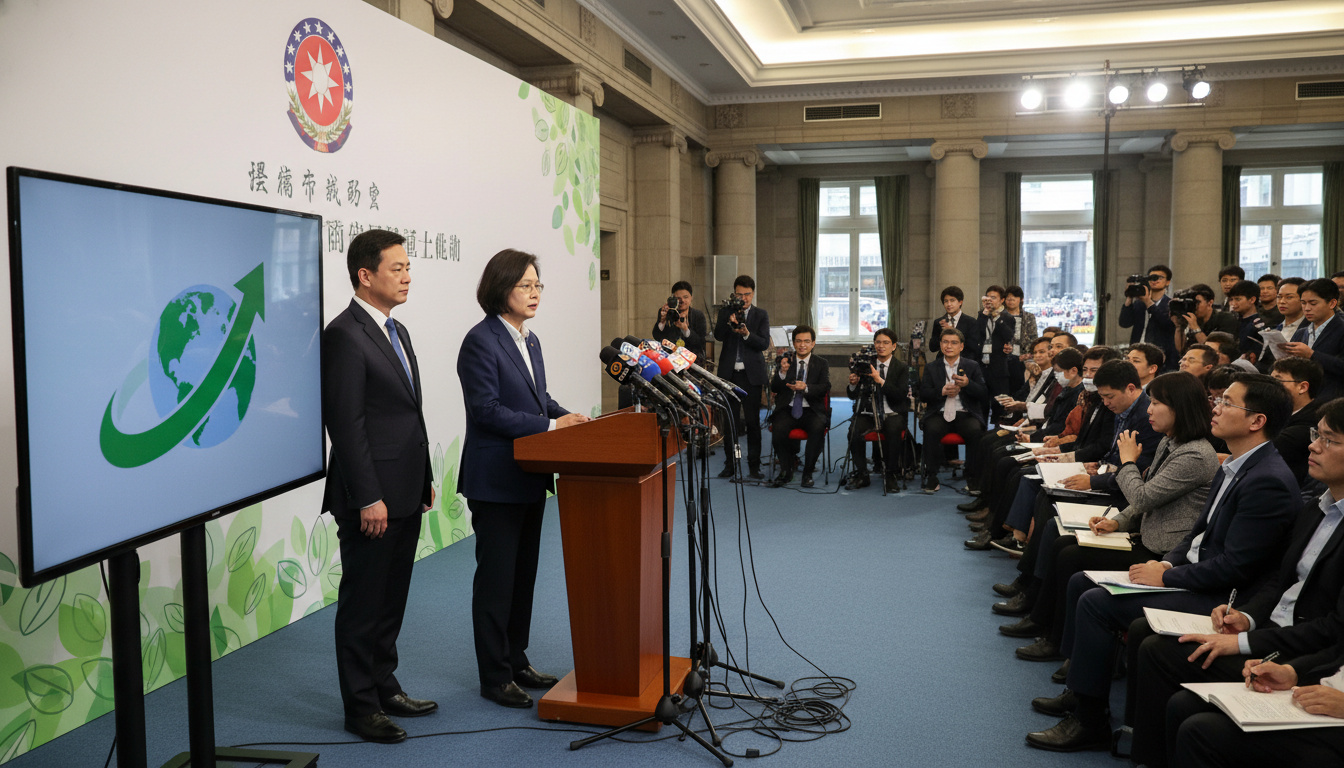
Taiwan Begins Charging Carbon Emissions Levy to Major Firms to Seed Decarbonization Fund
Taiwan begins charging a carbon emissions levy on major companies, with payments due this weekend, to seed a government decarbonization fund and accelerate emissions cuts.
Taiwan has begun collecting a carbon emissions levy from selected large emitters, with initial payments due this weekend as the government moves to launch a new decarbonization fund. The levy, targeting major industrial and energy companies, is designed to provide immediate financing for projects that reduce greenhouse gases and support the island’s transition to a lower-carbon economy. Officials describe the incoming transfers—valued in the millions—as the initial capital needed to operationalize a government-managed greenhouse gas reduction fund.
New Charge Takes Effect This Week
The levy went into force this week and affects firms identified under the government’s emissions reporting and control framework. Companies subject to the charge were required to calculate and remit payments according to the timetable announced by authorities. The prompt collection is intended to demonstrate the state’s commitment to climate policy and to provide seed money for targeted decarbonization measures.
Who the Levy Covers and Payment Details
The charge applies to a subset of large emitters in industry, power generation and heavy manufacturing whose emissions exceed established thresholds. Firms on the payment list received official notices outlining how to compute their liabilities and the deadline for remittance this weekend. Government statements indicate the first tranche of funds will be transferred into the new greenhouse gas reduction account once compliance is confirmed.
Purpose and Intended Use of the Fund
The government intends the decarbonization fund to finance technology upgrades, energy-efficiency retrofits and renewable energy projects that are otherwise difficult to fund through private capital alone. Officials say proceeds will support measures that deliver verifiable emissions reductions and build industrial capacity for low-carbon production. The fund is also expected to provide targeted assistance for small firms and communities facing transition risks.
Industry Reaction and Compliance Challenges
Initial industry responses have been mixed, with some major firms saying they will comply while seeking clarity on accounting rules and eligible fund uses. Trade associations have asked for transparent criteria on how funds will be allocated and for timelines that allow firms to adjust operations without sudden cost shocks. Compliance officers inside affected companies report concentrated effort this week to reconcile emissions inventories and prepare payments before the deadline.
Environmental and Economic Implications
Analysts say the levy could accelerate emissions reductions if revenues are deployed effectively and transparently toward high-impact projects. Economists caution that any new charge on energy and heavy industry can raise short-term operating costs, which may be passed to consumers if companies seek to protect margins. Supporters argue that early capitalization of the decarbonization fund will attract further investment and reduce long-term transition costs by seeding pilot projects and demonstration technologies.
Enforcement, Monitoring and Transparency Measures
Regulators have signaled that payments will be followed by audits of reporting methodologies and verification of emissions baselines. The government plans to publish periodic reports on fund receipts and approved projects to build public confidence in the program. Penalties for non-payment or inaccurate reporting were referenced in guidance documents, underscoring the administration’s intent to enforce the scheme consistently.
Next Steps and International Context
Officials have indicated that the levy and fund are part of a broader package of measures to meet Taiwan’s climate commitments and to align domestic policy with international expectations. Policymakers say the initial inflows will allow them to demonstrate project selection and governance practices ahead of scaling up the program. Observers note that similar levy-and-fund approaches have been used elsewhere to finance decarbonization while creating predictable price signals for emitters.
The government will monitor outcomes closely and adjust design features based on early experience, including fee levels, eligible uses and reporting requirements. Stakeholders—including industry groups, environmental NGOs and local governments—are expected to engage in consultations as the fund moves from seed capital to active deployment.

