
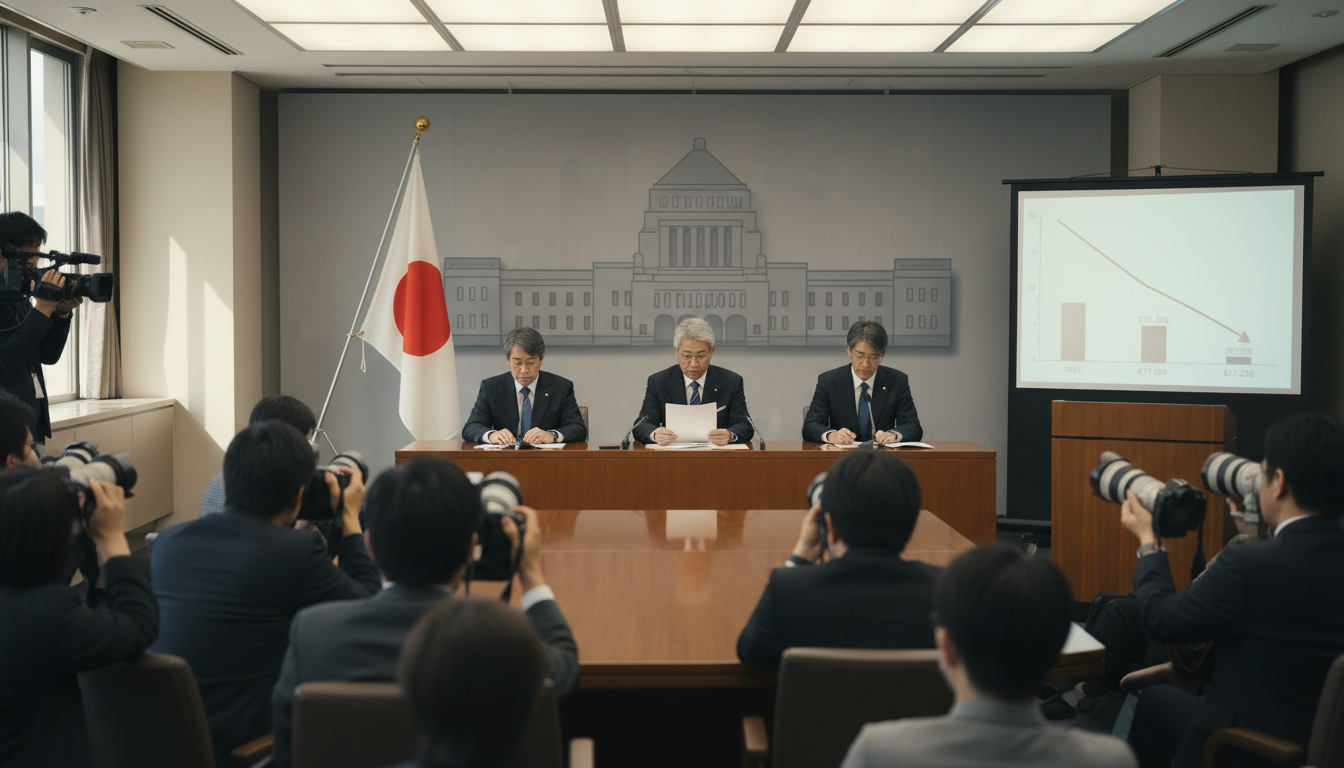
Japan birth rate hits record low in 2025 as births fall to 671,236
Japan birth rate plunged to a record low in 2025: births dropped to 671,236 and the total fertility rate fell to 1.14, Ministry data show.
The Ministry of Health, Labour and Welfare on June 3, 2026 released provisional population statistics showing that the Japan birth rate declined again in 2025, with 671,236 babies born to Japanese parents. This figure marks the tenth consecutive annual decrease and is the lowest number of births recorded since national statistics began in 1899. The report also recorded a total fertility rate (TFR) of 1.14, the lowest since the metric was first calculated in 1947.
Ministry releases 2025 population figures
The ministry described the figures as provisional results from the population dynamics statistics published on June 3, 2026. Officials noted that while the pace of decline in births was smaller than in some recent years, the downward trend remains a serious demographic challenge for the nation. The release includes data on births, deaths, marriages and divorces for the calendar year 2025 and forms the basis for short-term policy assessment.
Births fall to 671,236, marking decade-long decline
The 2025 birth total of 671,236 represents a decrease of 14,937 from the previous year. That decline continues a ten-year pattern of falling births and pushes the absolute number into territory that demographers had not expected until later this century under previous projections. Analysts say the persistent fall in births is reshaping population forecasts and will affect planning for schools, healthcare and the labor market.
Total fertility rate at 1.14, lowest since 1947
The report shows the national TFR — the average number of children a woman is expected to have over her lifetime — dropped to 1.14 in 2025. This is a record low in postwar statistics and underscores the depth of Japan’s low-fertility trend. The decline of the Japan birth rate and the falling TFR together suggest that both postponement of childbirth and longer-term decisions about family size are contributing to the demographic shift.
Maternal age patterns and first-birth timing
Age-specific data indicate a rise in births among women aged 30–34, who now account for roughly 40 percent of all births, the ministry reported. The average age of mothers at first birth remained at 31.0 years, unchanged from the prior year, reflecting continued postponement of childbearing. Demographers warn that later maternal age can compress the window for additional children, affecting both family size and fertility statistics.
Regional disparity: Okinawa tops, Tokyo records lowest rate
There are wide regional differences in the Japan birth rate. Prefectural TFRs ranged from a high of 1.52 in Okinawa to a low of 0.96 in Tokyo. Thirteen prefectures posted increases in their TFRs compared with the year before, but urban areas such as Tokyo and parts of Hokkaido and Miyagi remained at or below replacement-level indicators. The contrast highlights how local socioeconomic conditions and living costs continue to shape fertility behavior across the country.
Deaths, natural decrease and marriage trends
Deaths in 2025 totaled 1,589,489, a decline of 15,889 from the previous year, according to the ministry. Despite the fall in deaths, the gap between deaths and births produced a natural population decrease of 918,253 — the 19th consecutive year of natural decline. On the family front, marriages rose modestly to 489,119 pairs, up by 4,027 and marking two consecutive years of increases. Divorces fell to 179,068, down by 6,836. Ministry officials said they will continue to monitor the links between marriage trends and the Japan birth rate closely.
The ministry and independent researchers note that past national projections, including a median scenario published by the National Institute of Population and Social Security Research in 2023, expected annual births to fall into the 670,000 range around 2040. That timeline has accelerated, raising questions for policymakers about childcare provision, labor market participation and long-term social security financing. Officials signaled that the new figures will feed into policy reviews aimed at addressing low fertility and regional disparities.
Longer-term implications of the continued fall in the Japan birth rate include pressures on local services, schools and pension systems as the population ages further. Policymakers face a complex mix of measures — from child-rearing support and labor-market reforms to regional revitalization — if they are to alter the demographic trajectory. The ministry has emphasized steady monitoring and cross-ministerial work, but devising measures that affect long-term family decisions remains a central challenge.

