
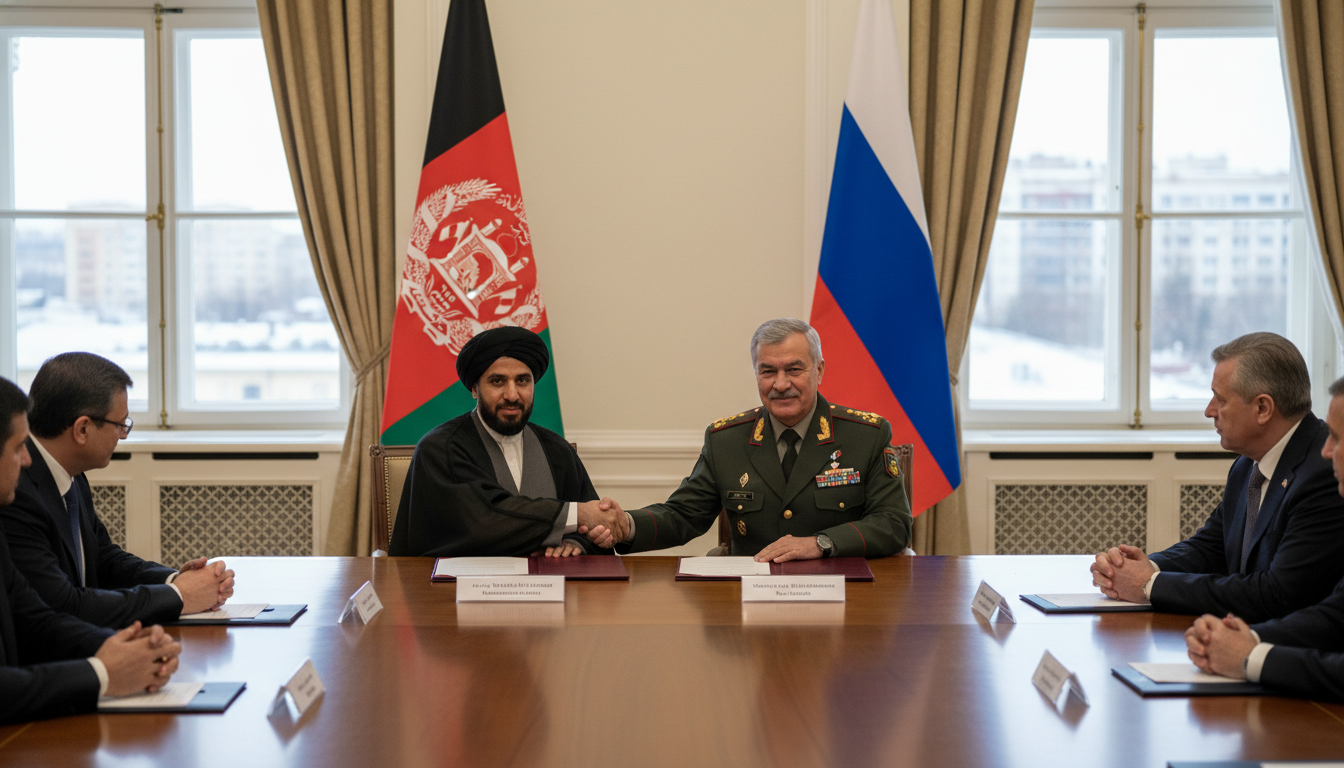
Taliban-Russia military cooperation deal deepens ties while experts say operational impact will be limited
Taliban-Russia military cooperation deal deepens security engagement; experts say focus on maintenance, training and logistics suggests limited change to air defence or frontline capabilities.
The Taliban government in Kabul has moved to deepen security engagement with Russia through a newly agreed military cooperation deal, officials and analysts say, in a development that adds a formal dimension to a relationship long shaped by pragmatism and mutual interest. The Taliban-Russia military cooperation agreement, according to observers, centers on maintenance, training and technical support rather than the transfer of offensive air-defence systems, a detail that experts say will limit its immediate operational effect.
Agreement concentrates on maintenance and logistics
The public descriptions of the pact emphasize non-combat cooperation such as equipment servicing, technical training and the exchange of military expertise. Observers note that such provisions can extend the usable life of existing platforms and improve basic operational readiness without introducing new strike capabilities.
Analysts caution that maintenance and logistical support nevertheless matter for long-term force sustainability, especially for aircraft and air-defence radars that require regular servicing. If implemented, these measures could gradually enhance the Taliban’s ability to maintain legacy hardware but would stop short of enabling a rapid expansion of offensive air power.
Deal comes amid tensions with Pakistan
The agreement was reached against the backdrop of strained relations and episodic armed clashes with neighbouring Pakistan, where cross-border militant movements and skirmishes have periodically inflamed bilateral ties. Islamabad has expressed concern in recent months about security along its western frontier, while Kabul faces its own priorities managing internal control and border security.
Regional officials and analysts say the Taliban’s approach includes hedging—maintaining channels with multiple external actors to secure political recognition, economic assistance and security guarantees. The military cooperation with Russia can be read as part of this broader strategy rather than a shift toward a single external patron.
Russia’s strategic calculus focuses on influence, not intervention
For Moscow, engagement with the Taliban appears driven by several strategic calculations: denying extremist groups a safe haven, gaining leverage in regional diplomacy, and safeguarding Russian investments and citizens in Central and South Asia. Moscow has historically preferred to use limited, transactional security ties to influence outcomes without committing to open-ended military intervention.
Russian officials framing of the cooperation has used language stressing stability and counterterrorism, which aligns with Moscow’s broader regional messaging. That posture allows Russia to expand its footprint in Afghanistan’s security architecture while avoiding the political and logistical costs associated with large-scale deployments.
Experts predict limited immediate change to regional balance
Security analysts who have reviewed the available descriptions of the pact say the likely short-term effect on the military balance in South Asia will be muted. The focus on maintenance and training reduces the probability of sudden capability transfers such as advanced surface-to-air missile systems that would immediately alter airspace control dynamics.
Nevertheless, experts add that even incremental improvements in equipment serviceability can have cumulative effects over time, especially if the cooperation broadens to include spare parts and technical upgrades. The pace and transparency of implementation will determine whether the deal remains narrowly technical or becomes a more consequential security relationship.
Potential diplomatic ripple effects in Islamabad and beyond
Pakistan, India and regional forums are expected to monitor how the agreement unfolds, with Islamabad particularly alert to any developments that could affect cross-border security. New security linkages between Kabul and external powers often prompt diplomatic outreach and recalibration among neighbouring states seeking to protect their interests.
Beyond South Asia, capitals in Central Asia and the Middle East may also weigh the implications for counterterrorism cooperation and refugee flows. The deal underscores a diplomatic reality: engagement with the Taliban by major powers can produce immediate political leverage even when military cooperation is constrained.
Implementation, oversight and transparency will shape outcomes
Key questions remain about the agreement’s implementation timeline, the areas of technical cooperation to be prioritized, and the mechanisms for oversight. Observers say transparent reporting and clear limits on the transfer of certain technologies would help mitigate regional alarm while permitting the maintenance support that Afghanistan’s forces require.
International actors and humanitarian organizations have also signalled interest in how security ties will affect civilian safety and access to aid. The way the Taliban and Russia operationalize the pact will influence wider discussions about stability, humanitarian access and counterterrorism coordination in the months ahead.
As the Taliban-Russia military cooperation deal moves from signing to practice, its practical consequences will depend on the specifics of technical assistance, the flow of parts and expertise, and the extent to which the pact is integrated into a broader pattern of diplomatic engagement across the region.

