
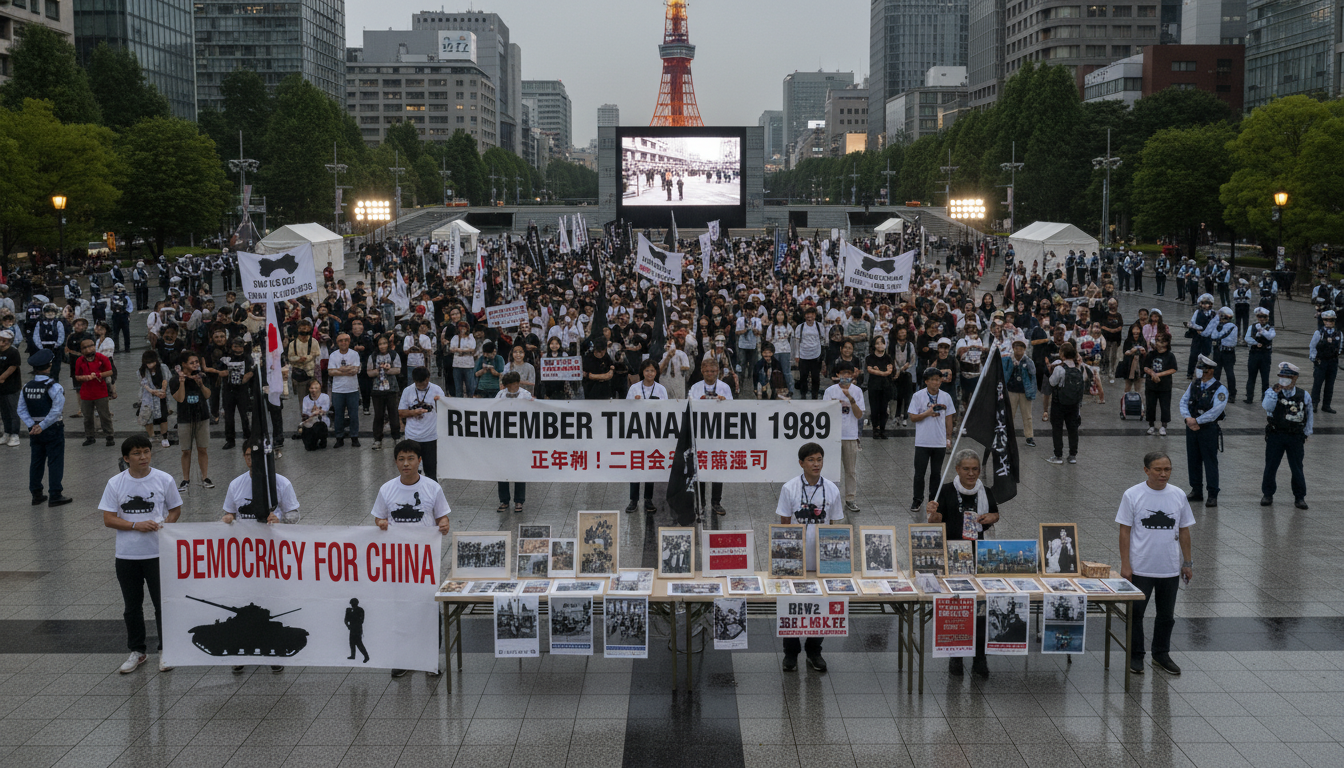
Tokyo Exhibit Reawakens Memory of the Tiananmen Crackdown on June 4, 2026
On June 4, 2026, activists in Tokyo staged an exhibit featuring a Goddess of Democracy statue to mark the Tiananmen crackdown and recall Hong Kong vigil traditions.
Exhibit opens in central Tokyo ahead of June 4 anniversary
Thirty seven years after the military crackdown at Beijing’s Tiananmen Square, a small group of activists gathered in central Tokyo to keep the memory alive. The exhibit, arranged by a coalition of local advocacy groups, included a replica of the Goddess of Democracy and displays that recalled the June 4, 1989 events. Organizers said the timing was intended to coincide with the anniversary on June 4, 2026 and to draw public attention to the continuing struggle over memory and rights.
Attendance at the opening was modest but deliberate, with visitors including students, expatriates, and older witnesses who said they remembered watching events unfold from afar. Volunteers handed out leaflets that documented eyewitness accounts, photographs, and timelines. The public display aimed to bridge generational gaps and prompt discussion in a city where direct experience of the crackdown is distant for most residents.
Organizer Alric Lee and local groups describe purpose and aims
The exhibit was organized by Alric Lee and several Tokyo based civic organizations that focus on human rights and democratic freedoms. Lee said the installation was intended to preserve historical knowledge and to connect it to related recent developments in the region. He emphasized that commemorating the Tiananmen crackdown is about safeguarding civic space and free expression, themes that organizers said remain relevant today.
Organizers framed the event as educational rather than confrontational, seeking to engage passersby with visual elements and short testimonies. They invited scholars and former activists to speak in small panels and Q and A sessions that accompanied the displays. Funding for the project came from modest donations and in kind support from local venues that provided space for the multi day exhibit.
Hong Kong vigil tradition highlighted and its changes noted
A central element of the exhibit was a retrospective on Hong Kong’s annual vigils that once drew tens of thousands to public squares to remember June 4. The display traced how those gatherings became a regular act of remembrance and civic solidarity in the years following 1989. It also documented how the scale and visibility of those vigils have changed in recent years as political and legal shifts affected public commemorations.
Speakers at the event described the vigil as part of a wider culture of remembrance that extended beyond mainland China. They said the loss of visible, large scale vigils in Hong Kong had a chilling effect on collective memory across the region. Visitors responded with conversations about the role of public ritual in sustaining historical awareness and how diaspora communities can contribute to that work.
Public reaction and media attention in Tokyo
Local passersby stopped to read panels and to ask questions about the Tiananmen crackdown and the meaning of the Goddess of Democracy symbol. Several visitors told reporters that they had limited knowledge of the 1989 events and appreciated the chance to learn more through the exhibit. Coverage in domestic media ranged from brief notices to longer feature pieces that explored why such commemorations matter in 2026.
Observers noted that Japan hosts a range of Chinese diaspora communities and that civic events like this can become focal points for dialogue. Some political commentators argued the exhibit would not shift government policy but could play a role in keeping public memory active. Organizers welcomed the attention while acknowledging that public interest competes with a crowded news agenda of wars and crises worldwide.
Challenges to preserving Tiananmen memory in a changing world
Activists emphasized that preserving the memory of the Tiananmen crackdown faces multiple challenges including time, competing news events, and generational distance. They said oral histories and physical displays remain important tools to counter fading awareness. The exhibit included witness statements and digital archives intended to be shared with schools and libraries to strengthen long term educational access.
Organizers also pointed to the broader issue of civic space in which remembrance takes place. They argued that keeping the facts of June 4, 1989 in the public record helps sustain informed debate about governance and rights in the region. Volunteers at the exhibit encouraged visitors to record their impressions and to consider how historical memory informs contemporary civic choices.
The Tokyo installation was one of several small commemorative events held this year in cities around the world by communities and groups seeking to mark the anniversary. Organizers said they hoped the display would spur similar efforts and support continued attention to the human cost of the crackdown and the virtues of public remembrance.
For the participants in Tokyo the exhibit was both a tribute and a call to vigilance. They said that as decades pass, active remembrance requires work by communities, educators, and cultural institutions to ensure that events such as the Tiananmen crackdown are not lost to history.

