
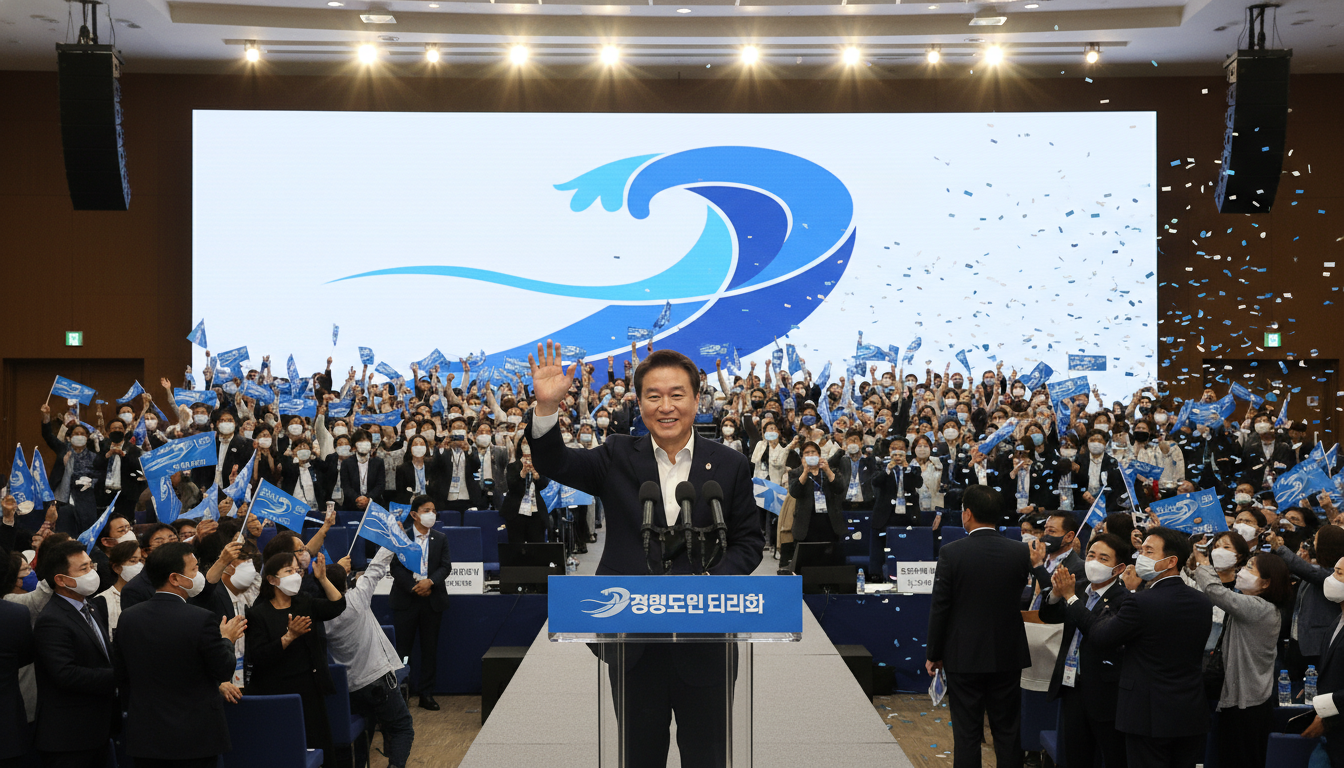
South Korea local elections: Lee Jae Myung’s liberals extend dominance as conservatives struggle
South Korea local elections deliver sweeping wins for Lee Jae Myung’s liberal party, extending rule as conservatives are beset by recent Yoon-era controversies.
President Lee Jae Myung’s liberal bloc secured a commanding set of victories in the South Korea local elections, strengthening the administration’s mandate for the remainder of his term. The results on Wednesday gave the ruling party control over a wide range of municipal and provincial offices, reinforcing its policy momentum at the local level. Conservatives were left grappling with losses, a weak turnout in several strongholds, and lingering fallout from controversies linked to the previous Yoon administration. Political analysts said the outcome reshapes the domestic balance of power and will influence national debates in the months ahead.
Liberals Consolidate Local Power
The ruling party’s gains were described by supporters as an endorsement of President Lee’s economic and social agenda. Victories in key urban centers and a number of provincial assemblies bolstered the party’s ability to coordinate policy implementation across multiple levels of government. Local officials aligned with the administration will now play a larger role in piloting social programs and infrastructure projects that the central government aims to expand.
Party officials framed the results as a mandate to pursue reforms on housing, labor and regional development that have been central to Lee’s platform. The consolidation also gives the ruling party leverage in budget negotiations and in appointing or influencing metropolitan and municipal administrators. Opponents warned that strengthened local control could reduce independent oversight, setting up contentious debates over governance and transparency.
Conservative Parties Hampered by Yoon Fallout
Conservative parties suffered notable setbacks, with multiple candidates failing to make inroads in districts they had previously held. Campaign strategists within conservative ranks attributed the poor showing in part to the public perception of unresolved controversies dating to the Yoon administration. Those issues, they said, sapped momentum and distracted from local policy messaging during the campaign.
Internal divisions emerged quickly after the vote, as party leaders sought to explain losses and map a way forward. Some veterans urged an immediate strategic overhaul and clearer policy alternatives, while others warned against hasty changes that could deepen factional splits. The outcome leaves conservatives with the task of rebuilding credibility ahead of upcoming national contests.
Voter Patterns and Urban Shifts
Analysts pointed to shifting voter behavior as a decisive factor in the South Korea local elections, particularly in metropolitan areas where liberal candidates expanded their margins. Urban voters, facing housing costs and income inequality concerns, appeared to favor candidates promising direct relief and regulatory changes. Young voters and first-time participants were reported to have played an outsized role in certain races, altering traditional electoral dynamics.
Turnout patterns varied across regions, with some rural districts showing lower participation that magnified urban swings. Observers noted that local issues—such as education, public transport, and municipal development—drove turnout in many jurisdictions, underscoring the importance of targeted local campaigning. The data suggest that future national campaigns will need to better account for nuanced, locality-specific concerns.
Implications for National Policy and 2027 Outlook
The election outcome is likely to accelerate the Lee administration’s legislative and administrative agenda this year. With allied local governments in place, Seoul can more readily pilot initiatives that require coordination across city, provincial and central authorities. This practical capacity could translate into tangible policy rollouts in areas such as urban regeneration, social welfare expansion and regional economic incentives.
Politically, the results recalibrate calculations ahead of the next presidential cycle and other national contests. A strengthened ruling party may feel emboldened to press forward with controversial reforms, while the opposition will be under pressure to unify and present clearer alternatives. How each side responds to the mandate will shape party fortunes and voter sentiment in the intermediary period.
Diplomacy and Regional Relations in the Wake of the Vote
The strengthened mandate also has implications for South Korea’s international posture, including ties with neighboring countries. President Lee has appeared in public diplomacy events in recent weeks, including a May 19 joint news conference in Andong where he met with visiting Japanese officials. Observers said a clearer domestic footing may afford the administration greater flexibility in pursuing dialogue on trade, security cooperation and historical issues.
However, foreign partners will also watch how domestic electoral winners translate campaign promises into policy that affects cross-border investment and regional coordination. Municipal-level actions—on trade facilitation, environmental standards, and cultural exchanges—can have cumulative effects on bilateral relations that central governments may need to manage carefully.
The South Korea local elections marked a decisive moment for the ruling party and a challenging one for conservatives as they regroup and reassess strategy. With a strengthened local base, President Lee’s administration has an opportunity to advance policy priorities and demonstrate governance outcomes that could influence national politics in the months ahead.

