
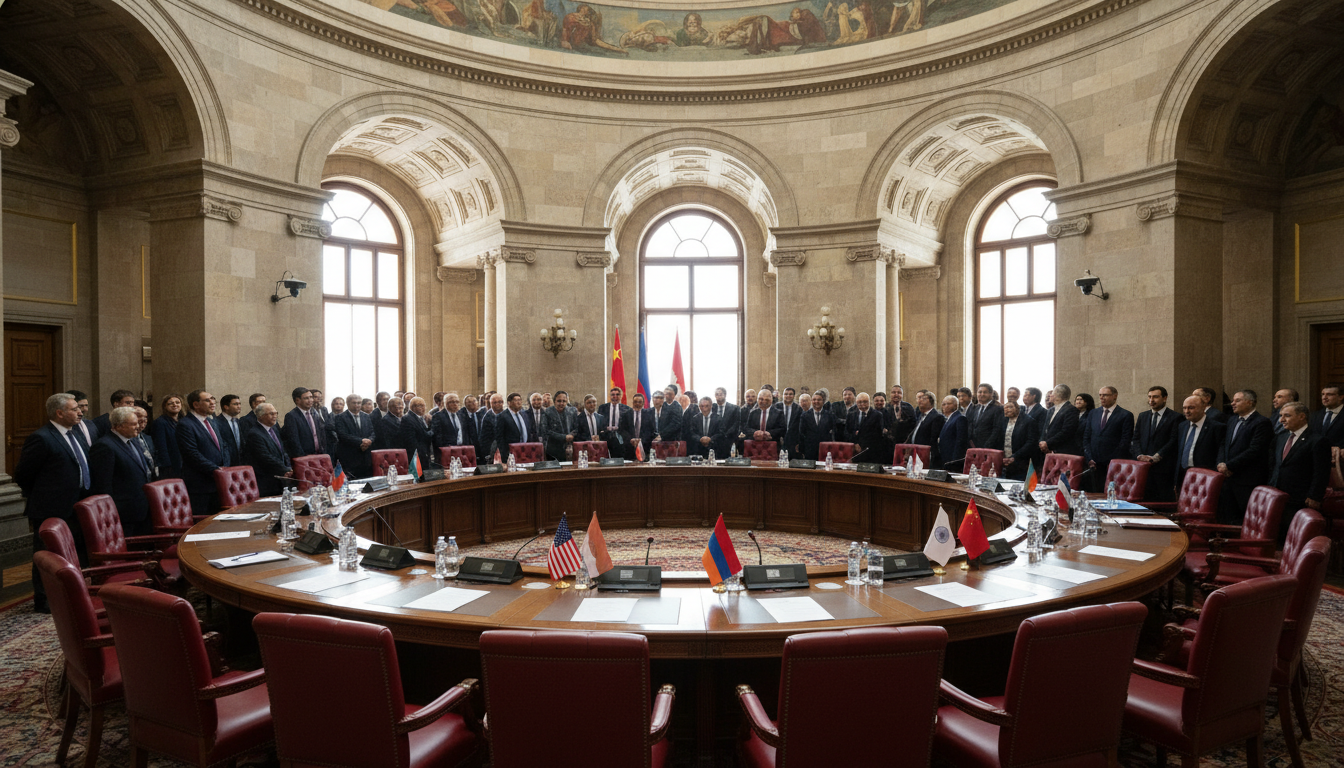
Armenia parliamentary election draws global powers as new trade corridor stakes rise
Armenia parliamentary election draws scrutiny from U.S., Russia, China and India as Yerevan becomes pivotal to a new Eurasian trade corridor and EU engagement. (152 characters)
Armenia parliamentary election set off a wave of international attention as major powers monitored the vote that will shape Yerevan’s geopolitical orientation. The contest has become a focal point for influence by the United States, Russia, China and India, each seeking leverage over a country positioned at the crossroads of Europe and Asia. Domestic political dynamics and competing economic visions are converging on a ballot that could alter the balance of regional partnerships.
Superpower scrutiny ahead of the vote
Diplomatic activity around the Armenia parliamentary election intensified in the run-up to polling as envoys and observers arrived in Yerevan. Western capitals stressed democratic processes while Moscow underscored security ties that have long anchored Armenia’s foreign policy. Beijing and New Delhi increased outreach that analysts said targeted infrastructure and trade opportunities rather than public declarations of political support.
Foreign ministries publicly framed their engagement in procedural terms, but behind-the-scenes meetings reflected broader strategic calculations. Officials from multiple countries sought assurances about access, transit and investment conditions, highlighting how an ostensibly domestic vote can have international consequences. The intensity of the scrutiny underscored Armenia’s growing importance to corridors linking Europe and Asia.
Trade corridor and economic prize at stake
Observers say the most tangible prize tied to the Armenia parliamentary election is Yerevan’s role in a proposed Eurasian trade corridor. Plans promoted in recent years envision routes that bypass older north-south arteries and offer shorter transit between the Black Sea and Central Asia. Supporters argue the corridor would boost commerce for landlocked neighbors and diversify regional supply chains.
Economic players have begun to align with political signals, and investors are watching the election outcome for indications of regulatory stability. Infrastructure financing and customs cooperation are among the immediate commercial issues on the agenda. For Armenia, the corridor represents both opportunity and risk as it negotiates terms with larger powers.
Pashinyan’s pro-EU pivot and domestic stakes
Prime Minister Nikol Pashinyan framed parts of his campaign as a move toward deeper ties with the European Union, emphasizing reforms and market access. His outreach to EU officials, including a visit by French President Emmanuel Macron to Yerevan on May 5, has been cited by allies as evidence of a Western tilt. That shift has domestic resonance: supporters see economic modernization, while opponents warn of alienating traditional partners.
The parliamentary contest thus doubled as a referendum on Pashinyan’s foreign-policy direction and his handling of recent conflicts. Voters weighed promises of reform against concerns about security and economic dislocation. The result will determine whether Yerevan accelerates integration with Western structures or reasserts a more balanced posture with Moscow and other regional capitals.
Russia’s military and security leverage
Russia maintains a significant military presence and longstanding security ties with Armenia, and its posture in the months before the election was closely watched. Moscow’s influence is rooted in defense cooperation, energy supplies and cultural links that remain potent across Armenian politics. Analysts say any perceived erosion of that relationship could prompt a recalibration in Moscow’s regional approach.
Kremlin-linked actors have emphasized stability and existing security arrangements, warning against abrupt shifts that might unsettle the South Caucasus. At the same time, Armenian leaders have tried to reassure Russia about the continuity of military cooperation while courting new partners. The dual-track diplomatic balancing act reflects Yerevan’s tightrope between sovereignty and dependency.
China, India and expanding economic interests
Beyond the U.S. and Russia, China and India have increased their attention to Armenia in recent years, primarily through economic and connectivity initiatives. Beijing’s interest centers on infrastructure and integration into broader Belt and Road networks, while Delhi has focused on energy, technology and minority communities with historical ties to the region. Both capitals view Armenia as a node in larger regional engagement strategies.
Trade agreements, investment proposals and development financing surfaced as pragmatic tools for influence during the election period. Unlike security-driven policies, these economic engagements rely on long-term projects that can outlast electoral cycles. For Yerevan, attracting diversified investment is critical to sustaining growth irrespective of geopolitical pressures.
Observation, diplomacy and the post-vote outlook
International observers and diplomatic missions pledged to monitor the Armenia parliamentary election and to press for transparency in counting and dispute settlement. Several bodies signaled readiness to report on process integrity and to recommend improvements where necessary. Governments also made clear they would interpret the vote’s legitimacy when calibrating future cooperation.
Post-election dynamics will hinge on coalition building, policy priorities and how quickly leaders move to conclude deals with external partners. The interplay between domestic mandates and international offers will determine the pace of Armenia’s strategic reorientation. For nations with vested interests, the verdict at the ballot box will shape next steps in a region where geography and politics remain tightly entwined.
The result of this Armenia parliamentary election will reshape not only a single government but also the alignments that govern trade, security and investment across the South Caucasus. As Yerevan navigates competing offers from powerful capitals, the domestic mandate emerging from the vote will be the chief determinant of its diplomatic and economic trajectory in the years ahead.

