
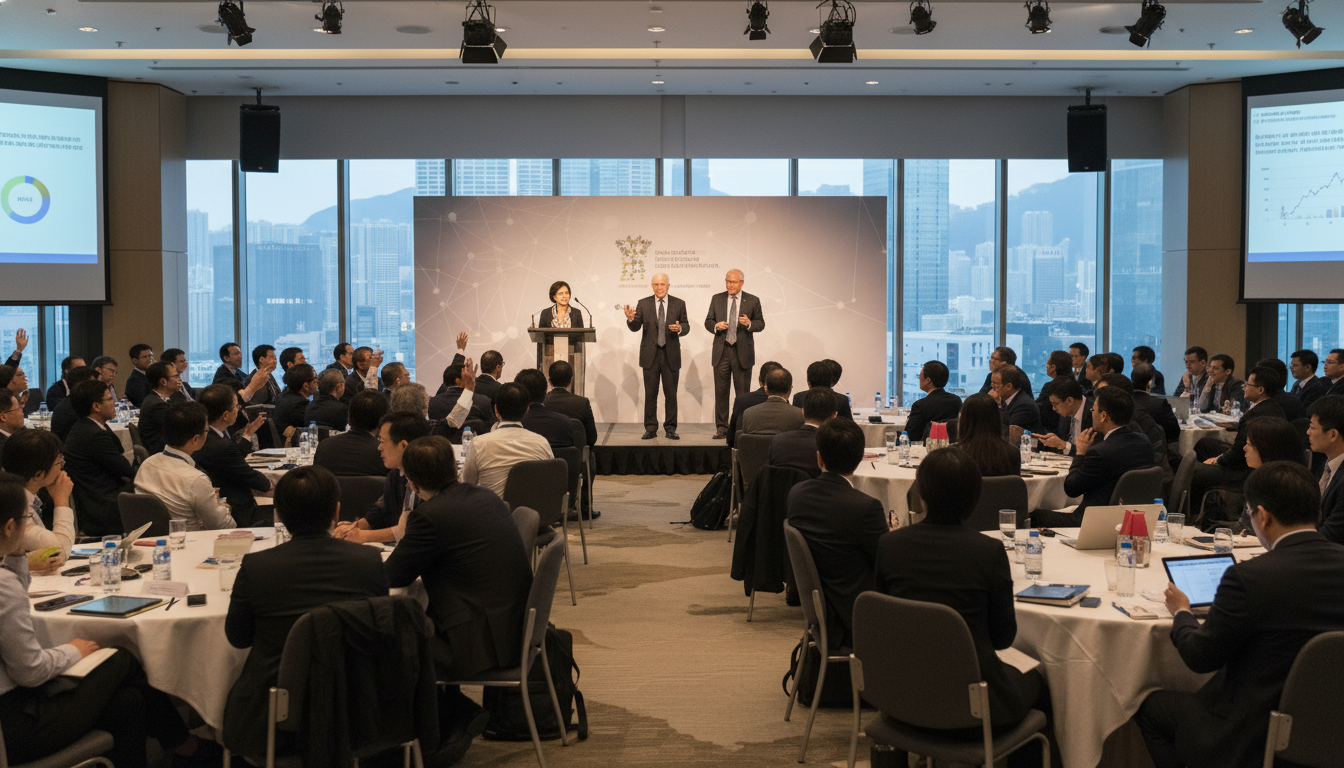
Law and Society Association meeting in Hong Kong draws academic backlash over national security risks
U.S.-based Law and Society Association meeting in Hong Kong provokes scholars’ protest over China’s national security law and potential risks to attendees amid backlash
The U.S.-based Law and Society Association meeting in Hong Kong has sparked a sharp reaction from scholars who say the conference decision raises serious safety and freedom-of-speech concerns. Critics argue the move risks tacitly endorsing Beijing’s national security law and could expose participants to surveillance, questioning or legal reprisals. Organizers face mounting pressure from academics and advocacy groups to reconsider the venue or adopt alternative formats to protect attendees. The dispute underscores broader tensions between engagement and caution in academic exchanges with Hong Kong.
Scholars cite legal and personal safety fears
Scholars opposing the Law and Society Association meeting in Hong Kong point to concrete dangers linked to the city’s security environment. Many warn that research topics, public talks or informal conversations at the conference could be interpreted as politically sensitive under the national security law. Those concerns extend to international participants who fear interrogation, visa difficulties, or other forms of scrutiny upon arrival or after returning home.
Academic critics say the risk is not merely theoretical given recent high-profile prosecutions and increased scrutiny of civil society since 2020. They emphasize that disciplinary measures, arrests and prosecutions in Hong Kong have influenced the willingness of researchers to travel there. For some, the prospect of attending a major international meeting in the city now carries career and personal safety calculations.
National security law background and implications
The national security law enacted in Hong Kong in 2020 created new criminal offences for acts viewed as secession, subversion, terrorism and collusion with foreign forces. Legal scholars and rights advocates have repeatedly warned that the law’s broad language can sweep in speech, organizing and research activities. Those concerns have translated into heightened caution by universities, publishers and event organizers considering Hong Kong venues.
Observers note that enforcement practices and the interpretation of the law have evolved since its introduction, affecting public assemblies, classroom discussion and online expression. For conference attendees, the ambiguity over what might trigger scrutiny creates an unpredictable environment for academic exchange. Many worry that unintended comments or circulating draft papers could have consequences beyond reputational damage.
Calls for alternative arrangements from academic community
Following announcement of the meeting location, a growing number of academics have urged the association to consider moving the event or offering a virtual option. Petitions and open letters circulating among scholars stress that hosting the conference in Hong Kong may deter participation and limit the range of papers presented. Organizers are being asked to weigh the value of in-person engagement against the ethical obligation to minimize harm to members.
Some advocates also propose hybrid models that allow contributors to join remotely without compromising dynamic discussion. Others suggest rotating venues to jurisdictions with stronger legal protections for academic freedom. The debate reflects a wider reassessment within the scholarly community about the boundaries of engagement in contexts where legal risk is significant.
Logistical and legal uncertainties for attendees
Beyond legal exposure, attendees face practical difficulties that could affect their ability to participate fully. These include visa vetting, the potential for device searches or data access requests at ports of entry, and limits on public gatherings or side events. Conference organizers typically provide guidance, but critics argue that standard protocols may be insufficient in a heightened security environment.
Universities and research institutions are re-evaluating travel advice and liability concerns for staff and students. Insurance coverage, institutional approvals and emergency response plans are becoming part of the calculus for those who might attend. For early-career researchers in particular, the choice to participate could involve balancing career visibility against personal risk.
Debate over academic engagement versus principled boycott
Supporters of holding the Law and Society Association meeting in Hong Kong argue that academic engagement and on-the-ground observation remain important for understanding legal and social changes. They contend that excluding Hong Kong risks isolating local scholars and diminishing opportunities for dialogue. Proponents emphasize that scholarly exchange can provide critical scrutiny and support for colleagues in places under pressure.
Opponents, however, say that venue choices convey norms and can inadvertently legitimize policies that undermine rights. They assert that credible scholarship requires safe spaces for debate and that organizers must not put participants in harm’s way. The dispute illustrates a broader moral and strategic balancing act facing international associations working in politically sensitive locations.
Potential next steps for the association and participants
The Law and Society Association now faces a range of options, from reaffirming the Hong Kong venue to relocating, postponing or adopting a hybrid format. Any decision will likely weigh membership sentiment, logistical feasibility and the reputational implications of either choice. Organizers may also increase security briefings, provide clear legal guidance and establish emergency support for participants who encounter problems.
For individual scholars, choices include withdrawing, attending remotely, or proceeding with caution while adapting presentation topics and materials. Many observers expect the debate to prompt stronger institutional policies on travel and event planning for conferences in jurisdictions with contested legal environments. The outcome could set a precedent for how academic communities navigate comparable tensions worldwide.
The controversy over the Law and Society Association meeting in Hong Kong has reignited urgent questions about academic freedom, institutional responsibility and the practical risks faced by researchers. As the association weighs its options, the dispute highlights a growing insistence among scholars that the safety and rights of participants must be central to decisions about where and how international academic exchange takes place.

