
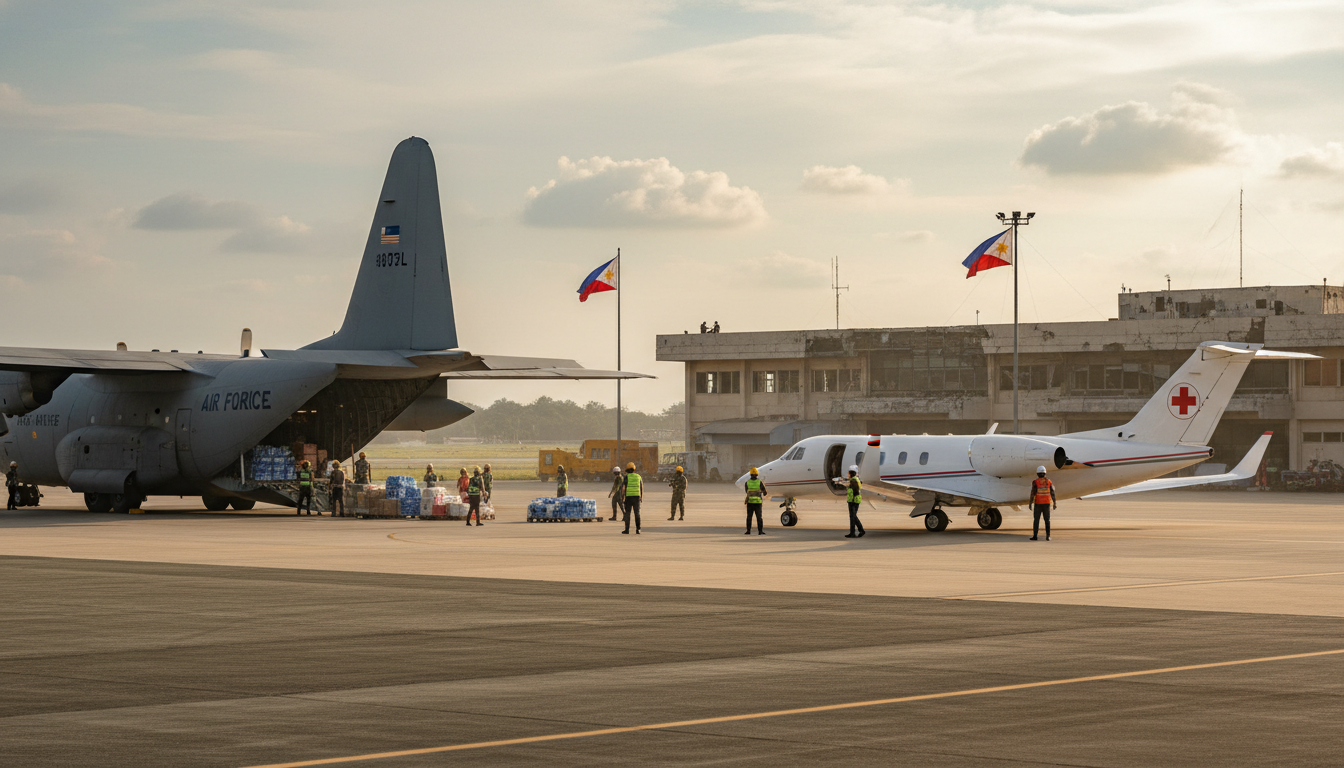
Mindanao earthquake on June 8, 2026, kills 37; General Santos airport reopens for government and humanitarian flights
Mindanao earthquake on June 8, 2026, killed 37 people, and authorities have reopened General Santos airport for government and humanitarian flights as relief efforts mobilize across southern Philippines.
The 7.8-magnitude Mindanao earthquake struck off the southern coast of the Philippine island of Mindanao on June 8, 2026, producing widespread disruption and at least 37 confirmed deaths, disaster management authorities reported. The tremor caused structural damage in coastal cities including General Santos, where officials temporarily closed the civilian airport before permitting limited government and humanitarian traffic. Emergency teams are coordinating to assess damage, identify survivors, and move aid into affected communities while authorities caution that conditions remain hazardous.
7.8-magnitude quake struck off Mindanao coast on June 8, 2026
The quake, measured at magnitude 7.8, struck offshore late on Monday, June 8, 2026, according to disaster management authorities who released early casualty figures. Its epicenter was located off the south coast of Mindanao, generating strong shaking felt across the southern island and prompting immediate emergency responses. Local officials reported collapsed structures and damaged infrastructure in multiple municipalities, and authorities have prioritized search-and-rescue in the hardest-hit areas.
Seismic monitoring agencies typically issue updates after major events to track aftershocks and assess tsunami risk, and emergency services in the Philippines moved quickly to evaluate coastal communities for secondary hazards. Residents in some towns reported intense shaking and panic as buildings swayed, while municipal authorities began compiling lists of damaged homes and public facilities.
Casualties and official toll: 37 confirmed dead
Disaster management authorities put the confirmed death toll at 37 as of the latest official report, with numbers expected to change as rescue operations continue and access improves. Authorities have not yet released a full breakdown of fatalities by locality or details on the number of injured, emphasizing that search efforts remain active in areas where buildings sustained serious damage. Family members and local officials are still accounting for missing persons, and hospitals in the region are treating those with injuries ranging from minor to severe.
Local governments have set up emergency hotlines and information centers for relatives seeking news about loved ones, and disaster management agencies said they will update counts as teams survey affected neighborhoods. The confirmed toll underscores the severity of the event and has prompted national-level attention to immediate relief needs.
General Santos airport reopens for government and humanitarian flights
General Santos International Airport, a key transport hub in southern Mindanao, was reopened on a restricted basis to allow government and humanitarian aircraft to deliver relief supplies and personnel. Airport authorities limited operations to non-commercial flights to ensure priority access for emergency responders and aid shipments, while commercial passenger services remain suspended until inspections confirm runway and terminal safety. The measure aims to accelerate the movement of medical teams, search-and-rescue units, and essential goods to communities cut off by quake damage.
Officials said airport operations would be closely coordinated with civil aviation regulators and disaster agencies to ensure safety and the most effective use of available airlift capacity. Humanitarian organizations and government relief units are expected to use the reopened facility to stage logistics and distribute emergency supplies, though officials cautioned that ground transport from the airport to remote areas may still be impeded by damaged roads and bridges.
Damage and community impact in Mindanao municipalities
Images and initial reports from the field show collapsed walls, cracked roads, and damage to public buildings in towns across southern Mindanao, including urban and rural communities alike. Local leaders described scenes of disrupted utilities and displaced residents seeking shelter in evacuation centers or with relatives, while assessment teams catalogued damaged schools, health centers, and critical infrastructure. Business activity in affected towns has been temporarily curtailed as authorities focus on life-saving priorities and damage assessments.
The full economic and social cost of the quake will take time to determine, with local governments expected to submit damage assessments in the coming days to request national assistance. Community groups and local volunteers have mobilized to assist with immediate needs, providing food, water, and temporary shelter to those who lost homes or who were forced to evacuate.
Relief operations and government coordination
National and local disaster management agencies have activated emergency protocols to coordinate relief operations, prioritizing search-and-rescue, medical care, and the delivery of food and shelter materials. The restricted reopening of General Santos airport is part of a broader logistics plan to improve access for government teams and non-governmental aid groups, officials said. Provincial authorities have requested support from the national government to scale up relief, while municipal officials work to restore services and clear access routes.
Humanitarian partners typically assess needs for clean water, sanitation, medical supplies, and temporary shelter following large earthquakes, and local authorities are urging residents to heed official instructions on evacuation and safety. Meanwhile, municipal managers are establishing checkpoints and information points to direct incoming assistance to the most urgent locations.
The quake has renewed calls for strengthened preparedness in the Philippines, which faces frequent seismic hazards due to its position on the Pacific Ring of Fire. Experts and officials often emphasize the importance of building standards, public awareness, and effective emergency planning to reduce future loss of life.
The situation remains fluid as teams continue search-and-rescue and damage assessment operations in Mindanao, and authorities have pledged to provide regular updates on casualties, infrastructure status, and relief distribution plans.

