
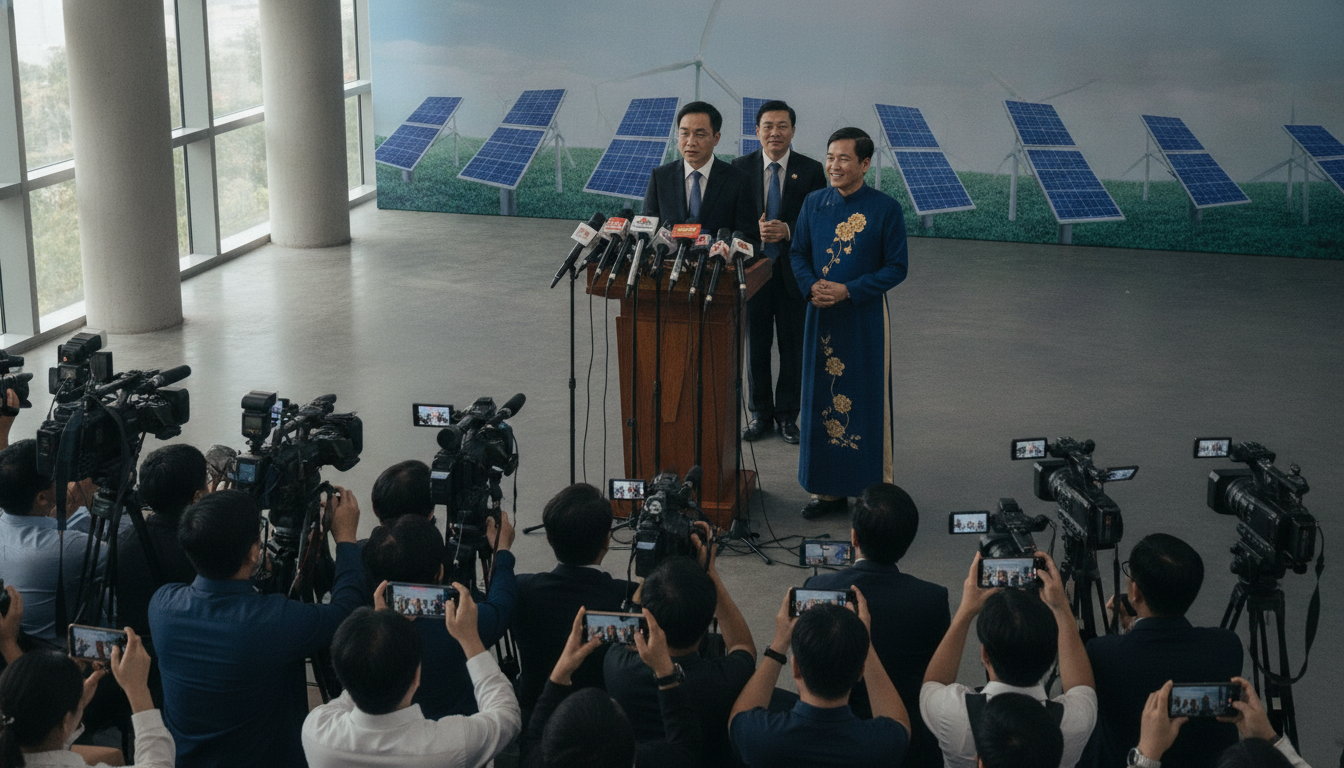
Foxconn to invest 1 GW of solar and wind power in Vietnam to supply factories and suppliers
Foxconn to develop 1 GW of renewable energy in Vietnam to power factories and suppliers, aiming to reduce grid reliance and support regional electronics production.
Foxconn, the major Taiwanese electronics manufacturer and Apple supplier, announced plans to invest in 1 gigawatt of solar and wind capacity in Vietnam to serve its factories and supplier network there. The move is presented as a response to rising power needs at large manufacturing sites and as part of a broader shift to secure on-site and contracted renewable generation. Company officials said the projects will target both Foxconn-operated plants and nearby suppliers, seeking to lower operating risk and emissions.
Foxconn commits to 1 GW of solar and wind in Vietnam
Foxconn said the investment will cover a mix of photovoltaic and wind installations with a combined capacity of about 1 gigawatt intended to supply factory campuses and supplier clusters. The company framed the initiative as an operational priority to ensure more stable and cleaner power for production lines that consume large amounts of electricity.
The announcement followed executive discussions in Ho Chi Minh City and aligns with the firm’s recent efforts to diversify production outside Taiwan and China. While Foxconn did not publish detailed site lists in the initial statement, industry observers expect the projects to focus on coastal and industrial zones where manufacturing concentration and grid access intersect.
Planned timeline and project scale
Foxconn has not disclosed a precise construction timetable or the split between rooftop, ground-mounted and offshore options for the new capacity. Typically, projects of this size are delivered in phases over several years, beginning with quicker rooftop or brownfield installations and followed by larger utility-scale arrays.
The firm may combine direct investment with power purchase agreements and joint ventures to accelerate rollout and manage capital intensity. Early phases could prioritize sites with the highest energy demand to yield immediate operational benefits and lower interruption risks.
Strategic reasons for choosing Vietnam
Vietnam’s role as an ASEAN electronics hub has expanded rapidly, attracting multinational contract manufacturers and component suppliers. Foxconn’s move to develop renewables locally reflects both the scale of energy consumption at modern assembly lines and the strategic need to anchor supply chains in markets with competitive production costs.
Locally generated renewable energy can also help companies mitigate exposure to transmission constraints and seasonal fuel-price volatility. For Foxconn, securing a significant share of on-site or nearby green power supports production continuity while addressing customer and investor pressure to reduce carbon footprints.
Impact on factories and suppliers
Direct access to dedicated renewable output can reduce factories’ dependence on the national grid and emergency diesel generators that are costly and carbon-intensive. For suppliers clustered around Foxconn campuses, the program promises cheaper and more predictable electricity, which can lower operating costs and encourage further investment in local manufacturing capacity.
The projects could also enable incremental decarbonization across supplier tiers, particularly for small and medium-sized vendors that lack the scale to contract their own large renewable arrays. By aggregating demand, Foxconn can create purchasing power that benefits the whole supplier ecosystem.
Grid integration and power purchase plans
Integrating 1 GW of intermittent generation into Vietnam’s power system will require coordination with grid operators and possibly investment in transmission upgrades or energy storage. Companies deploying large renewable portfolios increasingly pair projects with battery systems and demand-management software to smooth output and match industrial load profiles.
Foxconn may use a mix of on-site generation, direct lines, and commercial power purchase agreements to channel electricity to factories. Negotiating these arrangements will involve state utilities, regulators and local authorities to secure grid connections and dispatch rights.
Regulatory and environmental hurdles
Permitting, land acquisition and environmental assessments are likely to be key early hurdles for projects of this scale in Vietnam. Large ground-mounted wind and solar farms require careful siting to avoid conflicts with agricultural land, coastal habitats and local communities, and developers must navigate provincial approval processes.
Financing structures will also matter, particularly if Foxconn seeks to attract third-party investors or secure long-term offtake contracts with suppliers. Transparency around community engagement, compensation and ecological mitigation will be important to minimize delays and reputational risk.
Foxconn’s 1 GW plan underscores the increasing intersection of industrial strategy and energy planning in Southeast Asia, where manufacturers are beginning to internalize power security and emissions reduction as part of core investment decisions. If delivered at scale, the projects could strengthen Vietnam’s position as a resilient electronics manufacturing base while signaling a growing role for corporate-driven renewables in regional infrastructure development.

